NEURA, E.ON and enviaM bring Physical AI to energy grids
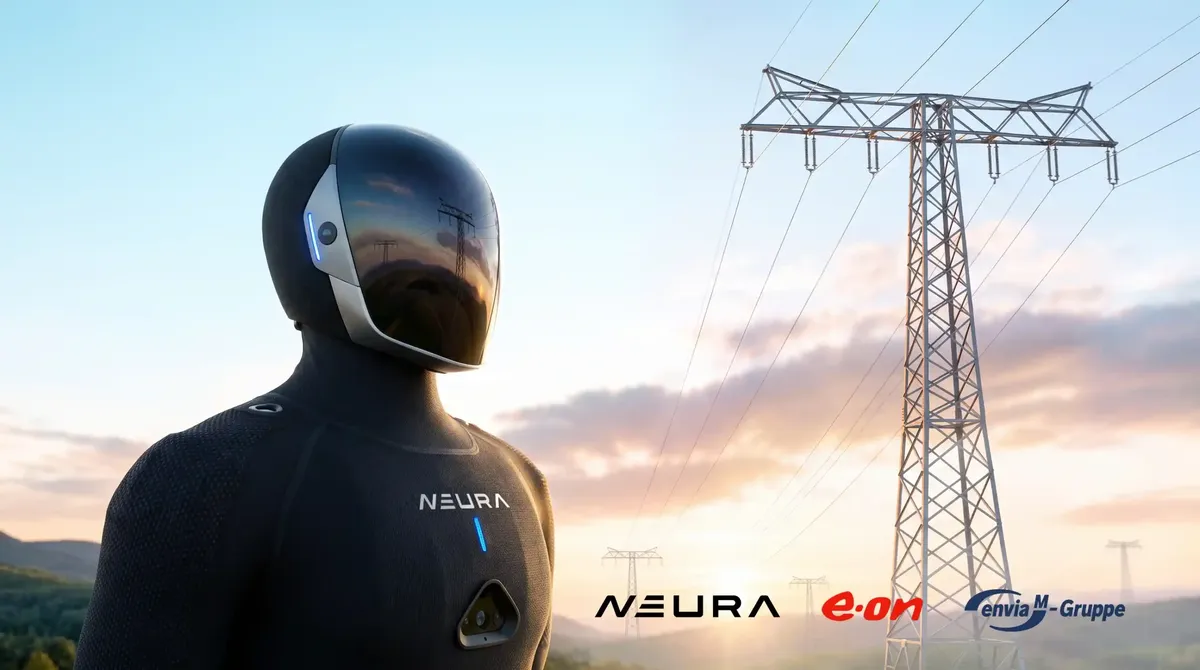
NEURA Robotics, E.ON and enviaM-Gruppe are partnering to develop and deploy Physical AI for critical energy infrastructure, including grid inspections, asset monitoring and support for hazardous or repetitive work. MITNETZ STROM, enviaM’s grid subsidiary, expects to test initial applications in real-world operations during 2027.
- NEURA, E.ON and enviaM are developing Physical AI for energy infrastructure.
- MITNETZ STROM plans to test initial applications during 2027.
- Early use cases include inspections, asset monitoring and site security.
- Training will combine human demonstrations, robot data and simulations.
- E.ON and enviaM will retain control of their data and trained skills.
From robot training to grid operations
The partnership will use Neuraverse, NEURA Robotics’ open Physical AI platform, to connect robotic training with later deployment. E.ON and enviaM are joining TUM RoboGym powered by NEURA, where robotic skills are developed using human demonstrations, real-world robot data and simulations.
The first possible applications include inspections, monitoring critical assets such as substations and supporting site security. The partners will also assess tasks in potentially hazardous environments. Skills will initially be developed and tested under controlled conditions before MITNETZ STROM evaluates them in real-world grid operations.
TUM RoboGym powered by NEURA opened at LabCampus at Munich Airport in October 2026. The centre covers more than 2,300 square metres and brings together research, robot training and industrial applications. Companies from more than ten industries are already training robots there for specific workflows.
Workers will help define the robotic skills
At the start of the project, interdisciplinary teams from E.ON, MITNETZ STROM and NEURA will identify specific use cases. Grid specialists will contribute their practical experience and requirements, while NEURA will help develop the required robotic skills and provide training and software infrastructure through the NEURA Gym and Neuraverse.
The NEURA Gym combines three sources of physical experience. Specialists can demonstrate workflows using sensor-equipped suits, motion capture systems and teleoperation. Robots can then perform tasks while their sensors record movements, physical contact and the results of their actions. Simulation and Data Amplifier environments add variations and scenarios based on real-world experience, after which the skills are validated on real robots.
NEURA says robots learn with Neuron AI, its multimodal foundation model for Physical AI. The model combines 3D vision, touch, audio, robot state, language and memory, allowing a robot to capture more than visual information during an inspection.
A scalable approach for energy infrastructure
The companies say the project is intended to go beyond a one-off demonstration. Insights from testing will inform the development of both the robotic skills and the Neuraverse platform, with the aim of creating repeatable Physical AI applications for energy infrastructure.
Neuraverse is designed to manage and deploy trained skills across compatible robots and additional sites. The source says E.ON and enviaM will retain control of their own data and trained skills, and will decide whether, and with whom, to share them.
“Humanoid robots can provide targeted support, particularly for physically demanding tasks or those with specific safety requirements,” Stephan Lowis, CEO of the enviaM Group, said. The company expects initial practical experience during 2027. NEURA says humanoid robots such as 4NE1 could eventually navigate facilities built for people, including environments with stairs, doors, control cabinets and tools, without requiring modifications to those facilities.