NVIDIA Publishes Cosmos3-H-Dreams Post on Generative Surgery Simulation
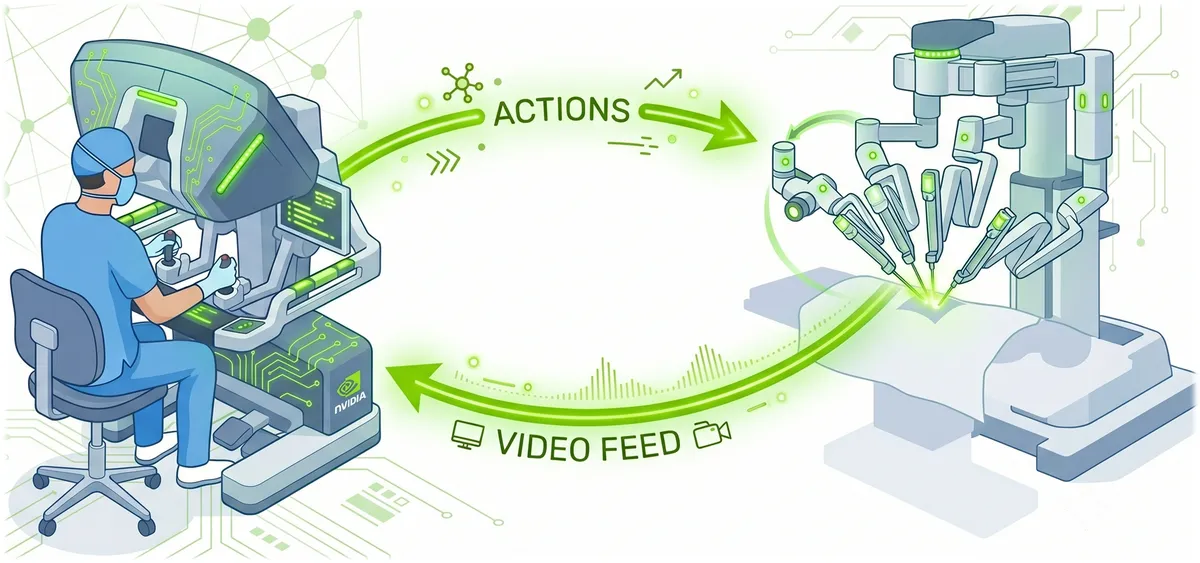
NVIDIA has published a Hugging Face blog post titled "NVIDIA Cosmos3-H-Dreams: Bringing Clinical Surgery to Life Through Generative Simulation." The page links two models and one dataset, but the available text does not describe how the system works.
- NVIDIA published a Hugging Face blog post titled "NVIDIA Cosmos3-H-Dreams: Bringing Clinical Surgery to Life Through Generative Simulation."
- The post is dated 2026-10-20.
- The page lists 2 models and 1 dataset, with Image-to-Video and Robotics labels.
- The available text gives no technical details, benchmarks or availability information.
What the post covers
The post is dated 2026-10-20 and appears on the Hugging Face blog under NVIDIA's organization. Its title places Cosmos3-H-Dreams in the area of generative simulation applied to clinical surgery.
The text available for this article is limited to the title and the surrounding page elements. It contains no description of the method, no training details, no benchmarks and no information on licensing or availability. None of these are stated here, and none can be assumed.
Linked models and data
The page lists 2 models and 1 dataset mentioned in the article. Two category labels appear on the page: Image-to-Video and Robotics. They suggest that at least one of the linked models generates video from images and that another is tagged for robotics use. The page text does not explain how these pieces fit together, and it does not name the models or the dataset in the portion available.
One of the linked items carries the label "Updated Sep 16" together with the figures 223k and 59. The page does not say what these numbers measure, so they should not be read as downloads, likes or any other metric.
What to watch for
The title makes clear that NVIDIA is applying generative simulation to surgical settings. Whether the models are open, how realistic the simulated procedures are, and what the system is meant to be used for are questions the available text does not answer. Readers who want those details should consult the full post and the linked model and dataset pages on Hugging Face.