NVIDIA cuDSS reaches general availability for GPU-accelerated simulation
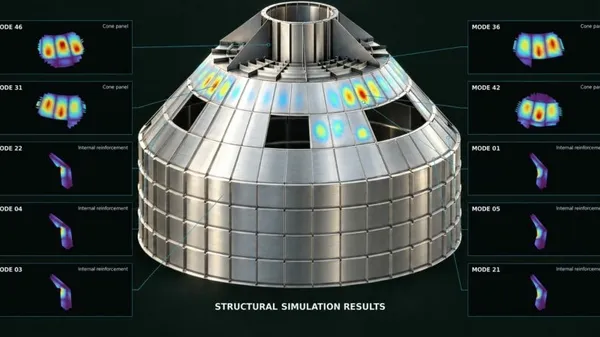
NVIDIA has made cuDSS, a CUDA-X library that moves large sparse system solves onto GPUs, generally available. According to NVIDIA, the library helps engineering and scientific applications cut time to results and run more simulations.
- NVIDIA cuDSS, a CUDA-X library for large sparse system solves on GPUs, is now generally available.
- Applied Materials reports up to 10x faster sparse solves in Ginestra versus CPU-only approaches.
- Dassault Systèmes reports an 8-10x speedup in Abaqus and its electromagnetic solvers.
- ZEISS SMT measured a 4x speedup in an EUV lithography plasma benchmark using COMSOL Multiphysics.
- cuDSS offers C, C++, Python and Fortran interfaces and scales from workstations to clusters.
What cuDSS does
Engineers rely on simulation to predict how chips, aircraft and industrial systems will perform before they are built. NVIDIA says that as designs grow more complex, simulations take longer to run, which raises computing demands and limits how many ideas teams can test.
cuDSS targets one step in particular: solving large sparse systems. NVIDIA describes this as the math-heavy step that repeats throughout engineering and scientific simulations and often limits how many designs a team can test. By running it on GPUs, applications can reduce time to results and increase simulation throughput, according to the company. NVIDIA says this lets end users explore larger, more realistic models, more accurate representations and a wider design space at a reduced cost.
Software vendors already on board
NVIDIA lists several companies that are integrating cuDSS into their tools. The figures below are as reported in NVIDIA's announcement.
- Applied Materials: sparse solves in its Ginestra simulation platform ran up to 10x faster than with CPU-only approaches, speeding exploration of semiconductor materials and device reliability.
- COMSOL: using COMSOL Multiphysics with cuDSS, ZEISS SMT measured a 4x speedup in an EUV lithography plasma simulation benchmark, finishing the full simulation in six days and 14 hours.
- Cadence: its Celsius software uses cuDSS to accelerate simulations of heat, structural stress and warpage in advanced chips and 3D chip designs, helping customers including Nokia analyze complex designs faster.
- Dassault Systèmes: reports an 8-10x speedup using cuDSS within its Abaqus structural and computer simulation technology electromagnetic solvers.
- Siemens: uses cuDSS in Simcenter STAR-CCM+ to accelerate simulations of structures in fluid-structure interaction workflows.
- Synopsys: uses cuDSS in its Sentaurus Device simulator for advanced logic, memory and power chips, helping Infineon model increasingly complex devices faster.
The speedups differ by tool and workload, and they come from the companies and NVIDIA rather than from independent testing.
Scaling and developer access
NVIDIA says cuDSS can scale out of the box from individual workstations to large computing clusters. Developers can add it to existing engineering, scientific and optimization software, bringing GPU acceleration to tools that engineers and researchers already use. The library is available through C, C++, Python and Fortran interfaces.
NVIDIA is showing cuDSS at its demo booth and at the Dassault Systèmes booth at GTC Berlin.
What it means for users
For engineers, the practical effect depends on whether their simulation software adopts the library. The companies named by NVIDIA cover chip design, semiconductor manufacturing, structural analysis and fluid simulation, so the reported gains touch several parts of the design workflow. According to NVIDIA, faster solves allow teams to test more designs and work with more realistic models. For software developers, the multi-language interfaces offer a way to add GPU acceleration without rebuilding their products from scratch.