NVIDIA DSX Platform Targets the Power Bottleneck in AI Infrastructure
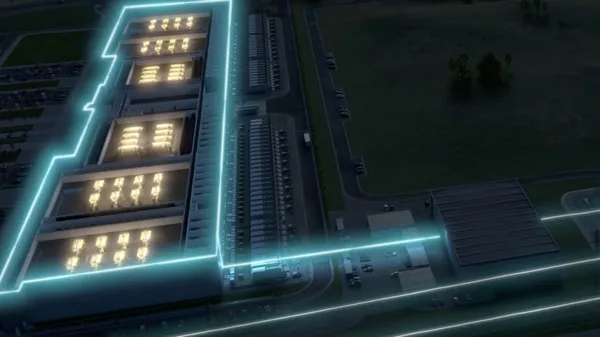
Companies including GE Vernova, Hitachi Energy, Schneider Electric and Siemens Energy are building on the NVIDIA DSX AI Factory Platform to plan, simulate and run the grid and the AI factory as one system, from the substation to the rack. According to NVIDIA, the aim is to ease what it calls the biggest bottleneck in infrastructure: power.
- NVIDIA DSX lets engineers plan, simulate and run the grid and AI factory as one system, from substation to rack.
- NVIDIA cites more than $300 billion in backlogged equipment and over 200 gigawatts waiting in U.S. interconnection queues.
- Hitachi Energy's battery storage system qualified as NVIDIA DSX Ready; GE Vernova, Schneider Electric and Siemens Energy are building on DSX.
- Phaidra reports about 10% more compute within the same power envelope.
- Emerald AI's approach is modeled to unlock up to 100 gigawatts on the existing U.S. grid.
A bottleneck rooted in siloed systems
NVIDIA describes the power problem in stark terms. More than $300 billion in equipment is backlogged, and over 200 gigawatts of projects are waiting in U.S. interconnection queues, according to the company.
One root cause, NVIDIA says, is siloed systems. The grid, the facility and the compute inside have long been designed independently from one another, which creates the conditions for delays, risk and stranded capacity.
DSX is meant to join these layers. NVIDIA DSX Sim and SimReady assets from leading energy manufacturers let engineers simulate the grid, substation and AI factory together. They can validate generators, switchgear, power systems and cooling before breaking ground. NVIDIA DSX Flex syncs AI factory demand with grid conditions and onsite generation, turning AI factories from static loads into flexible grid assets. DSX MaxLPS and DSX Exchange aim to squeeze more compute from every watt and to securely share signals across compute, networking, energy, cooling and operations.
Energy and engineering partners
GE Vernova is deploying its grid-to-facility and rack power expertise to complement NVIDIA DSX systems. The goal is to help customers turn power constraints into competitive advantages while maximizing compute and token output, sustainability and grid reliability.
Hitachi Energy's battery energy storage system has qualified as NVIDIA DSX Ready. This helps customers identify power infrastructure that meets applicable NVIDIA DSX reference architecture design requirements for resilient, reliable and scalable AI factories.
Schneider Electric, together with AVEVA and ETAP, is advancing NVIDIA DSX with validated NVIDIA Vera Rubin power and cooling reference architectures and an NVIDIA Omniverse-powered AI factory digital twin. Combining AVEVA's engineering software with NVIDIA SimReady assets, OpenUSD and Omniverse enables connecting simulations, real-time operational data and AI-driven optimization across AVEVA, Schneider Electric and third-party solutions. NVIDIA says this helps organizations design, simulate, operate and optimize data centers across their lifecycle.
Siemens Energy is expanding its collaboration with NVIDIA by developing a reference design for resilient, scalable and grid-aware power infrastructure across power generation, transmission and distribution. The design is aligned with the requirements of the NVIDIA DSX Vera Rubin AI factory design. The company is also exploring NVIDIA technologies such as RAPIDS, Metropolis and Isaac Sim for its Noedra digital twin platform, evaluating how they could enhance grid infrastructure monitoring, identify emerging risks and support unplanned outage prevention.
Software results: Phaidra and Emerald AI
Two software companies are also integrating DSX components. Phaidra integrated DSX Flex, DSX Max-Q and DSX Exchange into its self-learning agents. They optimize cooling and power allocation to maximize tokens per watt and improve grid flexibility, and according to the source they deliver about 10% more compute within the same power envelope.
Emerald AI integrated its Conductor platform into DSX Flex to help utilities tap underused grid capacity. The approach is modeled to unlock up to 100 gigawatts on the existing U.S. grid.
What it means for AI factory builders
For operators planning AI capacity, the message from NVIDIA is that power planning and compute design should happen together rather than in sequence. Reference designs, simulation before construction and equipment that is qualified against DSX requirements are meant to reduce delays and stranded capacity. The Phaidra and Emerald AI figures are presented as results or modeled estimates by the companies involved.
NVIDIA points readers to the Omniverse DSX Blueprint and the Vera Rubin DSX AI Factory Reference Design. The news came alongside GTC Berlin, where Hitachi Energy (booth 7004, hall 7), Schneider Electric (booth 3041, hall 3) and Siemens Energy (booth 3048, hall 3) were showing their work.