NVIDIA NemoClaw Bundles Open Agent Stack Around Your Existing Harness
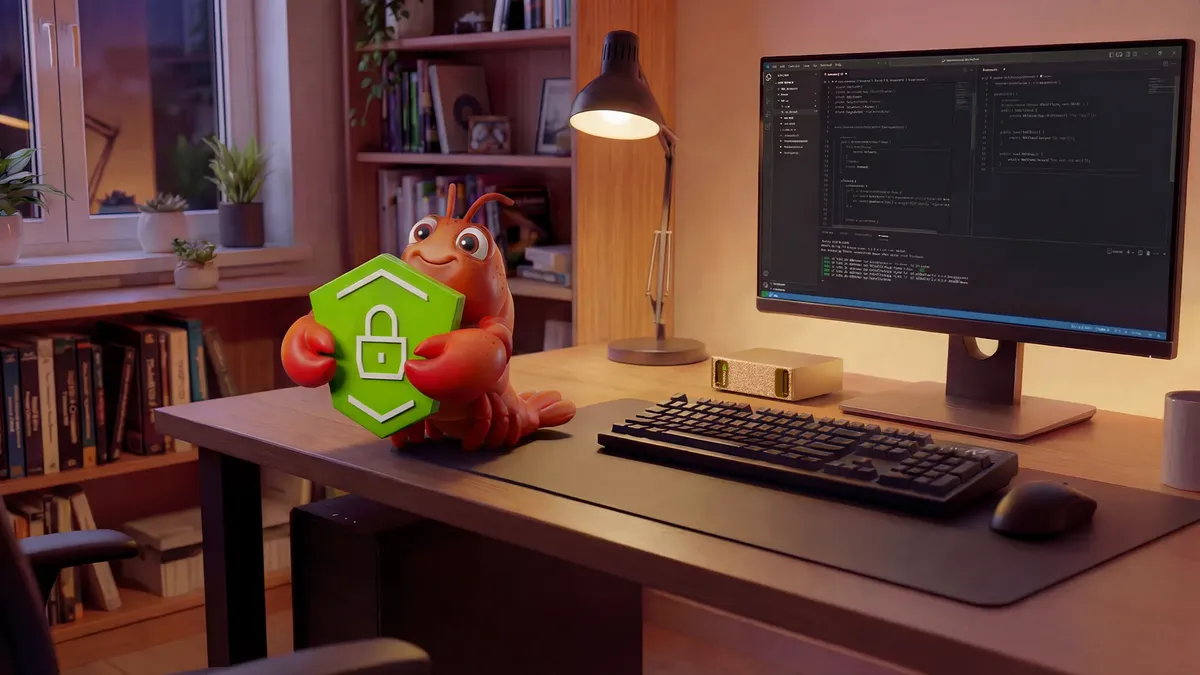
NVIDIA has detailed NemoClaw, a set of open blueprints that assemble a full agent stack around a harness developers already use. According to NVIDIA, the blueprints currently support OpenClaw, Hermes Agent and LangChain Deep Agents, and add Nemotron models, optimization tools and a secure runtime without requiring the agent to be rewritten.
- NemoClaw is a set of open blueprints that adds Nemotron models, NeMo tools and the OpenShell runtime around an existing agent harness.
- Supported harnesses are OpenClaw, Hermes Agent and LangChain Deep Agents.
- According to NVIDIA, LangChain's tuned Deep Agents harness brought Nemotron 3 Ultra to near-frontier performance at approximately 10x lower cost per run versus leading closed models.
- OpenShell governs agent access to files, networks, credentials and tools through policy.
- NemoClaw agents run in the cloud, data centers, DGX Spark and RTX PCs and workstations, and can work alongside Claude, Codex or Cursor agents.
What NemoClaw is, and what it is not
NVIDIA states that NemoClaw is not a competing harness and not a runtime. It is a collection of blueprints that builds an open agent stack on top of the harness the developer selects. NVIDIA describes an agent as needing four things: a model that reasons, a harness that defines how the agent operates, tools and skills that extend its capabilities, and a runtime that governs what the agent can access and do in production.
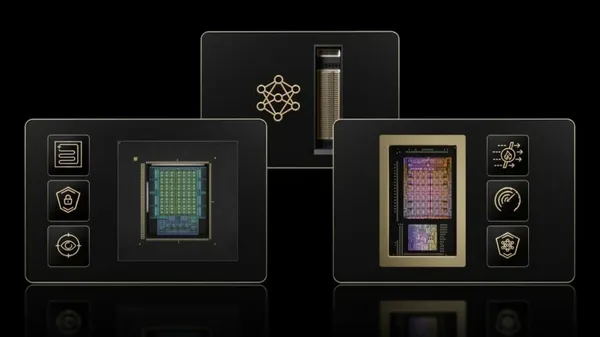
Each blueprint brings together four components:
- A tuned open harness, such as Hermes Agent, LangChain Deep Agents or OpenClaw, optimized to work with NVIDIA Nemotron.
- Nemotron open models.
- NVIDIA NeMo tools for optimization, including NVIDIA NeMo Relay for observing and improving agent execution, plus routing capabilities that can help improve throughput, cost and reliability.
- NVIDIA OpenShell, the secure runtime that governs agent access to files, networks, credentials and tools.
The three supported harnesses differ in focus. OpenClaw can access files and applications, write code, spawn sub-agents and keep context across sessions. Hermes Agent, from Nous Research, is designed to improve with use by capturing corrected and repeated workflows as reusable skills. LangChain Deep Agents targets complex, multistep tasks, combining planning, file-based context management, memory and delegation to specialized subagents.
Tuning the harness for the model
NVIDIA argues that a model and its harness should be matched. When they are not, the model may ask for context again, stop early or loop without progress.
As an example, the company says LangChain tuned its Deep Agents harness for Nemotron 3 Ultra by adjusting prompts, tools and middleware, without retraining the model. According to NVIDIA, starting from an already strong baseline, this brought Nemotron 3 Ultra to near-frontier performance at approximately 10x lower cost per run compared with leading closed models. The NemoClaw blueprint for LangChain Deep Agents packages these optimizations, so developers using that combination do not need to reproduce the tuning work. The tuned model profile is available through LangChain on GitHub.
NVIDIA also separates the roles of harness and blueprint. A harness is where developers build and experiment with skills, tools, memory and orchestration logic. A blueprint is used to assemble and run a specialized agent on an open stack with a tuned harness, models, optimization, telemetry and OpenShell runtime controls.
Governance and a Chief of Staff example
Every NemoClaw reference includes OpenShell, which adds security and policy enforcement around the harness and tools. NVIDIA says its OpenShell tutorial shows how to create a first policy to prevent data exfiltration to GitHub, and that NemoClaw references include more sophisticated policies covering connections across many internal tools, sites and communication channels.
The NemoClaw community repository includes a memory-driven Chief of Staff recipe, built as a deployable Hermes profile. The agent keeps a persistent, human-readable model of the people, projects, priorities and working patterns it encounters, so it does not rebuild context on every task. OpenShell governs its file system, process and network access, and keeps credentials for managed inference and Model Context Protocol (MCP) connections outside the sandbox. NVIDIA says this helps keep the agent bound by policy even when its memory or retrieved context leads it toward an unintended action.
NeMo Relay is integrated natively into the Hermes session. It closes trace spans at real session boundaries, such as a new session, reset or expiry, and exports the resulting trajectories for audit and further optimization.
Where agents run and how to start
NemoClaw agents can run in the cloud, in data centers, on NVIDIA DGX Spark, and on NVIDIA RTX PCs and workstations. NVIDIA says a clinical agent for a hospital and a simulation agent for electronic design automation can share the same stack while using entirely different tools and skills. They can also work alongside frontier agents: Claude, Codex or Cursor agents can delegate domain-specific subtasks to NemoClaw-powered specialists running on open models and owned infrastructure.
For developers who already use one of the three harnesses, the pitch is to add model optimization, telemetry and governance without starting over. NVIDIA points to the Deploy Secure Agents with NemoClaw DLI course, a 101-level introduction, a NemoClaw quickstart for deploying an agent through a blueprint, and the NemoClaw GitHub repository for examples and additional blueprints.
NVIDIA Developer: Build Specialized Agents on a Stack You Control with NVIDIA NemoClaw