Open-weight models hit 72% of top-50 token use on OpenRouter
Open-weight models handled 72% of the tokens among OpenRouter's top 50 models in late September 2026, up from 27% in October 2025, according to a new analysis from the model routing platform. The same data shows they cost about a quarter as much per token, while the best closed-weight models still lead on quality.
- Open-weight models handled 72% of the top 50 models' tokens on OpenRouter in late September 2026, up from 27% a year earlier.
- Open-weight list prices averaged $0.28 in / $1.62 out per million tokens, versus $1.27 / $6.36 for closed-weight models.
- The best closed-weight model, Claude Opus 5.5, scores 57.6 on the Artificial Analysis Intelligence Index, against 46.3 for the best open-weight model, MiMo-V2.6-Pro.
- OpenRouter recommends starting with an open-weight model and using closed-weight models only for steps that need them.
- Licenses for open-weight models vary, so OpenRouter advises checking terms before building on one.
What open-weight means, and how it differs from open source
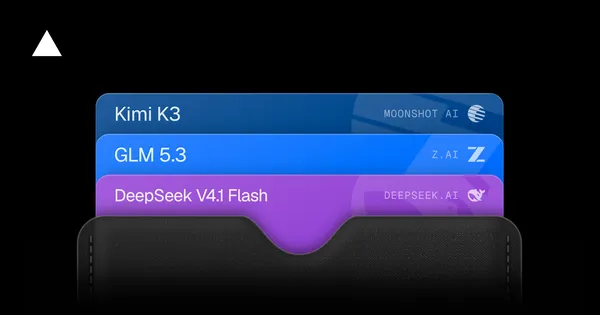
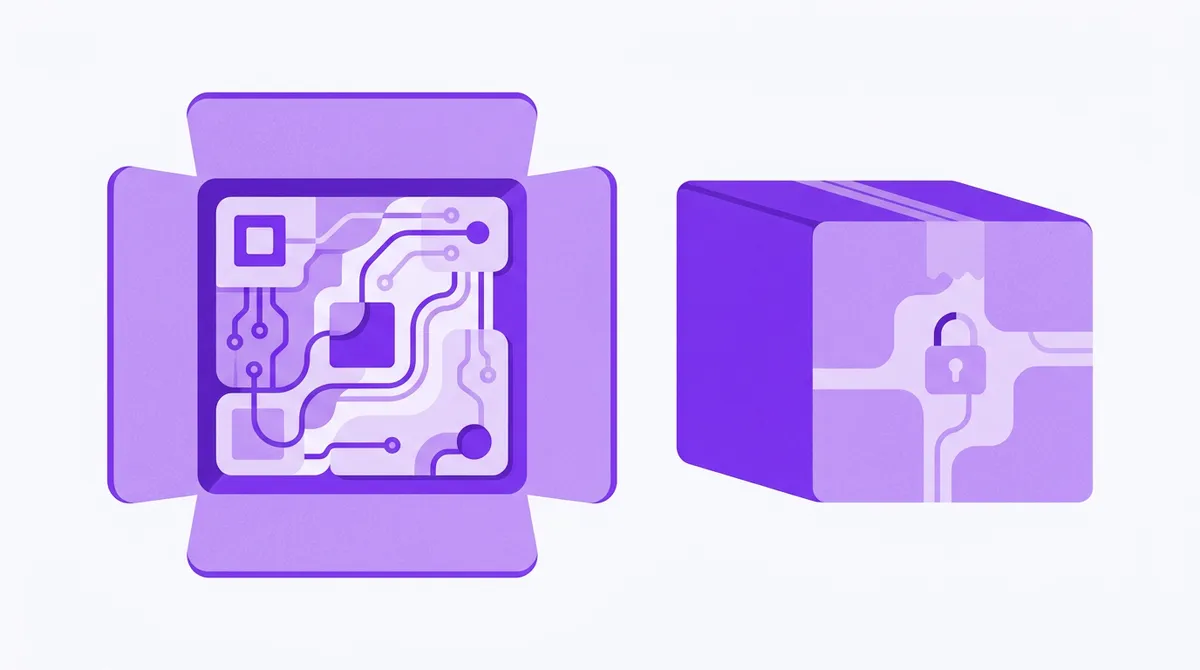
An open-weight model is one whose trained weights are published, so anyone can download it, run it on their own hardware, fine-tune it or serve it to others. A closed-weight model keeps its weights private and can only be used through the company that built it or a cloud it licenses to. OpenRouter lists DeepSeek V4.1 Flash, GLM-5.3, Kimi K3 and MiMo-V2.6-Pro as open-weight, and Claude, GPT and Gemini models as closed-weight.
OpenRouter stresses that published weights do not mean unlimited use. Licenses vary: DeepSeek V4 Flash shipped under the MIT license, while MiniMax M3's community license requires attribution and asks larger commercial products to get written permission first. The company advises checking the license before building on a model.
Open weight is also not the same as open source in the Open Source Initiative's sense, which for a model includes training data (or detailed information about it), code and weights. Most open-weight models do not release their training data. According to OpenRouter, the term "open-source LLM" almost always means open-weight in practice.
Usage growth: from 27% to 72% of tokens
OpenRouter classified every model in its top 50 by weekly token volume as open-weight or closed-weight, based on whether its catalog entry links to published weights. The open-weight share rose from 26.8% in the week of Oct 6, 2025 to 35.1% in late January 2026, 47.7% in April and 77.5% in July. It stood at 71.7% in the week of Sep 28, 2026.
Both categories grew. Closed-weight volume rose almost tenfold, from 3.4 trillion to 33 trillion tokens a week, while open-weight volume rose more than 60-fold, from 1.3 trillion to 83.5 trillion. The open share peaked in July and has stayed above two-thirds since. OpenRouter notes that earlier MIT Sloan research, based on its traffic from May to September 2025, found closed models handled nearly 80% of tokens.
The most-used open-weight models over the last four weeks were DeepSeek V4.1 Flash, GLM-5.3 Flash, Hunyuan 4 Preview and DeepSeek V4 Flash. On the closed side, GPT-5.6 Luna led by a wide margin, followed by Gemini 3.8 Flash and GPT-6 Luna. On both sides, most volume goes to cheap, fast models rather than the highest-scoring ones.
Price: a four-times gap driven by competition
Over the last four weeks, the token-weighted list price for open-weight models on OpenRouter was $0.28 per million input tokens and $1.62 per million output tokens. For closed-weight models it was $1.27 and $6.36, about four times as much. OpenRouter attributes this mainly to competition: anyone can serve an open-weight model, so providers compete on price for the same one.
On October 21, 2026, GLM-5.3 Flash had 30 providers with input prices from $0.04 to $1.15, DeepSeek V4.1 Flash had 31 from $0.03 to $0.60, and Kimi K3 had 20 from $0.24 to $4.50. Among closed models, Claude Sonnet 5.5 had 5 providers at $2.00 to $2.20, GPT-6 Luna had 3 at $0.05 to $0.20, and Gemini 3.8 Flash had 2 at $0.38 to $1.35.
The categories overlap. Kimi K3's cheapest endpoint costs less than Claude Sonnet 5.5, but its most expensive one costs about twice as much. GPT-6 Luna lists at $0.10 per million input tokens, less than any Kimi K3 provider charges. OpenRouter's advice is to compare specific models, not categories.
Quality: closed models still lead by about 11 points
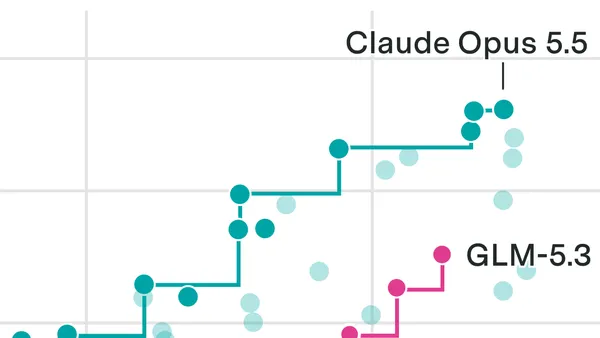
On the Artificial Analysis Intelligence Index, the best closed-weight scores were Claude Opus 5.5 at 57.6 and Claude Sonnet 5.5 at 56.0. The best open-weight scores were MiMo-V2.6-Pro at 46.3, GLM-5.3 at 44.8 and Step 5 Preview at 43.7, with Kimi K3 just behind at 43.6. Each score reflects the model at its highest reasoning effort setting.
OpenRouter cautions that the 11-point gap is between the strongest models on the hardest tasks the index measures, and does not show how much it matters for a given workload. Its June roundup put the gap at about five points on an earlier version of the index, so the company calls the exact figure a snapshot.
What it means for developers
Given an 11-point quality gap against a 4x price gap, OpenRouter's default is to start on an open-weight model and test it on your own tasks. It suggests moving to a closed-weight model only for steps where the test shows the extra quality changes the result, usually the hardest step in a workflow, such as planning in an agent, rather than every call.
The platform serves both kinds through one API. A request can list a closed-weight model first and an open-weight model as fallback, with a price cap set through provider routing. In OpenRouter's example, a cap of $1 per million input tokens and $4 per million output tokens makes the request skip Claude Sonnet 5.5 and route to GLM-5.3 Flash. A shortcut it recommends is to set the price ceiling first and sort what remains by throughput.
Teams whose data cannot leave their own infrastructure, or who want a model fine-tuned on their own data, have a further reason to choose open weights, the company says.
OpenRouter: Open-Weight vs Closed-Weight Models: What's the Difference?