Runpod adds Nix flake for Flash and Global Volumes beta for Serverless

Runpod has released a first-class Nix flake for its Flash CLI and put Global Volumes into beta for Serverless endpoints. The updates appear in the company's Q3 2026 release post, alongside a guide to fine-tuning an open-weight LLM with Axolotl.
- Flash now ships a first-class Nix flake, runnable with nix run github:runpod/flash.
- Global Volumes are in beta for Serverless endpoints, letting workers start in any data center with the user's GPU types.
- A new Runpod guide covers fine-tuning with Axolotl on a single GPU pod, using a 27B Qwen model and the 128B Mistral Medium 3.5.
- Fine-tuned models can be chatted with in SillyTavern, KoboldCpp or text-generation-webui.
Flash gets a Nix flake
According to Runpod, Flash now ships a first-class Nix flake. Users can run the CLI directly from GitHub with the command nix run github:runpod/flash. The flake also provides a pinned dev shell, and users can send GPU work to Runpod Serverless from it.
For developers who already manage their tooling with Nix, this means the CLI can be launched without a separate manual installation step. The pinned dev shell is meant to keep the environment consistent.
Global Volumes in beta for Serverless
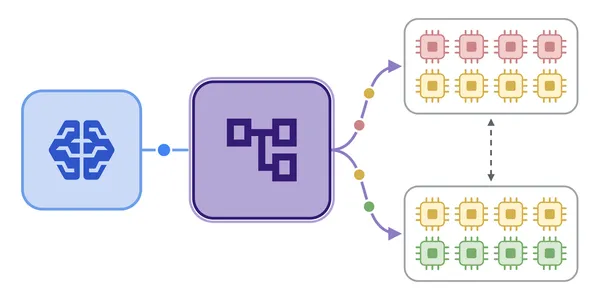
Runpod says Global Volumes are now in beta for Serverless endpoints. The idea is that a user attaches a Global Volume to a Serverless endpoint, and the endpoint's workers can then start in any data center that offers the user's chosen GPU types.
Runpod sums up the approach in one line: "Store model weights once, read anywhere." In practice, this addresses a common problem with Serverless inference, where model weights have to be available wherever a worker spins up. The feature is labeled beta, so its behavior may still change before general availability. The source does not give pricing or limits.
A guide to fine-tuning a persona model with Axolotl
The post also points to a tutorial on performing a first LLM fine-tune on Runpod with Axolotl and then hosting the result. The guide shows how to teach an open-weight LLM to text like a specific persona, including their slang, reply length and humor. Runpod lists roleplay scenes, creative writing exercises and chatbot customer interactions as possible uses.
The requirements are modest, according to the company: some chat logs, which can be synthetic or real, a few hours of data prep, and a single GPU pod. The walkthrough goes from raw messages to a model that users can chat with in SillyTavern, KoboldCpp or text-generation-webui.
Runpod uses two base models in the guide: a 27B Qwen model and the 128B Mistral Medium 3.5. The company says everything was tested end to end, and that every error it hit is documented in a Troubleshooting section so readers are less likely to get stuck at the same points.
What it means for users
The three items target different groups. Nix users get a cleaner way to run Flash and dispatch GPU work. Teams running Serverless endpoints get a beta option for sharing model weights across data centers without duplicating them. Newcomers to fine-tuning get a documented path that fits on a single GPU pod.
The post is titled "Runpod Q3 2026: Batch Inference, Global Volumes, Enterprise", but the text available here describes only the Flash, Global Volumes and Axolotl items, so details on batch inference and enterprise offerings are not covered in this report.