Schneider Electric: Prefabricated IT pod cut onsite install time by 80%
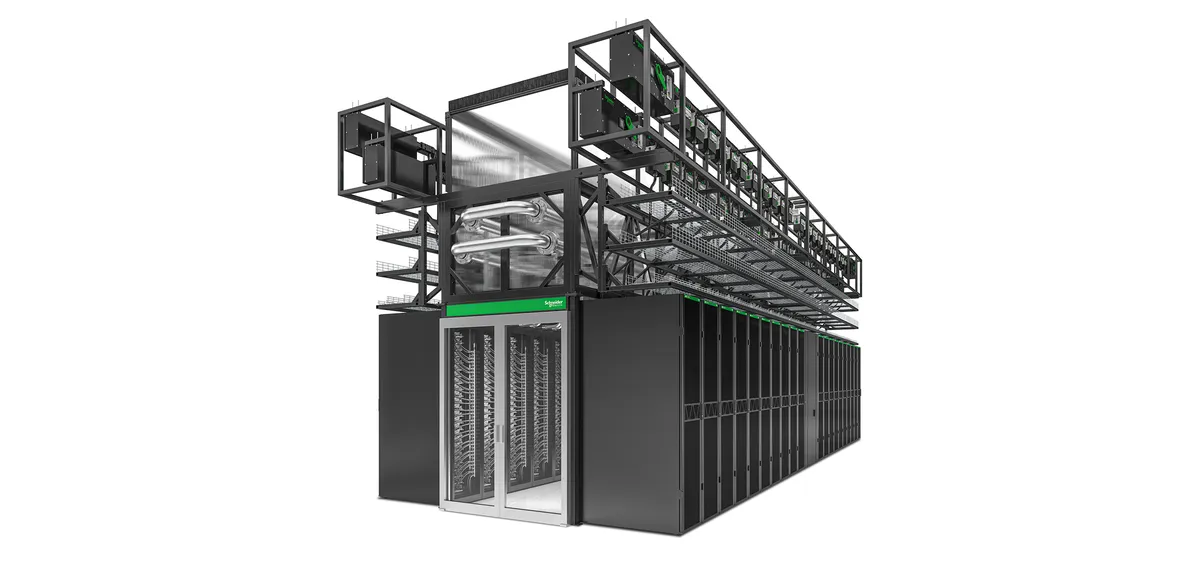
A time study by Schneider Electric and Compass Datacenters found that a prefabricated liquid-cooled IT pod needed 15 hours of onsite work, compared with 75.5 hours for a functionally equivalent traditional installation, an 80% reduction. The companies published the results in a white paper on high-density deployments.
- Onsite installation time fell from 75.5 hours to 15 hours, an 80% reduction, for the configuration studied.
- The comparison covered a prefabricated liquid-cooled IT pod versus a traditional onsite build with TCS piping, busway, cable support and containment.
- Schneider Electric says savings came from integrating systems at the factory, not from faster field work.
- A later Compass pod took about 15 hours onsite versus 18 hours for a deployment 15 pods earlier.
- Final TCS flushing, pressure testing and commissioning still happen onsite.
What the study compared
According to Schneider Electric, the two companies wanted to quantify a benefit that is often discussed but rarely measured: how much deployment time is saved when white-space infrastructure is integrated into a prefabricated IT pod before it reaches the site. They analyzed the installation of a prefabricated liquid-cooled pod and compared it with a traditional approach in which containment, TCS piping, busway and cable-support systems are installed onsite.
The white paper is titled Prefabricated White Space Module Time Study: Lessons from a High-Density Liquid-Cooled Deployment. It focuses on the onsite activities needed to prepare the pod for IT equipment installation. The prefabricated schedule used durations observed during a Compass Datacenters deployment. The traditional case combined observed containment-installation durations with schedules developed by mechanical, electrical and plumbing (MEP) specialists for the extra TCS piping, busway and cable-support work. Activities after installation verification and all offsite manufacturing were outside the scope.
Where the time savings came from
For the configuration analyzed, onsite duration fell from 75.5 hours to 15 hours. Schneider Electric states that the gain did not come from crews doing the same field work faster. In the traditional comparison, separate TCS, busway and cable-shelving installation took approximately 37, 13 and 5 hours respectively.
In the prefabricated pod, truss-mounted TCS piping sections were installed before delivery and joined onsite. Busway cages and cable shelving were mounted to the pod frame during assembly. This largely removed the separate onsite installation steps.
Not every phase got shorter. Receiving and staging the larger preassembled components took more effort than unloading the smaller parts of a traditional build. The traditional route, however, required more unpacking, organization, verification and installation later on. According to the company, the modest increase in front-end handling was offset by the installation work avoided.
The companies also point to rising rack power densities as the reason the approach matters. Higher-capacity power distribution, denser cable support, heavier structural supports and overhead liquid-cooling pipes all have to share the same space, which makes onsite coordination harder.
Repeatability and quality checks
The study also looked at benefits beyond speed. Because the pod design and installation sequence are standardized, teams can refine the process across deployments. At Compass Datacenters, the analyzed installation took about 15 hours onsite, versus 18 hours for a deployment completed 15 pods earlier.
Part of the inspection and quality work also moves into a controlled manufacturing setting. Factory-installed TCS piping sections can be cleaned, passivated and leak-tested before shipment. The full TCS loop still needs final flushing, pressure testing and commissioning onsite, but doing selected steps earlier reduces integration work inside the data hall.
Standardization does not freeze the design, according to Schneider Electric. Pod configurations changed during the Compass deployment, including cooling and density. Defined structural interfaces and an established installation sequence let later modules absorb those changes without recoordinating overhead supports, routing and trade sequencing across the whole white space.
What it means for operators
Schneider Electric says the study gives operators, developers and design teams a way to judge whether moving selected work into a manufacturing environment suits their projects. The results come from one configuration and one deployment, and the white paper contains the methodology, assumptions and detailed installation activities behind the figures. Compass contributed experience with repeatable white space modules at its campuses, while Schneider Electric supplied prefabricated infrastructure design and quantitative analysis.
Schneider Electric: Measuring the impact of prefabricated IT pods: What we learned working with Compass Datacenters