Shanghai Sustainability Conference Pairs AI Debate With Everyday Green Action
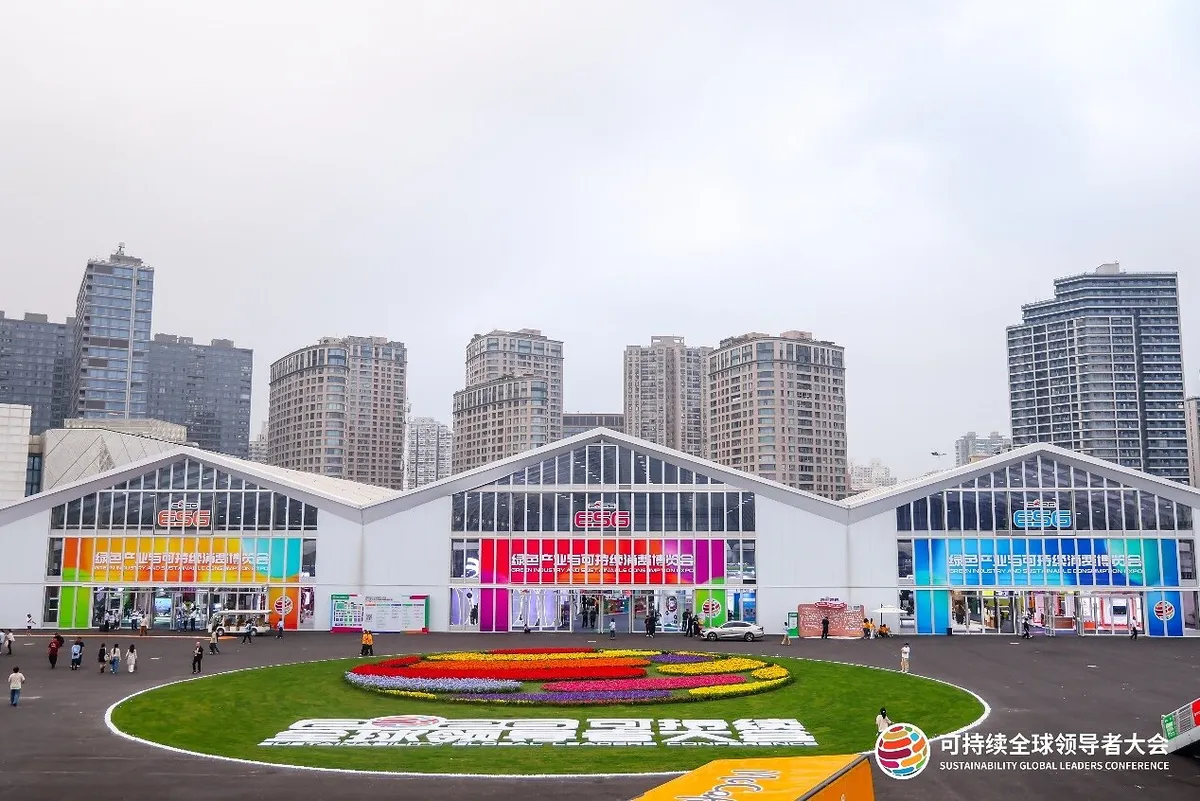
The 2026 Sustainability Global Leaders Conference in Shanghai combined policy debate, including a high-level dialogue on artificial intelligence, with public events meant to show sustainability in daily life. According to the organizers, the three-day event ran from October 20 to 22 and was carbon-neutral.
- The 2026 Sustainability Global Leaders Conference ran October 20 to 22 in Shanghai and was carbon-neutral, according to the organizers.
- It recorded more than 13,000 in-person visits and featured more than 400 speakers from 28 countries.
- Joseph Sifakis called for international standards for AI regulation, and Alan Macfarlane proposed a "trust fund" to direct AI profits toward public welfare.
- The third Shanghai ESG Development Report and the 2026 Compendium of Corporate ESG Practices were released, and the 2027 youth ESG challenge was launched.
A large, international program
The conference took place at Litan Cultural Center in Huangpu District, Shanghai. It was co-hosted by the World Green Design Organization (WGDO) and SINA Group, with the Beijing Office of the IFRS Foundation as a supporting organizer. Its theme was "Forging a Resilient Future: Global Governance, Innovation-Led Advancement & Industrial Renewal."
According to the organizers, the event recorded more than 13,000 in-person visits and featured more than 400 speakers from 28 countries. International participants made up more than 40% of speakers, including 33 heads of international organizations and 72 senior executives from financial institutions in China and overseas. The program included 15 parallel forums and 50 discussion topics, alongside the second Green Industry and Sustainable Consumption Expo.
Green transition and the AI debate
Speakers from abroad commented on China's role in the global energy transition. Irina Bokova, former director-general of UNESCO, described China as an important supporter and defender of multilateralism and said its industrial capabilities were helping make the transition possible. Erik Solheim, chair of the Europe Asia Center, said China's development of new energy technologies had helped bring down the cost of green technologies and made the transition more accessible globally.
Artificial intelligence was another major focus, with speakers stressing the need to balance technological progress with public accountability. Joseph Sifakis, 2007 Turing Award Laureate, called for international standards for AI regulation. Tawakkol Karman, 2011 Nobel Peace Prize laureate, said the debate must go beyond what AI can do to consider who controls it, who benefits and who bears the risks.
These questions were central to a dialogue titled "AI and the Future of Humanity," which examined implications for social relationships, human agency and the distribution of economic gains. Alan Macfarlane, a Cambridge anthropologist, proposed a "trust fund" to channel some AI profits toward public welfare instead of letting technology companies capture the gains exclusively. He also warned that AI platforms could exploit users' anxieties, or deliberately heighten them to sell products.
Xiang Biao, director of the Max Planck Institute for Social Anthropology, spoke about the erosion of people's connections with their immediate surroundings. He argued that in the AI era people risk withdrawing from the wider world and retreating into themselves, and offered the concept of "taking oneself as a method" as a counter: starting from personal experience to rebuild meaningful connections with the world.
Sustainability beyond the conference hall
The organizers paired the talks with activities aimed at the public. On opening day, guests joined the "Huangpu Grand Yuyuan Garden Night," a program centered on intangible cultural heritage that included an evening tour, a themed dinner and demonstrations of traditional crafts.
- Please Take Your Seat: a series of chairs designed and made from approximately 6,300 recycled milk cartons, conveying that everyone has a role in sustainable development.
- "A Moment Worth Sustaining": a photography exhibition presented by Sina showing people living alongside nature, discarded objects finding new uses and small efforts to reduce waste.
- Riverside run: a 3.3-kilometer morning run along the Huangpu River under the message "WE WISH: Sharing Health with the World."
- Green Lifestyle Festival: dozens of sustainable lifestyle, cultural and creative brands and nearly 15 specialty food brands, where visitors could explore circular reuse, waste reduction and energy conservation.
Reports, awards and what they signal
The conference marked the release of Advancing Sustainable Development: Shanghai ESG Development Report 2026, the third annual edition. Led by the Shanghai Advanced Institute of Finance at Shanghai Jiao Tong University (SAIF) with financial institutions, companies and service providers, it examines how stakeholders can strengthen their environmental, social and governance capabilities. It is intended to give practical reference points to policymakers, corporate executives and financial institutions.
Sina also co-published the 2026 Compendium of Corporate ESG Practices with the Center for Environmental Education and Communications of China's Ministry of Ecology and Environment and SynTao Consulting. WGDO and Sina presented the 2026 Green Design & ESG Pioneering Enterprise Award, and Sina and SAIF announced the results of the 2026 Global Youth Sustainability & ESG Investing Challenge and launched the 2027 edition.
The organizers' message was that sustainability depends not only on policy and investment but also on how businesses operate, how communities engage and how people make everyday choices. For the AI field, the conference showed that calls for international regulatory standards and a fairer sharing of AI profits are entering sustainability and governance forums alongside energy and ESG topics.