SmallRig Puts Human Experience at the Center of AI-Era Creativity
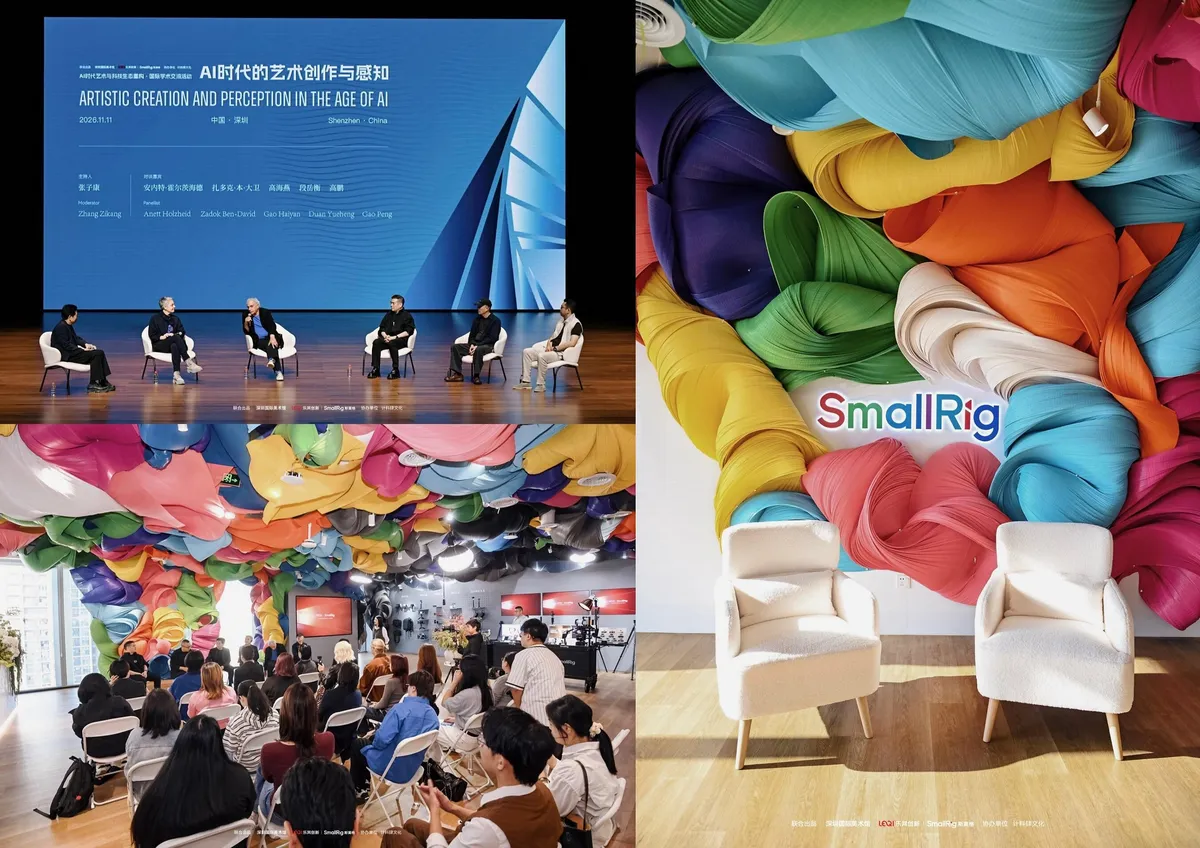
SmallRig and Shenzhen International Art Museum brought artists, curators and museum leaders together to examine creativity and authenticity as generative AI changes image making. The November 11 exchange in Shenzhen focused on how technology can support art without replacing human experience.
- SmallRig and Shenzhen International Art Museum held an AI and creativity exchange on November 11.
- Participants discussed authenticity, generated imagery and the value of real-world experience.
- SmallRig co-founder Gao Haiyan said AI cannot replace capturing real-life experiences.
- The company unveiled Ode to the Orchid at its headquarters.
- SmallRig plans to connect products, content and services in a creator-focused ecosystem.
Artists and curators debate AI's role in art
The international discussion included Zhang Zikang, director of Shenzhen International Art Museum and a professor at the Central Academy of Fine Arts, Wang Shaoqiang, director of the Guangdong Museum of Art, Anett Holzheid, senior curator at Germany's ZKM Center for Art and Media Karlsruhe, artists and SmallRig co-founder Gao Haiyan.
Zhang said art and technology are a key direction for the museum, drawing on Shenzhen's technology environment. Wang described using AI to produce short films about classic works, saying the approach reduced cost and production time. He also argued that art must return to personal growth, understanding the world and the expression of Eastern aesthetics.
Holzheid described exhibitions as shared ground for artists, audiences and curators. She said AI can widen perception and support collaboration across disciplines, placing the technology within a broader exchange rather than treating it only as a production tool.
Real experience remains central to the creative process
The participants also discussed how artists are using generated imagery while preserving their own perspective. Zadok Ben-David explored bird forms with AI for an installation, repeatedly refining the images and selecting some for the final work. The process, according to the source, was guided by a requirement that the work retain an artist's character, emotion and humanity.
A photographer combined an AI-generated lightning strike with a desert photograph he had taken himself. The experiment generated ideas, but he observed that generated imagery tends toward sameness and that being physically present at a scene cannot be substituted.
Spatial artist Feng Yu defended honesty of material, arguing that imperfection and unplanned outcomes can carry sincerity. Gao made a similar case for photography and image making. Speaking for SmallRig, he said, “AI cannot replace real-life experiences or the act of capturing them.”
SmallRig links its workplace to a wider creator ecosystem
After the forum, guests visited SmallRig's headquarters for the unveiling of Ode to the Orchid, an installation co-created with Feng Yu. It is the first of his works placed in a corporate workplace, according to the announcement.
Rather than sponsoring an exhibition or releasing a co-branded product, SmallRig placed the artwork in an everyday space, where people encounter it in passing instead of behind museum walls. Gao said the company wants to move beyond manufacturing and technology to merge with art and creativity.
SmallRig said AI can serve as an efficient, enabling creative tool, while real images remain its starting point. The company plans to work more closely with creators, explore art IP and cultural products, and connect products, content and services into one ecosystem. It also said more activities supporting creators are on the way, extending the meeting between technology and art into everyday creative practice.