UChicago Wins $10 Million Grant for AI Weather Forecasting
A University of Chicago team has received a $10-million grant from the Laude Institute to expand AI weather forecasting for low- and middle-income economies. The project will support an open-source platform designed to help agencies produce forecasts tailored to local decisions, from planting crops to preparing for heat waves.
- The Laude Institute awarded the UChicago team a $10-million grant.
- AI forecasts have reached more than 50 million smallholder farmers in Africa and South Asia.
- The UChicago-Laude AI Almanac will be free and open source.
- The platform will support agriculture, public health and climate hazard warnings.
- Training is preparing meteorologists from 14 countries, with a goal of 30 by 2027.
Forecasts built around local decisions
The UChicago team has developed AI weather systems that combine existing AI and physics-based forecasts, then adapt them to specific human needs. Instead of focusing only on broad measures such as temperature and precipitation, the systems are designed to answer questions such as when a monsoon will begin or whether a dangerous heat wave is approaching.
That distinction is especially important in tropical regions, where forecasts have historically been less accurate and less actionable, according to the University of Chicago Data Science Institute. Wealthy nations built modern physics-based forecasting around mid-latitude climates, using dense observation networks and supercomputers that many tropical agencies do not have.
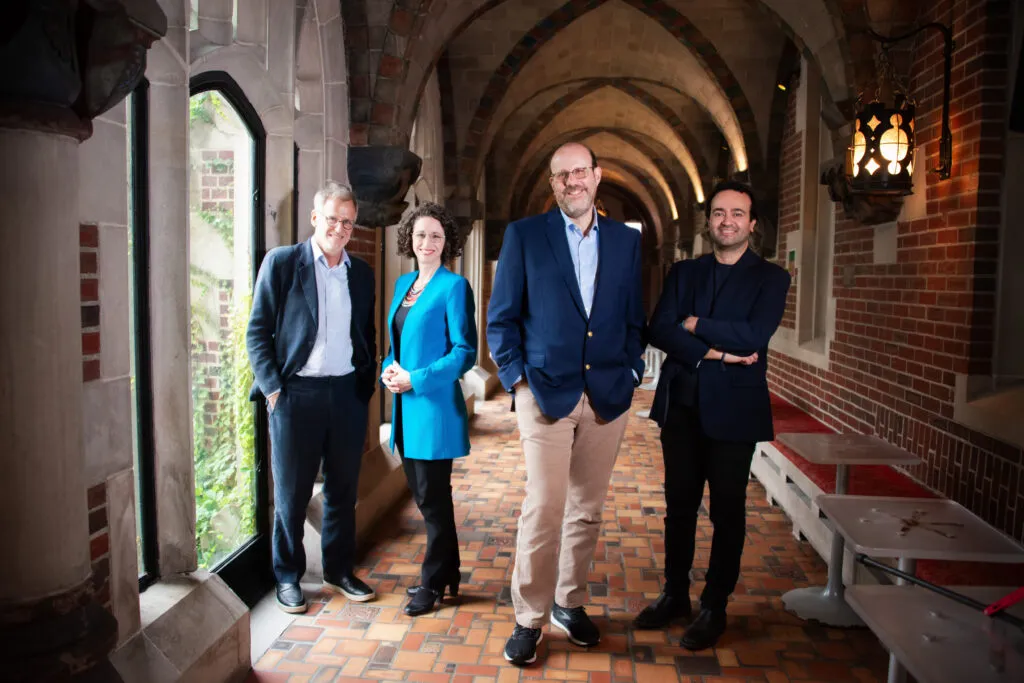
Over the last six months, the team and its collaborators reduced the time required to benchmark and adapt forecasting models from four to five months of expert labor to a single day of expert review. Prof. Rebecca Willett, who leads the team with Prof. Pedram Hassanzadeh, Prof. Ian Foster and Prof. Michael Kremer, said the platform asks whether a forecast helps a specific person make a better decision in a specific place.
An open platform for meteorological agencies
Laude funding will support new forecasting frameworks in the UChicago-Laude AI Almanac. The free, open-source platform is intended for meteorological agencies, governments and NGOs, allowing them to generate, evaluate and deploy forecasts tuned to their own geography, observations, decision needs and knowledge of local weather dynamics.
The platform is being designed to work without specialized technical expertise, supercomputing infrastructure or dense observational networks. It will cover agriculture as well as public health and warnings about compound climate extremes.
“This platform will significantly accelerate the translation of the AI-driven weather forecasting revolution into enhanced capabilities of the meteorological agencies that need it most,” said Hassanzadeh, according to the institute.
From farmers to hundreds of millions of people
From 2024 to 2026, the UChicago Human-Centered Weather Forecasts initiative worked with government agricultural ministries to send AI forecasts by text message to tens of millions of farmers in Africa and South Asia. In two seasons, governments in those regions used forecasts developed with the team to provide more than 50 million smallholder farmers with information about when the rainy season would arrive.
The forecasts correctly predicted an unusual stall in seasonal rains, giving farmers an early warning. Those who received the information on their phones could make more informed planting decisions, rather than planting too early and losing a crop.
The grant is intended to turn that work into a global platform covering more weather and climate hazards. The team is working with the OpenAI Foundation, the Gates Foundation, AIM for Scale, Precision Development and UC Berkeley on forecast delivery. A companion AIM for Scale training program, co-led by UChicago and the United Arab Emirates’ Mohamed bin Zayed University of Artificial Intelligence, is preparing government meteorologists from 14 countries to use the tools, with a goal of reaching 30 countries by 2027.
For users, the project could make locally relevant weather information more accessible without requiring each agency to build and maintain its own computing infrastructure. Foster said the team will draw on experience with Globus, a non-profit research data management platform, to help agencies adapt and deliver forecasts for their communities.
UChicago Data Science Institute: University of Chicago Team Wins $10-Million Laude Institute Grant to Advance AI Weather Forecasting for Low- and Middle-Income Economies