UNESCO opens third round of free AI and digital citizenship course, adds Portuguese
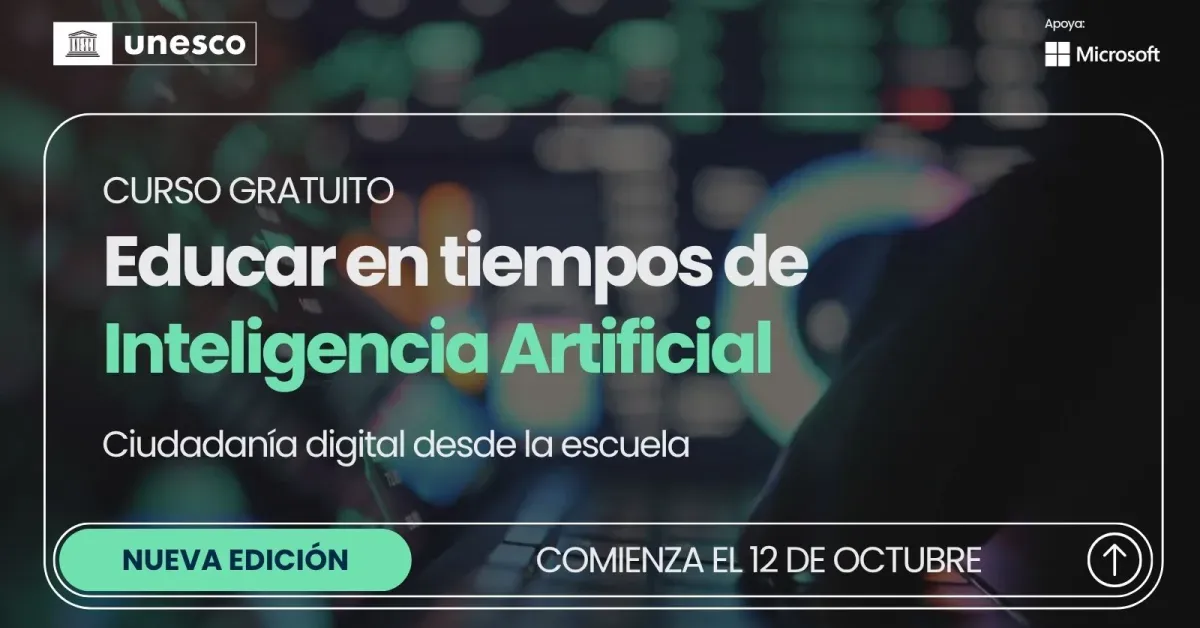
UNESCO has opened a third edition of its free online course on digital citizenship and artificial intelligence, adding a Portuguese version to the existing Spanish and English ones. The course, "Educating in the age of artificial intelligence: Digital citizenship at school," begins on 12 October 2026.
- UNESCO's free MOOC on digital citizenship and AI starts its third edition on 12 October 2026.
- A Portuguese version joins the existing Spanish and English versions.
- More than 33,000 people from over 113 countries registered in earlier editions, 61% of them women.
- The course has five modules and offers a UNESCO certificate for completing at least 80% of content and assessments.
- It was developed with the support of Microsoft and coordinated by UNESCO's Montevideo office.
Portuguese joins Spanish and English
The new edition widens the reach of the massive open online course (MOOC) with a Portuguese-language version. According to UNESCO, the aim is to make it easier for educators and other stakeholders across Latin America and the Caribbean to access tools and knowledge about the challenges and opportunities that artificial intelligence and digital environments bring to education and citizenship.
Zelmira May, Education Programme Specialist at the UNESCO Regional Office in Montevideo, said that adding Portuguese is "a fundamental step towards making this content accessible to more educators and communities across Latin America and the Caribbean." The course is coordinated by the Montevideo office and was developed with the support of Microsoft.
What the course covers
The MOOC is designed especially for teachers, education teams and social actors. It takes a broad approach to digital citizenship and addresses digital footprints, disinformation, information bubbles, the ethical use of artificial intelligence, coexistence in digital environments, the protection of rights and democratic participation.
UNESCO says the course does not treat AI solely as a pedagogical tool. Instead, participants are invited to understand how algorithms work, how they affect everyday life, and what ethical, social and educational challenges they pose.
The content is split into five thematic modules. They range from how algorithms work and influence everyday decisions to the challenges AI poses for teaching, assessment and meaning-making in the digital age. The format combines videos, expert insights, discussion forums and case studies, with an interdisciplinary approach grounded in the regional context. An open-access digital publication complements the course and explores the conceptual framework around AI and education in more depth.
Results from the first editions
UNESCO reports the following figures from the earlier editions:
- More than 33,000 registrations
- 61% of registered participants are women
- Participants from more than 113 countries
- A retention rate of over 34%
- An average rating of 9.61/10 for the academic quality of the course, according to participants
May described reaching more than 33,000 people as "a very encouraging result," adding that it motivates UNESCO to keep expanding the course's reach.
Registration and certification
Participation is free of charge, and registration is open on UNESCO Open Learning in Spanish, Portuguese and English. Participants who complete at least 80% of the course content and assessments are eligible for an official UNESCO certificate.
For teachers and school teams in Portuguese-speaking parts of the region, the new version removes a language barrier to a course that has so far drawn participants from more than 113 countries. The source does not specify further details on the Portuguese-language materials beyond their availability.
UNESCO (AI): UNESCO opens third edition of its course on digital citizenship and