UNESCO Santiago marks 25 years of IFAP with AI literacy events in Uruguay and Chile
UNESCO's Regional Office in Santiago marked the 25th anniversary of the Information for All Programme (IFAP) with two events in Montevideo and Santiago on critical literacy in the age of artificial intelligence. The events were part of an initiative that received IFAP funding in 2026.
- UNESCO Santiago marked IFAP's 25th anniversary with events in Montevideo (15 October) and Santiago (26 October).
- The events were part of a project that received IFAP funding in 2026, one of three supported worldwide.
- The project, run through UNESCO's Observatory on AI in Education for Latin America and the Caribbean, targets teachers, students and education authorities.
- Speakers said AI literacy must include evaluating information, identifying bias and understanding ethical and privacy implications.
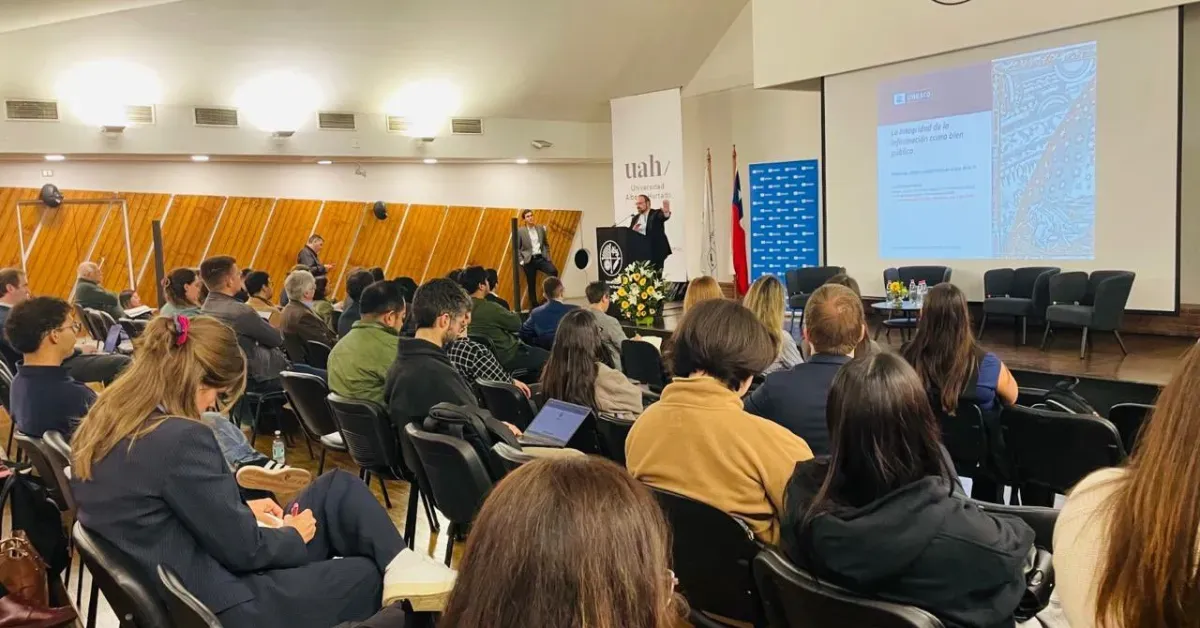
- Guilherme Canela gave the keynote "Information integrity as a public good" in Santiago.
Two events, two cities
The UNESCO Regional Office in Santiago held the commemoration in two parts. The first took place on 15 October at the MERCOSUR Building in Montevideo, in collaboration with Uruguay's Ministry of Education and Culture, as part of EduIA Conf 2026. It brought together specialists from Chile, Argentina and Uruguay to discuss how artificial intelligence is changing education, access to information and knowledge production.
Opening remarks came from Valtencir M. Mendes, Head of Education at UNESCO Santiago, and Andrea Vignolo Mosca, Director of International Cooperation and Projects at Uruguay's Ministry of Education and Culture. Contributors included Rayén Condeza Dall'Orso of the UNESCO-UC Chair on Media and Information Literacy in Digital Spaces at the Pontifical Catholic University of Chile, Roxana Morduchowicz, UNESCO Senior Adviser on Digital Citizenship, and Javiera Sánchez Ríos of Ceibal in Uruguay.
The second event followed on 26 October in the Chilean capital. It was co-organized with Universidad Alberto Hurtado as part of the university's Second Artificial Intelligence Week and Global Media and Information Literacy Week. The keynote, "Information integrity as a public good", was delivered by Guilherme Canela, Director of UNESCO's Section for Digital Policies and Digital Transformation in Paris and Secretary of the IFAP Programme. According to UNESCO, he addressed misinformation, artificial intelligence and the transformation of information ecosystems, and stressed the need to strengthen critical thinking and promote trustworthy information environments.
An IFAP-funded project on critical AI literacy
Both events belonged to a UNESCO Santiago initiative selected for international IFAP funding in 2026. It was one of three initiatives the Programme supported worldwide that year, alongside projects from West Africa and the Caribbean.
The project is run through UNESCO's Observatory on Artificial Intelligence in Education for Latin America and the Caribbean. According to UNESCO, it aims to strengthen critical AI literacy among teachers, students and education authorities by building the capacities needed to understand, evaluate and use these technologies ethically, critically and responsibly.
Esther Kuisch Laroche, Director of the UNESCO Regional Office in Santiago, said the Programme "reminds us that ensuring access to information also means developing the capacities needed to understand, evaluate and use it critically."
What the discussions stressed
According to UNESCO, the Montevideo dialogue highlighted that AI literacy must go beyond the technical use of tools. It should include competencies for critically evaluating information, identifying bias, recognizing misinformation risks, and understanding the ethical and privacy implications of these technologies. The event also addressed the importance of integrating media and information literacy into teacher education, education systems and public policies.
In Santiago, speakers from Chile, Argentina and Colombia, including Marcos Mendiburu, Alejandra Falabella, María Teresa Rojas, Tomás Durán and Francisco Fernández, discussed media and information literacy as a tool for meeting the challenges of digital transformation, strengthening citizens' capacities and contributing to the integrity of information ecosystems.
Why it matters for users
UNESCO links the Programme's 25 years of relevance to a challenge in everyday life: people need to access information, and also have the tools to understand it, assess its reliability and use it to make informed decisions. The organization points to skills ranging from recognizing misleading content on social media to using AI for learning and work. For teachers, students and education authorities in Latin America and the Caribbean, the funded project is meant to build those skills.
UNESCO (AI): UNESCO Santiago commemorated the 25th anniversary of the Information