Univers expands physical AI partnerships across critical infrastructure
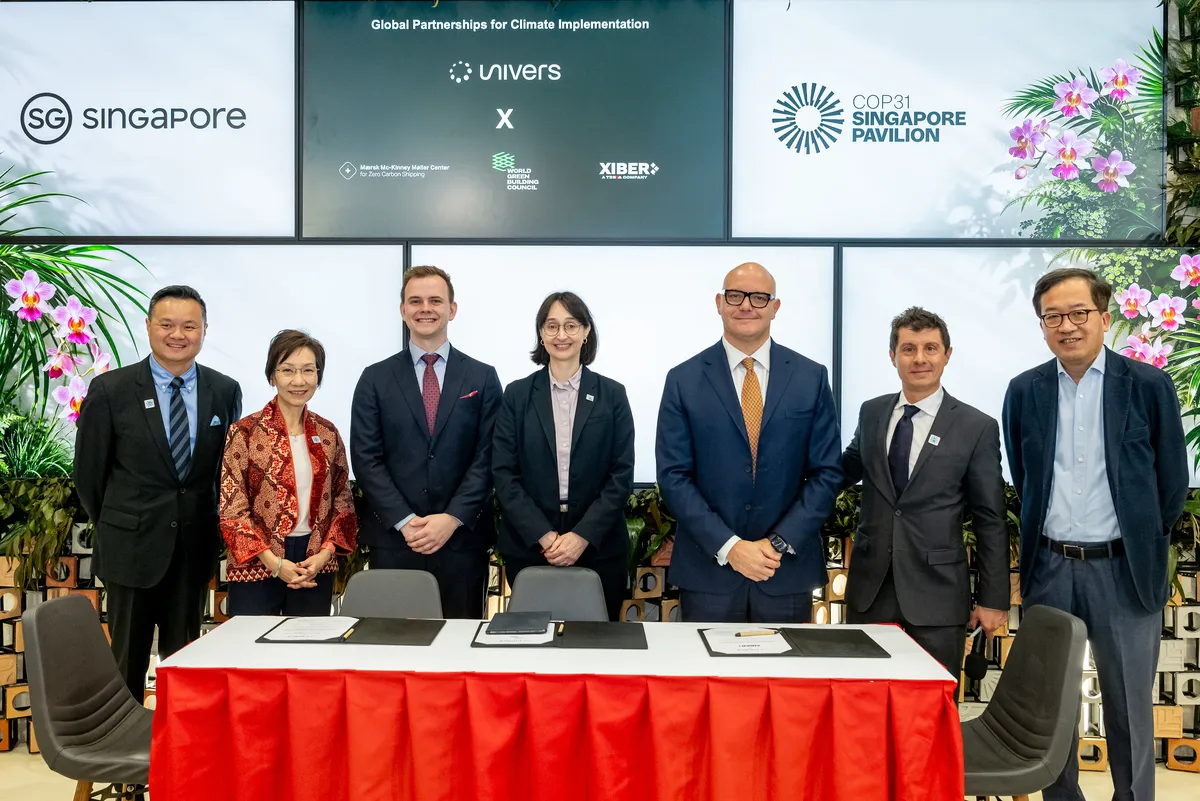
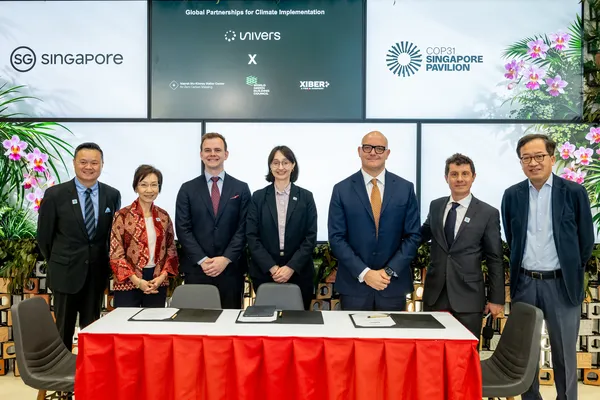
Univers has announced three partnerships aimed at applying its physical AI platform to buildings, maritime operations and industrial sites. The agreements with the World Green Building Council, the Mærsk Mc-Kinney Møller Center for Zero Carbon Shipping and XIBER Energy Solutions were signed at COP31.
- Univers signed three partnerships at COP31.
- The partners are the World Green Building Council, the Mærsk Mc-Kinney Møller Center and XIBER Energy Solutions.
- Projects cover buildings, maritime operations and industrial facilities.
- Univers launched a Return on Intelligence framework and technical report.
- Its platform connects more than 450 million devices and sensors across 45 markets.
Three partnerships target real-world infrastructure
The Singapore-based company formalised the agreements at the Singapore Pavilion during COP31 in Antalya, Turkey. Singapore’s Minister for Sustainability and the Environment, Grace Fu, witnessed the signing ceremony.
Univers describes physical AI as a way to connect operational technology, information technology and artificial intelligence so organisations can understand, optimise and orchestrate complex physical systems at scale. The company said the partnerships address the implementation challenges facing increasingly electrified and interconnected energy and infrastructure systems.
With the World Green Building Council, Univers will work through the council’s global network as its first global AI knowledge partner. The collaboration will examine how physical AI can support smarter building management and sustainable infrastructure, while contributing expertise to efforts to decarbonise the built environment.
Applications span factories, ships and ports
Through its agreement with XIBER Energy Solutions, the internal decarbonisation startup of TESYA Group, Univers will deploy physical AI across XIBER’s global customer and manufacturer base. The companies aim to help industrial organisations improve energy and operational performance while reducing emissions.
Univers will also become one of the first AI partners of the Mærsk Mc-Kinney Møller Center for Zero Carbon Shipping. Their collaboration will explore systemic decarbonisation in maritime operations, including ways to connect decisions involving vessels, fuels, ports and operations.
The maritime partnership is linked to Univers’ new Return on Intelligence framework, launched at COP31. The framework proposes evaluating the value AI creates in physical operations, including through operational decisions that can improve capital productivity, operating economics, revenue opportunities and barriers to growth. A technical report titled Return on Intelligence: How AI Changes the Economics of Transportation is being presented at COP31, with contributions from the shipping centre and perspectives from the transportation, energy and finance ecosystem.
A broader ecosystem across energy and transport
The COP31 announcements build on earlier agreements. Univers has expanded its collaboration with Voltalis in Europe to turn commercial building portfolios into flexible assets for the electricity grid. After an initial start in the United Kingdom and France announced in June, the organisations have begun exploring opportunities in additional regions.
In Singapore, Univers is strengthening its strategic partnership with SBS Transit. The expanded work applies physical AI to energy and operations, starting with electric bus management and potentially extending to railway maintenance.
Together, the partnerships extend Univers’ stated ecosystem across buildings, energy, public transport, maritime operations and industry. The company says more than 450 million devices and sensors are connected to its platform, and that approximately 20% of the world’s renewable energy capacity operates through its technology across 45 markets. For users and infrastructure operators, the announced collaborations point to a focus on applying AI to operational decisions and physical assets, rather than treating AI as a standalone software system.