Univers expands Physical AI partnerships across buildings, shipping and industry
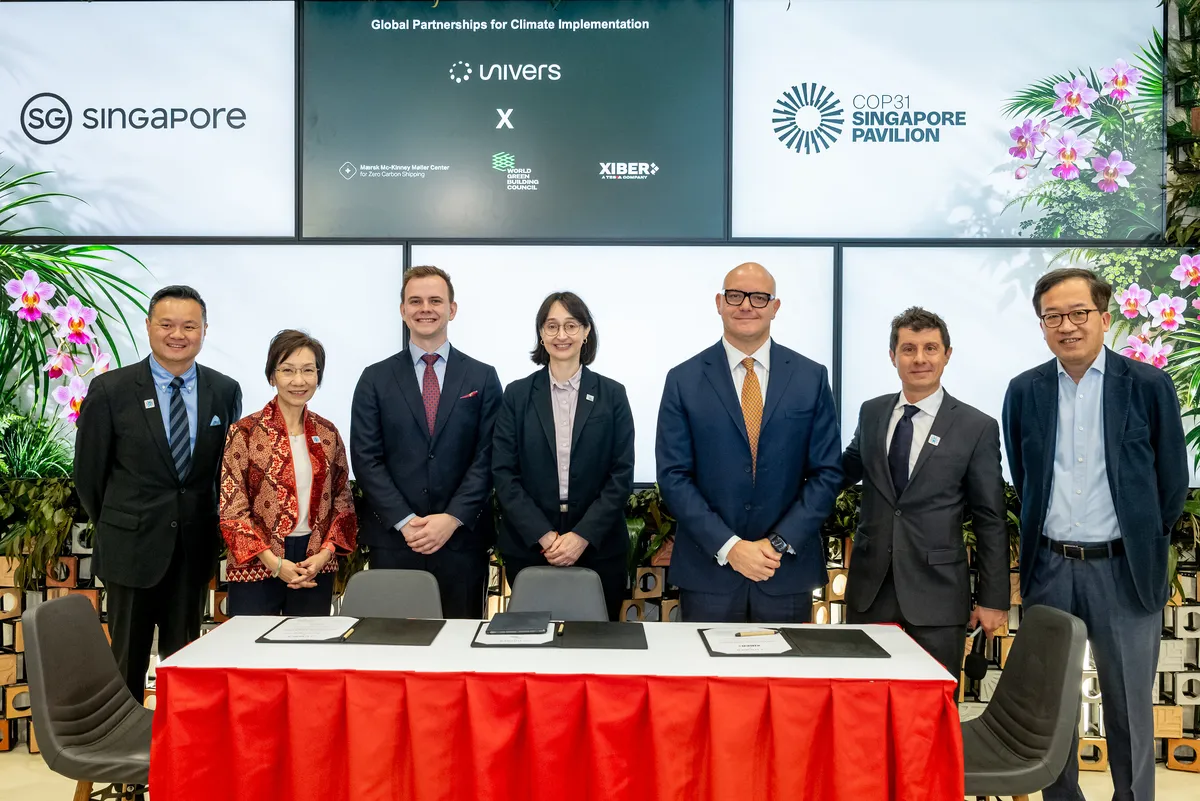
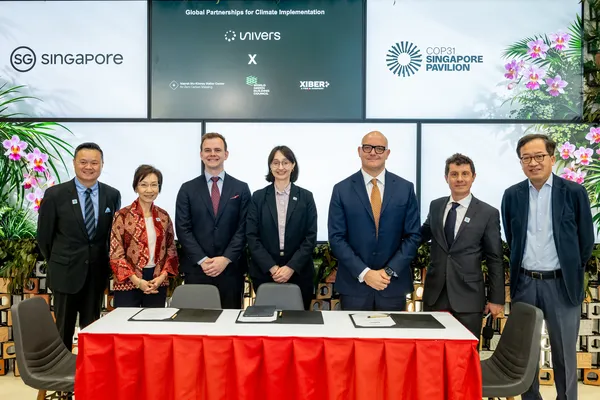
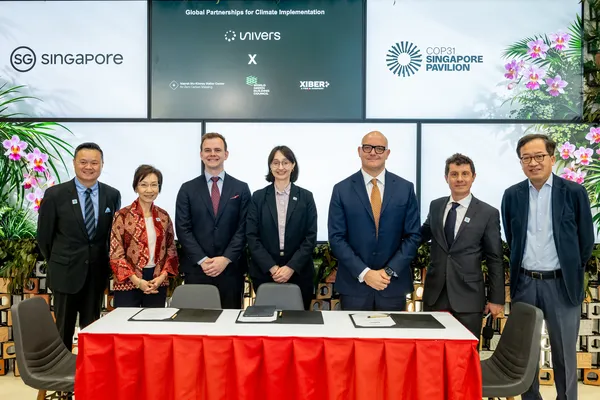
Univers has announced three global partnerships aimed at applying Physical AI to buildings, maritime operations and industry. The agreements were formalised at the Singapore Pavilion at COP31, where the company also launched a framework for assessing the business value of AI in physical systems.
- Univers signed three partnerships at the Singapore Pavilion at COP31.
- The partners are the World Green Building Council, the Mærsk Mc Kinney Møller Center and XIBER Energy Solutions.
- The collaborations cover buildings, maritime operations and industrial manufacturing.
- Univers launched its Return on Intelligence framework and a related transport whitepaper.
- Univers says its technology connects over 450 million devices and sensors across 45 markets.
Three partnerships target major infrastructure sectors
The Singapore headquartered company signed separate agreements with the World Green Building Council, the Mærsk Mc Kinney Møller Center for Zero Carbon Shipping and XIBER Energy Solutions. The signing ceremony was witnessed by Singapore’s Minister for Sustainability and the Environment Grace Fu.
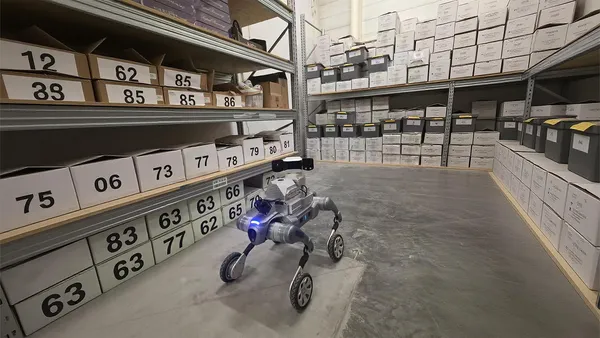
Univers describes Physical AI as an approach that connects operational technology, information technology and AI. Its Platform for Physical AI is designed to help organisations understand, optimise and orchestrate complex physical systems at scale.
Valerio Dilda, Senior Vice President of Europe at Univers, said the priority has moved from climate ambition to implementation across the physical economy. According to Dilda, combining the partners’ domain expertise with Univers’s technology could help countries develop energy systems that are “sustainable, resilient, affordable and sovereign”.
Applications range from buildings to maritime operations
Under the agreement with the World Green Building Council, Univers will become the organisation’s first AI Global Knowledge Partner. The companies will work with the council’s global network on intelligent building operations and sustainable infrastructure, with a focus on built environment decarbonisation.
Univers will also work with XIBER Energy Solutions, TESYA Group’s in house decarbonisation start up. The partnership will apply Physical AI across XIBER’s global industrial and manufacturing customer base, with the stated aim of improving energy and operational performance while reducing emissions.
In maritime, Univers will become one of the first AI partners of the Mærsk Mc Kinney Møller Center for Zero Carbon Shipping. Their collaboration will examine how AI can support decisions across vessels, fuels, ports and operations. It will also explore a Return on Intelligence framework focused on the economic and environmental value of more intelligent operational decisions.
Univers links AI adoption to operational value
The partnerships coincide with the launch of Univers’s Return on Intelligence framework at COP31. The framework is detailed in a whitepaper titled Return on Intelligence: How AI Changes the Economics of Transport, which includes input from the Mærsk Mc Kinney Møller Center for Zero Carbon Shipping and perspectives from the transport, energy and financial ecosystem.
Fox Chu, Senior Vice President and Global Head of Aviation, Transportation & Logistics at Univers, said the framework evaluates how better operational decisions create enterprise value. The company identifies improved capital productivity, stronger operating economics, new revenue opportunities and the removal of constraints to growth as examples.
The announcement adds to Univers’s earlier partnerships with Voltalis in Europe and SBS Transit in Singapore. Univers says its technology currently connects over 450 million devices and sensors, while approximately 20% of global renewable capacity runs through it across 45 markets. The figures are company claims.