USC Stevens School of Computing and AI Adds Six New Faculty Members
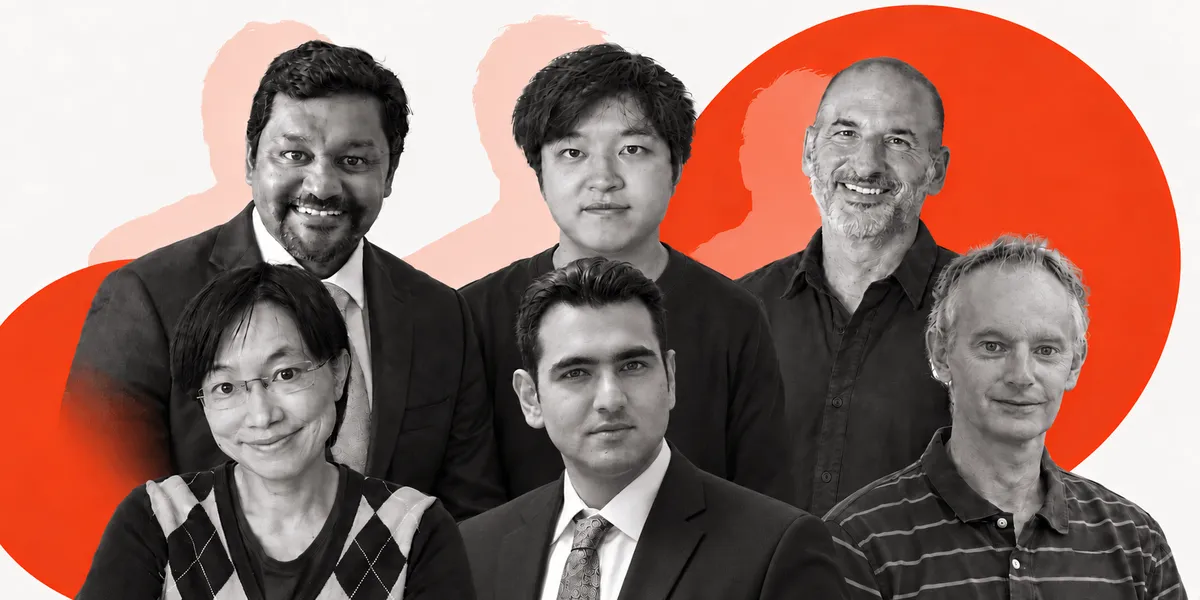
The USC Stevens School of Computing and Artificial Intelligence has welcomed six new faculty members whose work spans AI, computing and emerging hardware. The appointments come as USC expands its investment in AI and advanced computing through the newly named school.
- USC Stevens School of Computing and AI welcomed six new faculty members this year.
- Z. Morley Mao and Scott Mahlke join from the University of Michigan.
- Sasan Razmkhah, Haowei Shi, Itay Hen and Ajey Jacob join ECE in research appointments.
- Research areas include trustworthy machine learning systems, quantum computing, superconducting electronics and photonic AI accelerators.
- The hires come as USC expands its investment in AI and advanced computing.
Who is joining and where they come from
According to USC Viterbi, the six faculty are appointed across USC Stevens, the USC Ming Hsieh Department of Electrical and Computer Engineering (ECE) and the USC Thomas Lord Department of Computer Science. Their combined expertise covers machine learning systems, computer architecture, quantum computing, superconducting electronics, quantum information and next-generation computing hardware.
Two of them, Z. Morley Mao and Scott Mahlke, come to USC from the University of Michigan. Mao brings expertise in trustworthy machine learning systems, cybersecurity and autonomous systems. Mahlke contributes expertise in computer architecture and compiler-driven hardware design.
Four others join ECE in research appointments. Sasan Razmkhah and Haowei Shi continue their work at USC after postdoctoral and doctoral research at the university. Itay Hen and Ajey Jacob bring longstanding research leadership from the USC Information Sciences Institute (ISI), where they have led projects in quantum computing and advanced computing hardware.
Research focus of the new faculty
Mao, a computer science professor with a PhD from UC Berkeley, works on systems and security projects, including machine learning systems, cyber-physical systems and security for autonomous vehicles and drones. She has recently focused on trustworthy machine learning systems for autonomous vehicles and drones, and on a cloud-edge system for multimodal clinical screening to support rural health care.
Mahlke, an ECE professor with a PhD from the University of Illinois Urbana-Champaign, studies the intersection of computer architecture and compiler code generation. The goal, he says, is to automatically design highly customized hardware architectures for the applications they run.
Razmkhah, a research assistant professor, works on superconducting and cryogenic electronics for energy-efficient computing. His latest work under the GENESIS Mission explores AI and machine learning to develop design and optimization tools for superconducting integrated circuits, aiming to improve scalability, performance and design automation.
Hen, a research associate professor and principal scientist at ISI, focuses on computational physics and quantum computing. He develops algorithms for simulating quantum many-body systems and methods for benchmarking quantum computers, and leads the Hen Lab.
Shi, a research assistant professor, works on quantum sensing, quantum communication and quantum information theory. He developed an entanglement-enabled noiseless amplifier that boosts sensing and communication efficiency without adding noise.
Jacob, a research professor who leads the Application-Specific Intelligent Computing (ASIC) Lab, studies next-generation computing and sensing hardware, from materials and devices to circuits and architecture. His current projects include photonic compute-in-memory accelerators for AI inference, heterogeneous integration, beyond-CMOS devices and quantum system integration. He joined ISI after 16 years at Intel and GlobalFoundries.
Advice for students and the broader context
The faculty profiles also include advice for students. Mahlke says language models are great tools that everyone should use, but they are "not a substitute for your own understanding." Jacob advises students to focus on creating new knowledge through their own research rather than competing with AI on what is already known.
Razmkhah urges students not to be discouraged by negative attitudes about the future of their field, noting that every major technological shift changes the nature of work but also creates new opportunities.
USC says the newly named USC Stevens School serves as a hub for interdisciplinary research, education and innovation in AI. The university's broader computing initiatives are advancing research and education in areas including AI, quantum technologies and hardware for machine learning, while efforts across USC explore how AI can accelerate scientific discovery and address challenges in security and other fields.
For students and collaborators, the hires strengthen USC's profile in areas where AI meets hardware and quantum research, with several of the new faculty working directly on AI accelerators, AI-assisted chip design tools and trustworthy machine learning systems.
USC Viterbi (AI): Six New Faculty Join USC Stevens School of Computing and AI This Year