USC Viterbi Leans Into AI After $200 Million Stevens Gift
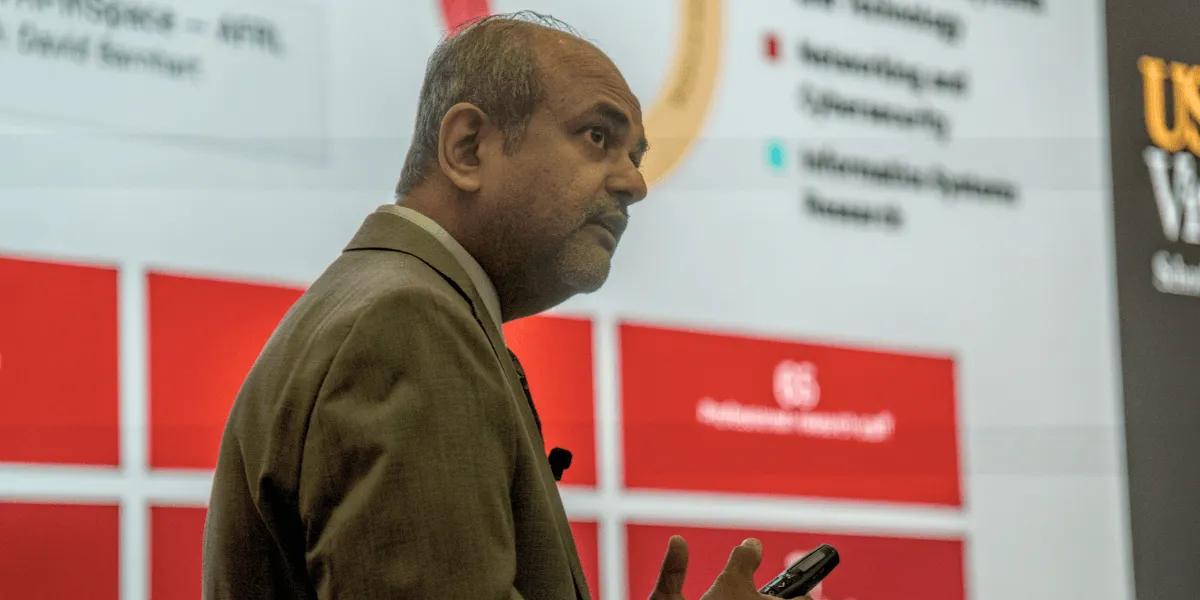
The USC Viterbi School of Engineering is building its next phase around artificial intelligence, backed by a $200 million gift from Mark and Mary Stevens and a new undergraduate AI degree. Interim dean Gaurav Sukhatme laid out the plan in his first State of the School address on September 24.
- A $200 million gift from Mark and Mary Stevens established the USC Stevens School of Computing and Artificial Intelligence.
- USC Viterbi launched a Bachelor of Science in Artificial Intelligence, with its first class starting this fall.
- In fiscal year 2026 the school recorded $148 million in research expenditures, excluding subcontracts, plus $63 million in subcontracts.
- A new practicum requirement will give every student at least one hands-on experience.
- Sukhatme cited declining master's enrollment and changing conditions for international students as pressures.
A $200 million gift and a new AI degree
Sukhatme, who is also director of the USC Stevens School of Computing and AI, described the school as one with 8,000 students, more than 800,000 square feet of space and over $200 million in annual research activity. He said the presentation offered only "selective slices" of everything happening at the school.
One of the year's biggest developments was a $200 million investment from Mark and Mary Stevens, which is among the largest gifts in USC history. It established the newly named USC Stevens School of Computing and Artificial Intelligence and will help expand AI research and education across USC's 23 schools. Sukhatme called it "a catalyst for amazing change."
The gift arrives as USC Viterbi launches a new Bachelor of Science in Artificial Intelligence. The interdisciplinary degree is jointly administered across three departments, and the first class began this fall.
Where the school wants to lead
Sukhatme named five areas where USC Viterbi has the expertise and opportunity to lead:
- artificial intelligence
- semiconductors and photonics
- materials and manufacturing
- quantum computing
- engineering for medicine
He pointed to recent results as evidence of momentum. Several USC projects were selected through the U.S. Department of Energy's GENESIS Mission, a national effort using AI to accelerate scientific discovery, and many of the winning projects are led by USC Viterbi faculty. The NSF-awarded Artificial Intelligence Institute for Advances in Optimization (AI4OPT), where USC's Bistra Dilkina is a co-principal investigator, recently received a five-year, $20 million renewal.
On quantum computing, Sukhatme said: "This is an area of strategic importance where we need to be playing."
In fiscal year 2026, the school recorded $148 million in research expenditures, excluding subcontracts, plus another $63 million in subcontracts. More than 400,000 square feet of its footprint is dedicated to research. Its faculty includes 33 members of the National Academy of Engineering, four members of the National Academy of Sciences, two members of the National Academy of Medicine, one Turing Award winner and two National Medal of Technology recipients. On November 17, the school hosts the New Space Economy Forum, which brings USC researchers together with companies from Southern California's space ecosystem.
A practicum for every student
Sukhatme also described a change for the school's approximately 2,700 undergraduates, more than 4,000 master's students and more than 1,000 Ph.D. students. A new practicum requirement will ensure every student completes at least one meaningful hands-on experience. That could be an internship, research, a student design team or work with a nonprofit.
"We are determined to make experiential learning more and more a facet of what we do at Viterbi," he said. The requirement builds on existing opportunities such as CURVE undergraduate research, student organizations, rocketry and projects in the Baum Family Maker Space.
Anniversaries and enrollment pressures
The address also marked several anniversaries. The Alfred Mann Department of Biomedical Engineering turned 50 and became a joint department between USC Viterbi and the Keck School of Medicine of USC. The Thomas Lord Department of Computer Science and the John Brooks Slaughter Center are also marking 50 years, and the Ming Hsieh Department of Electrical and Computer Engineering is celebrating 20 years since its naming.
Sukhatme acknowledged challenges facing engineering schools: declining master's enrollment, changing conditions for international students, limits on undergraduate growth and increased competition. The school is exploring ways to reach domestic students, including expanded online and asynchronous programs. "We can't simply accept this and say nothing can be done," he said. "We need to think creatively."
For students and prospective applicants, the changes point to a school that is tying its growth to AI education and to required practical experience, while working to offset enrollment headwinds.
USC Viterbi (AI): State of the School 2026: Built for What Comes Next