VIAVI to Model Private 5G for Blackpool’s Trams and Buses
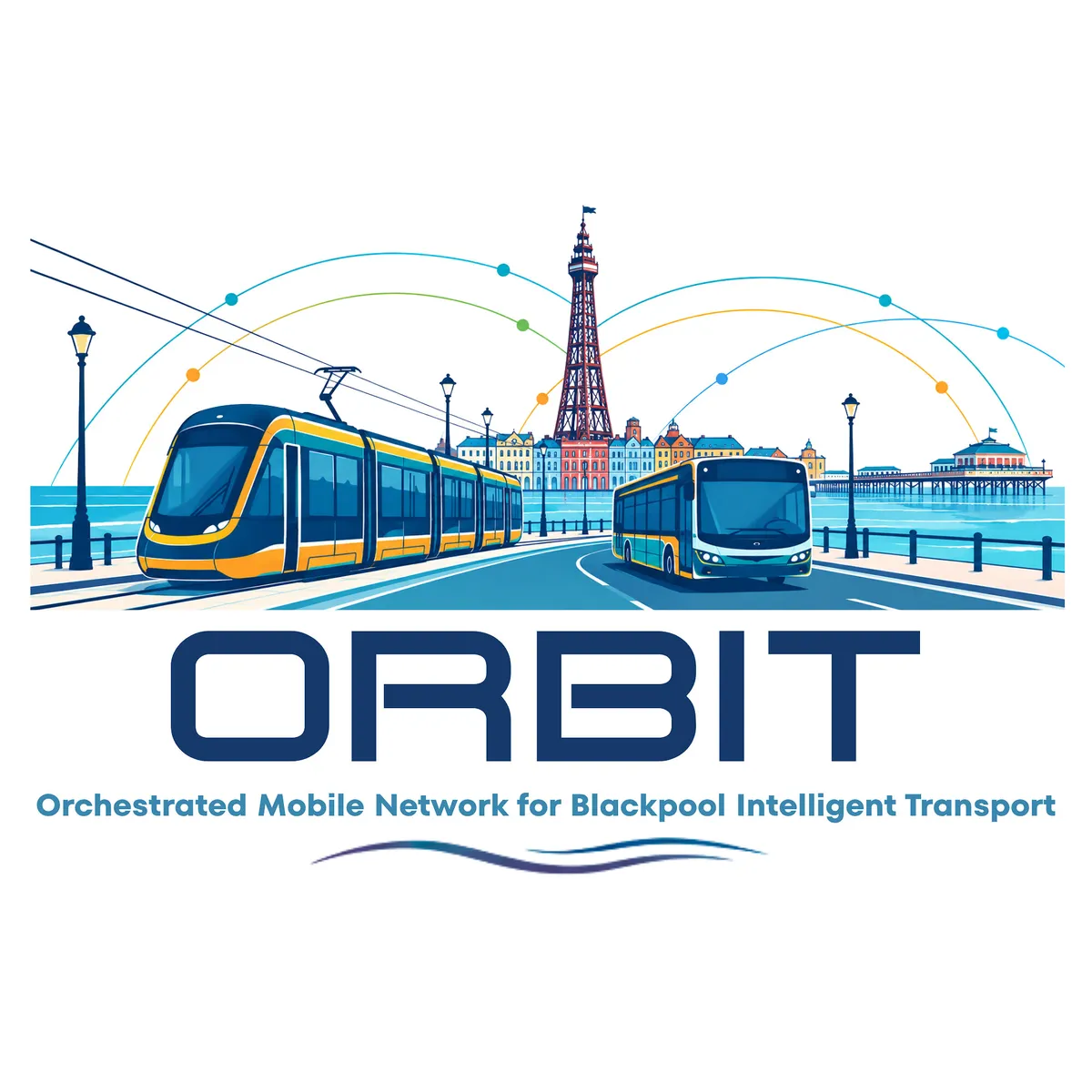
VIAVI Solutions has joined ORBIT, a UK-backed project that will use digital twin technology to plan and validate a private 5G network across Blackpool’s tramway and bus network. The project will test a multi-vendor Open RAN deployment in a live public transport environment.
- VIAVI has joined the UK-funded ORBIT private 5G project.
- The network will cover Blackpool’s tramway and bus network.
- VIAVI will model routes with its Network Digital Twin and TeraVM AI RSG.
- Use cases include CCTV, onboard multimedia and operational technology communications.
- The consortium will produce demonstrators, assurance reports and a reference architecture.
Digital twin for a live transport network
ORBIT, short for Orchestrated mobile Network for Blackpool intelligent transport, is funded by the UK Department for Culture, Media and Sport and Innovate UK. The project has a total budget of approximately $4.15 million and will integrate and assure a standalone non-public 5G network, also known as an SNPN, across Blackpool’s trams and buses.
VIAVI will use its Network Digital Twin, based on the TeraVM AI RAN Scenario Generator, to model Blackpool’s tram and bus routes. The model will allow project teams to refine and test control routines against realistic traffic scenarios before field trials take place.
According to VIAVI, this process is intended to validate performance, resilience and energy efficiency at the system level. Testing before equipment is deployed on the streets could also reduce technical risk and integration overhead, the company said.
Testing Open RAN components together
The project is focused on a challenge facing private 5G deployments: operators must bring together equipment from multiple vendors while establishing that the components perform as a complete system. ORBIT will concentrate on integration and assurance, rather than testing individual network elements in isolation.
Planned use cases include live CCTV streaming for incident management, multimedia delivery to onboard screens and a network slice for operational technology communications. These applications will be demonstrated on Blackpool trams and buses as part of the project.
VIAVI said its digital twin approach can provide a way to test network behavior and AI-driven control before live deployment. “ORBIT gives us a live reference case for applying our digital twin capabilities to network deployments across critical sectors to reduce cost and risk,” said Ian Langley, VIAVI’s Senior Vice President and General Manager, Wireless, Security and Applications.
Consortium will produce reference materials
VIAVI is working with Blackpool Council, which leads ORBIT, along with the University of York and Hitachi Rail. The consortium will deliver live demonstrators on Blackpool’s trams and buses, interoperability and assurance reports, and a replicable reference architecture.
Those outputs are intended to support early market evaluation of assured 5G solutions. The project therefore links the field deployment with documentation that can be used to assess how similar network designs might be integrated and assured.
Why the project matters
For transport operators, the project offers a live environment in which private 5G and multi-vendor Open RAN can be assessed before broader deployment. The source describes private 5G as increasingly important to safer and more resilient transport, while ORBIT addresses the limited evidence available on how Open RAN components perform together as a procurable system.
VIAVI also sees applications beyond public transport. Langley said the same approach could be applied to “utilities, airports, ports, advanced manufacturing sites and other nationally significant infrastructure.” The Blackpool deployment will serve as the company’s live reference case for that wider use of network digital twins.