Vultr Hackathon Winners Build Agents for Kernels, Browsers and RL
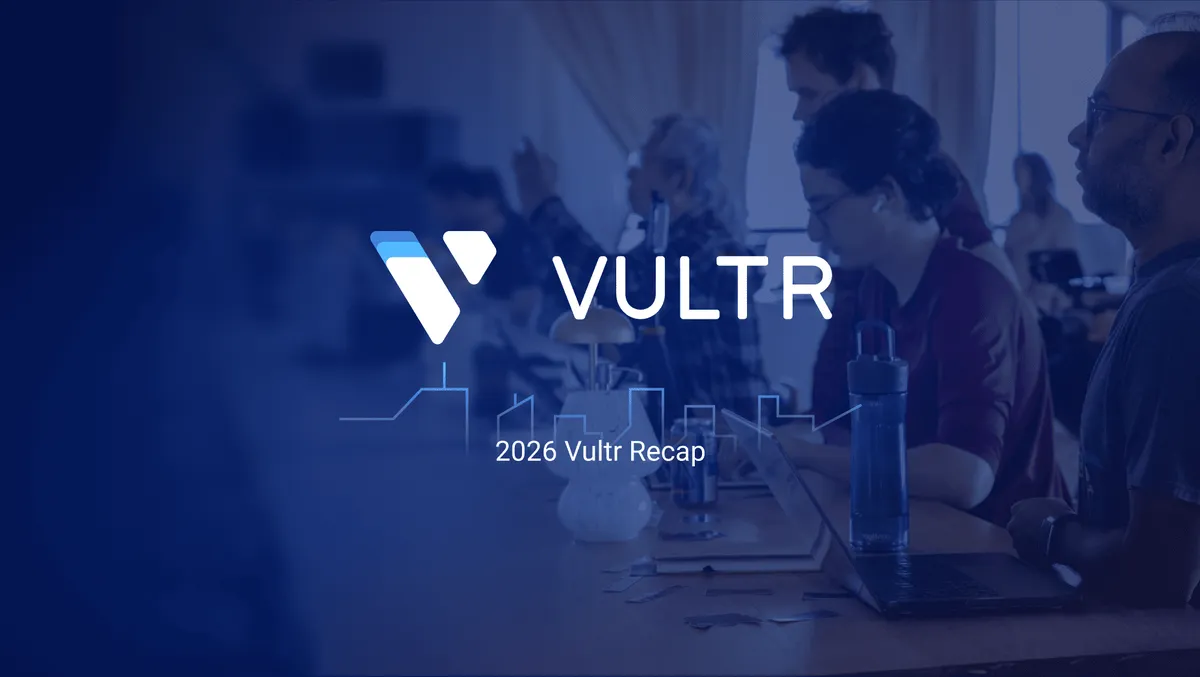
Vultr and Cerebral Valley ran the Agent Arena Hackathon in San Francisco, where developers used Vultr infrastructure to build production-ready enterprise agentic systems. Vultr highlighted three winners: Nusa, Skeleton Key and RL Forge.
- Vultr and Cerebral Valley held the Agent Arena Hackathon in San Francisco.
- Nusa rewrites a model's slowest kernel for a user's CPU, with up to twice-as-fast decode time on AMD's Llama 3.1 8B, according to Vultr.
- Skeleton Key turns websites without an API into callable MCP, REST or OpenAPI interfaces.
- RL Forge raised accuracy from 2/20 to 5/20 on a mathematics evaluation and engineering repairs from 3/20 to 7/20 on a LEGO bridge environment.
Infrastructure as the focus
According to Vultr, successful agentic AI relies on two pillars: the agents themselves, and the infrastructure supporting them. The company argues that agents have progressed to a point that requires better infrastructure, and that was the theme of the hackathon.
Competitors worked with tools such as Vultr Serverless Inference, Vultr Cloud Compute and VM backends. The goal was to apply that infrastructure to enterprise agentic systems that are ready for production.
Nusa: faster models on existing CPUs
Nusa is built to make AI models run faster on the CPU servers a user already has. After the user picks a model, Nusa rewrites the model's slowest kernel to run on the user's exact CPU and returns the faster version.
Nusa is an LLM running on Vultr Serverless Inference. In the hackathon it tailored models for Vultr VX1 Cloud Compute, reading a profile of the model and rewriting the kernel that took the most time. It is designed to run unattended, with every attempt running in a throwaway microVM with no network. According to Vultr, it produced up to twice-as-fast decode time on AMD's Llama 3.1 8B. The project comes from Alazar Shenkute.
Skeleton Key: an API for sites without one
Skeleton Key gives agents access to websites people use every day, including those with no API. Vultr describes its own platform as the entire control plane for the project, using Vultr Cloud Compute VMs, Vultr VPC, Vultr Serverless Inference, Vultr Container Registry, Vultr Object Storage and more.
Vultr gives an example: an agent such as Claude Code or Codex cannot reach a user's Luma account, because Luma lacks an API and MCP. Skeleton Key turns the site into an API the agent can call. It walks the site, clicks by numbered element IDs, records the site's requests, turns each request into an operation, and runs and verifies the operations in a sandbox.
- Results can be published as an MCP, REST, OpenAPI spec, and downloadable Python.
- Personal data is redacted.
The project was built by Carl Okpala and Jiyun Park.
RL Forge: papers into training environments
With RL Forge, users upload a paper or specification, and the system builds exercises with a standalone evaluation runtime in which an agent learns through trial and error. It combines document extraction, task generation, sandbox execution and reward verification to create an environment where agents learn by doing.
Vultr reports two results. On a mathematics evaluation, accuracy improved from 2/20 to 5/20. On an eight-turn LEGO bridge environment, successful engineering repairs rose from 3/20 to 7/20. RL Forge was built by Vishnu Vennelakanti.
What it means
Vultr says the three projects reinforced the potential of agentic AI, provided it is built on infrastructure that can support it. The company presents itself as that layer and says the developers at the event are the ones who will power the agentic enterprise. For teams building agents, the winners show the range of work Vultr is positioning its platform for: model optimization, web access for agents, and training environments.