Study finds $360 billion AI gains gap among Commonwealth nations
A new study from the Ayre Think Tank calculates a $360 billion difference in potential economic gains from AI between the Commonwealth countries best prepared for the technology and those lagging behind. The Ayre Index was unveiled at the Commonwealth Heads of Government Meeting in Antigua and Barbuda.
- The Ayre Index covers 732 million people aged 15 to 29 across all 56 Commonwealth states.
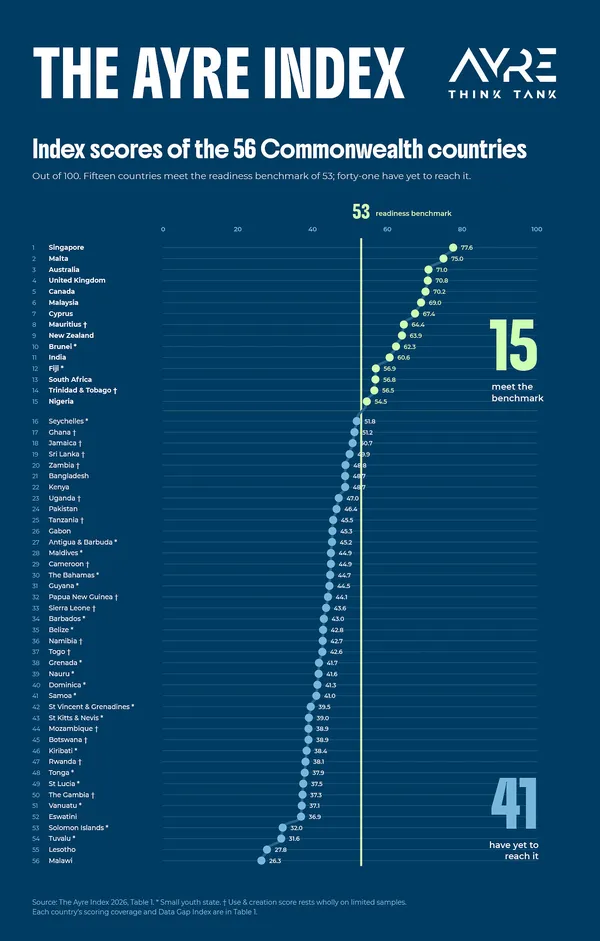
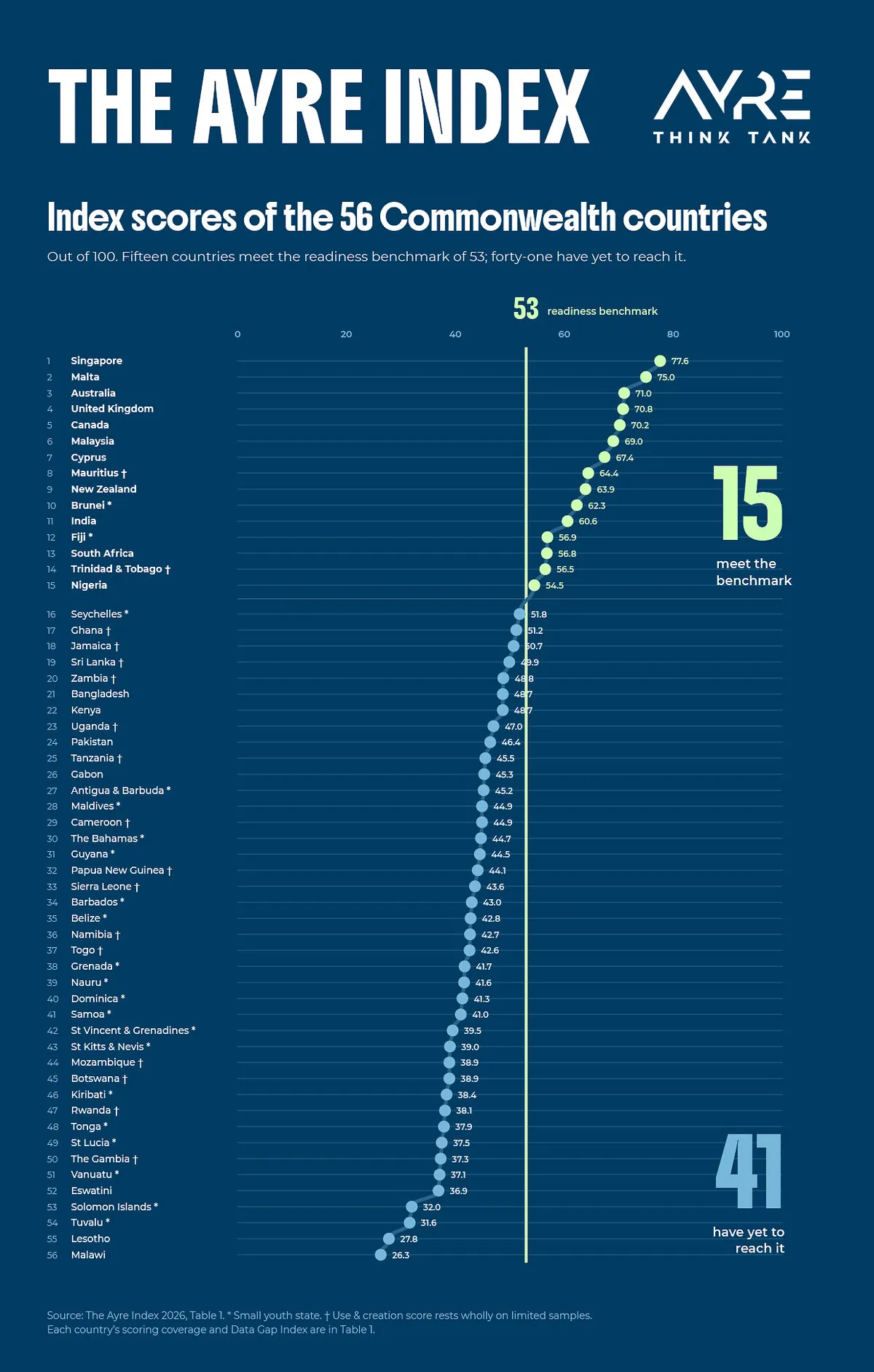
- Only 15 countries met the benchmark for youth AI readiness.
- Ready nations could gain $389.2 billion in economic level after 10 years, versus $29.2 billion for the other 41, in the middle scenario.
- Singapore ranked first; Malawi and Lesotho finished last.
- The study says access alone is insufficient without skills, affordable connectivity and routes into work.
What the Ayre Index measured
The Ayre Index examined conditions facing 732 million people aged 15 to 29 across all 56 Commonwealth member states. It assessed how ready each country is for young people to benefit from artificial intelligence. According to the think tank, the study drew on 1,128 sources.
Only 15 countries met the index's benchmark for youth AI readiness. Under the study's middle scenario, those nations could see a combined $389.2 billion increase in the level of their economies after 10 years. The other 41 countries could see $29.2 billion combined.
The resulting $360 billion gap is twice the size of the $174 billion in development aid given by the world's major donor countries last year, according to the study.
Rankings and regional picture
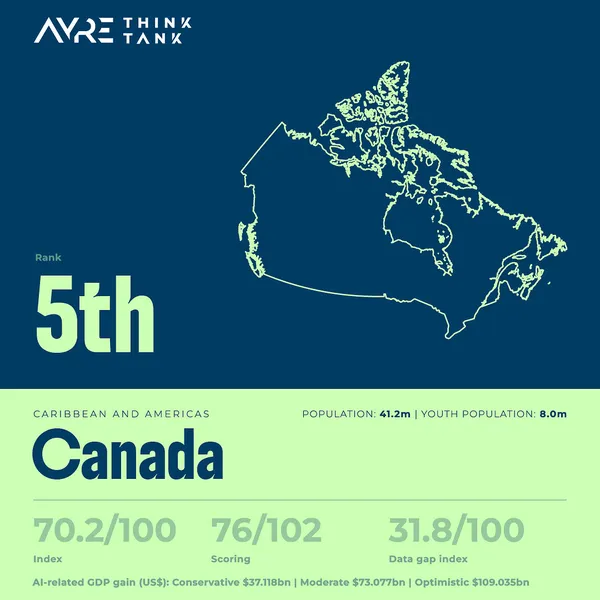
Singapore topped the rankings, followed by Malta, Australia, Britain and Canada. Malawi and Lesotho finished last.
Among the Commonwealth's 21 African members, only Mauritius, South Africa and Nigeria reached the readiness benchmark.
The research suggests that installing networks does not automatically create opportunity. In Togo, 4G coverage reaches almost everyone, yet fewer than half of young people report using the internet. In Malawi, electricity reaches a fifth of the population.
Enthusiasm and jobs do not close the gap
The study also found gaps where enthusiasm is high. About 90% of young Nigerians surveyed expected to use AI for work or education within a year, but Nigeria scored just 0.8 out of 10 on measures of conventional digital capability.
Meeting the benchmark does not guarantee employment either. South Africa qualified, but unemployment stood at 46.3% among its young labour force.
The study also exposed how little comparable evidence exists about young people's actual AI capabilities in some countries.
What it means
Calvin Ayre, entrepreneur, philanthropist and founder of the think tank behind the index, said: "AI is going to change how we work, how we do business and how wealth is created. Nobody can afford to be complacent." Governments, he said, must give young people the skills and opportunities to succeed.
The study's central warning is that access alone is insufficient. It says skills, affordable connectivity, routes into employment and support for entrepreneurs will determine whether AI creates new businesses and better jobs, or reinforces existing economic divides.