Ayre Index: AI Readiness Gap Could Cost Poorer Commonwealth Nations $360 Billion
Artificial intelligence risks deepening the divide between rich and poor nations, according to a new study from Ayre Think Tank that estimates a $360 billion gap in potential economic benefits among Commonwealth countries. The Ayre Index was presented at the Commonwealth Heads of Government Meeting in Antigua and Barbuda.
- The Ayre Index covers 732 million people aged 15 to 29 in the 56 Commonwealth member states.
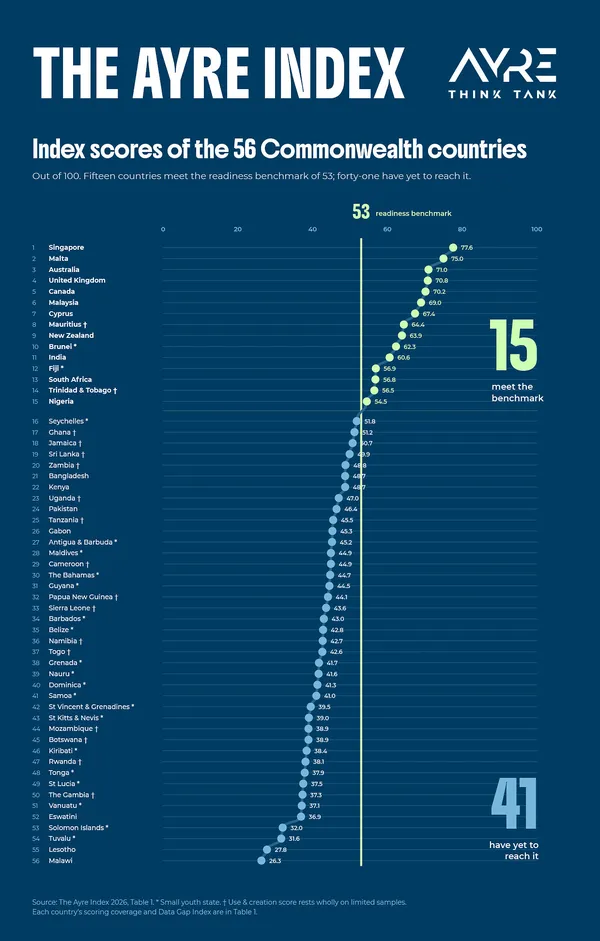
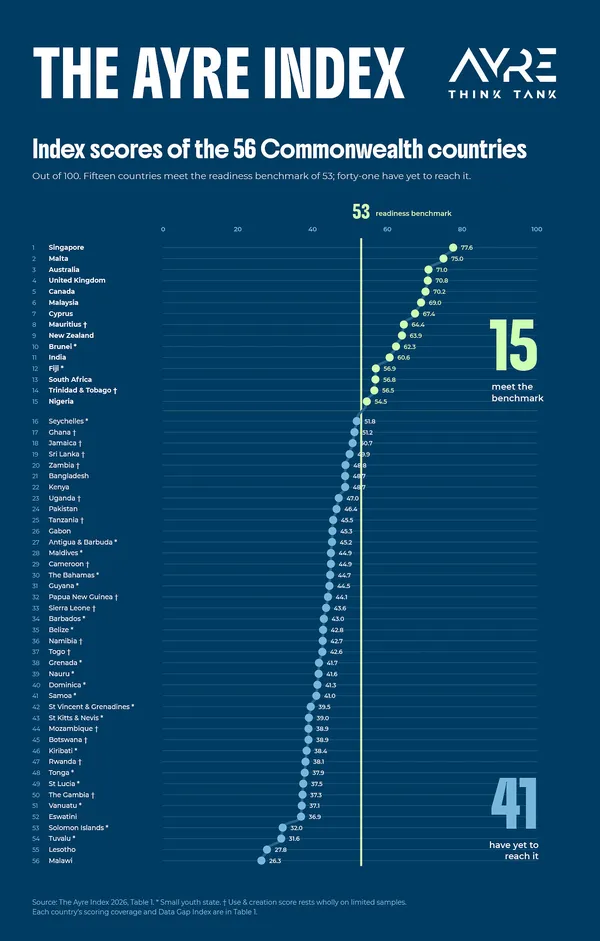
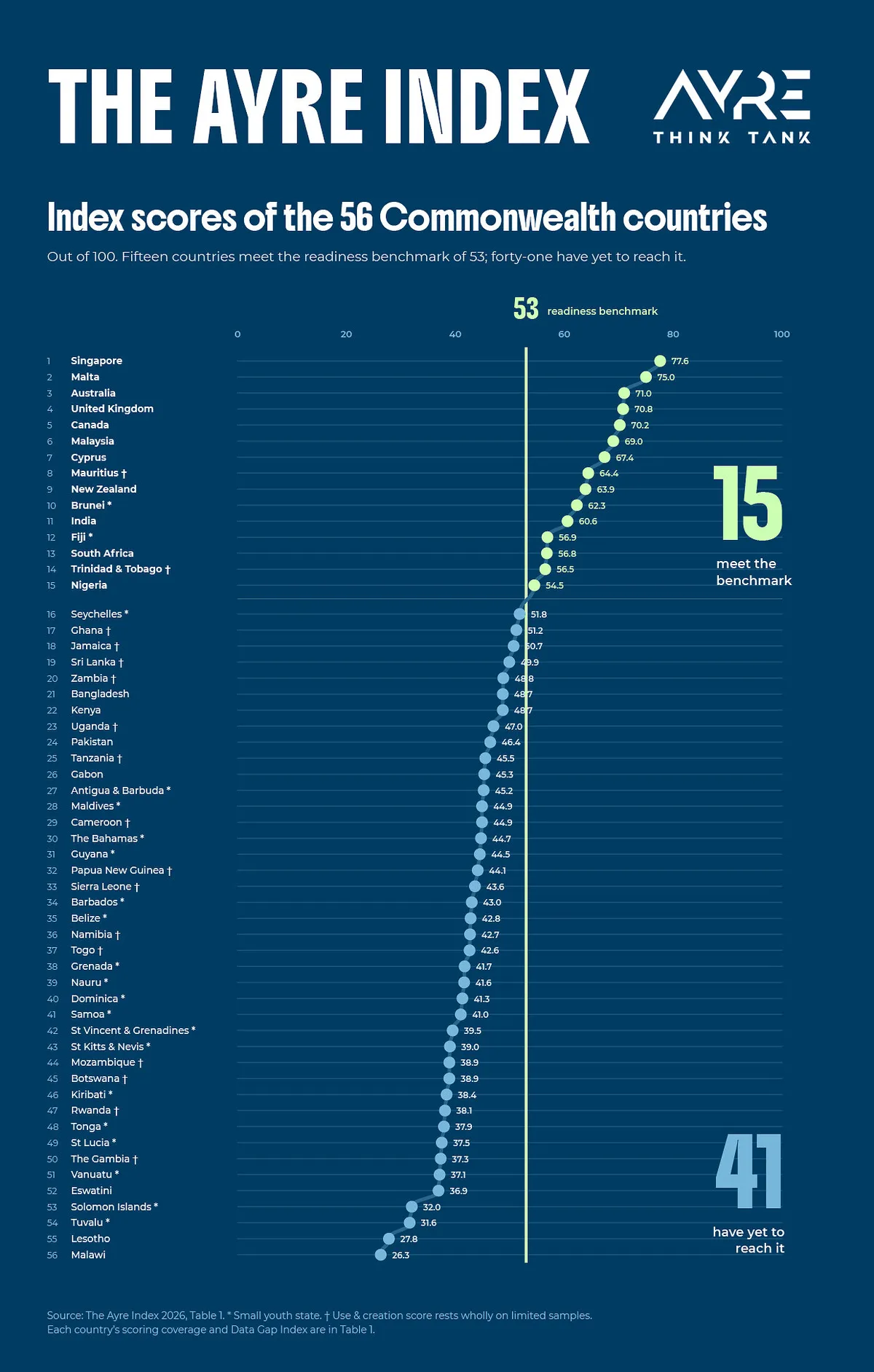
- Only 15 countries reached the AI readiness threshold for young people.
- The projected gap in economic benefits is $360 billion over 10 years, in the study's middle scenario.
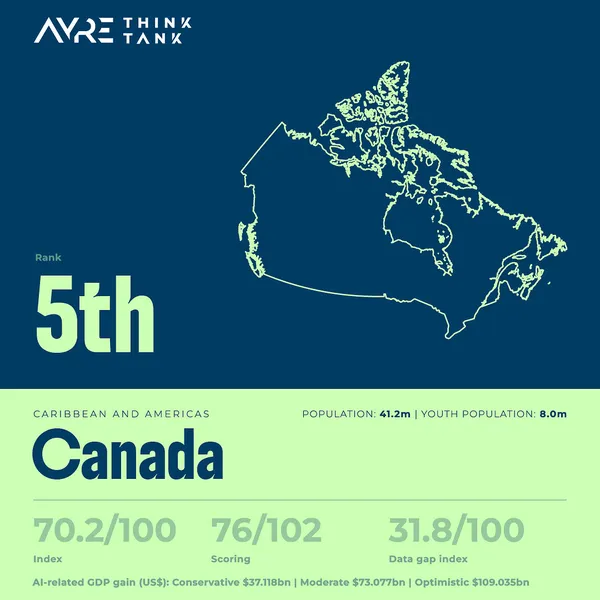
- Singapore, Malta, Australia, the UK and Canada lead; Malawi and Lesotho rank last.
- Skills, affordable connectivity and job pathways matter more than network access alone, the study says.
What the Ayre Index measured
The Ayre Index examined the situation of 732 million people aged 15 to 29 across the 56 member states of the Commonwealth. It assessed how prepared young people in each country are for artificial intelligence. Only 15 countries reached the readiness threshold set by the study.
Under the study's middle scenario, those 15 nations could see a combined economic gain of $389.2 billion over 10 years. The other 41 countries would add $29.2 billion. The difference of $360 billion is roughly double the $174 billion that the world's main donor countries spent on development aid last year, according to the study.
Singapore topped the ranking, followed by Malta, Australia, the United Kingdom and Canada. Malawi and Lesotho placed last. Of the 21 Commonwealth members in Africa, only Mauritius, South Africa and Nigeria met the readiness threshold.
Connectivity does not guarantee opportunity
The research suggests that rolling out networks does not automatically create opportunities. In Togo, 4G coverage reaches almost the whole population, yet fewer than half of young people say they use the internet. In Malawi, electricity reaches only one fifth of the population.
Gaps also appear where enthusiasm is high. About 90% of the young Nigerians surveyed expected to use AI in their work or studies within a year. Even so, Nigeria scored just 0.8 out of 10 on conventional digital skills indicators.
Meeting the benchmark does not secure jobs either. South Africa met the requirements, but unemployment among its young workforce stood at 46.3%.
Warning from the founder and limits of the data
Calvin Ayre, the businessman and philanthropist who founded the think tank behind the index, said: "La IA va a transformar nuestra forma de trabajar, de hacer negocios y de crear riqueza. Nadie puede permitirse caer en la autocomplacencia". In English, that means AI will change how people work, do business and create wealth, and nobody can afford to be complacent. He said governments must give young people the skills and opportunities they need to succeed.
The study drew on 1,128 sources. It also revealed that comparable evidence about young people's real AI skills is scarce in some countries, which limits how complete the picture can be.
What it means
The study's central warning is that access alone is not enough. According to the report, skills, affordable connectivity, pathways into employment and support for entrepreneurs will decide whether AI produces new businesses and better jobs, or instead reinforces existing economic divides. For governments in the Commonwealth, the findings point to investment well beyond network coverage if young people are to benefit from the technology.
PR Newswire: El auge de la IA amenaza con ampliar la brecha entre naciones ricas y pobres