Chile's Supreme Court and UNESCO Step Up Talks on AI in the Justice System
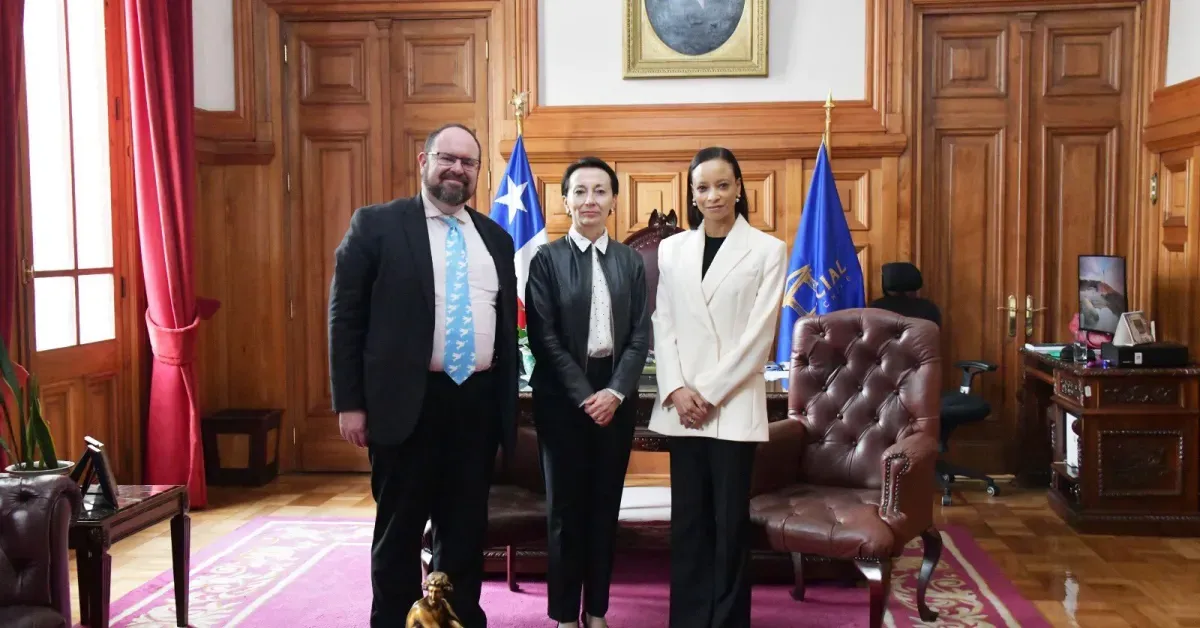
The Supreme Court of Chile and UNESCO have opened a new round of dialogue on artificial intelligence in the judicial sphere, with a focus on training and knowledge exchange. UNESCO officials met the court's president, Gloria Ana Chevesich, on 26 October, according to a UNESCO report published on 30 October 2026.
- UNESCO officials met Chile's Supreme Court President Gloria Ana Chevesich on 26 October to discuss AI in the judicial sphere.
- Possible collaboration areas are judicial training and knowledge exchange.
- According to UNESCO, its Global Initiative for Judges has since 2013 strengthened the capacities of more than 39,000 judicial actors in over 160 countries.
- UNESCO's cooperation with the Chilean judiciary dates back to 2014.
- No concrete programme or agreement was announced.
Who met and what was discussed
Esther Kuisch Laroche, Director of the UNESCO Regional Office in Santiago, and Guilherme Canela, Director of UNESCO's Division for Digital Inclusion and Policies and Digital Transformation in Paris, met with Gloria Ana Chevesich, President of the Supreme Court of Chile. The aim, according to UNESCO, was to exchange experiences and explore opportunities for collaboration on artificial intelligence and its growing presence in the judicial sphere.
The two institutions discussed possible areas for collaboration in training and knowledge exchange. They took into account the experience and areas of work of each organization, as well as their shared interest in deepening reflection on the opportunities that artificial intelligence offers for justice.
UNESCO's judicial training track record
The UNESCO representatives presented the Global Initiative for Judges. According to UNESCO, the programme has since 2013 contributed to strengthening the capacities of more than 39,000 judicial actors in over 160 countries. UNESCO says this work has promoted the exchange of knowledge and experiences among judicial professionals from different regions of the world.
Kuisch Laroche said UNESCO greatly values the dialogue with the Chilean court. In her words, it "allows us to share experiences and explore new possibilities for collaboration in an area of growing importance." She added that UNESCO hopes to continue strengthening the exchange, "making our international experience available while also learning from the perspectives and progress of the Chilean judiciary."
A relationship that goes back to 2014
UNESCO notes that cooperation with the Chilean judiciary is not new. It dates back to 2014, when Chile hosted the 17th Ibero-American Judicial Summit in Santiago from 2 to 4 April.
More recently, as part of the 2024 World Press Freedom Day Conference, the Supreme Court of Chile hosted a meeting on crimes against the environment and the role of judicial systems in protecting journalists and other critical voices.
What it means
The meeting did not produce a announced agreement or a concrete programme. The source describes it as an exchange of experiences and an exploration of possible collaboration, with training and knowledge exchange identified as the potential areas. For courts watching the spread of AI tools, it signals that the Chilean judiciary is engaging with an international body that already runs a large judicial training network. Any specific projects, timelines or formats would still need to be defined by the two institutions.
UNESCO (AI): The Supreme Court of Chile and UNESCO strengthen dialogue on