CIFAR network develops tools to protect courts from synthetic evidence

CIFAR’s AI Safety Solution Network is developing a framework and verification tools to help courts assess whether digital evidence is authentic or generated by AI. The initiative is aimed at judges, lawyers and people representing themselves in court.
- CIFAR is developing a framework for evaluating synthetic court evidence.
- The project addresses both fabricated evidence and the dismissal of genuine files as AI-generated.
- A proposed verification tool would expose digital clues rather than issue automated rulings.
- The network is focused on judges, lawyers and self-represented litigants.
Synthetic evidence creates risks in both directions
The initiative responds to a growing evidentiary problem involving fabricated audio, text and images. CIFAR describes a family court scenario in which an audio recording appears to capture a parent threatening a child. If the recording is genuine, immediate intervention may be necessary. If it was generated using AI, the same evidence could lead to a damaging decision based on words that were never spoken.
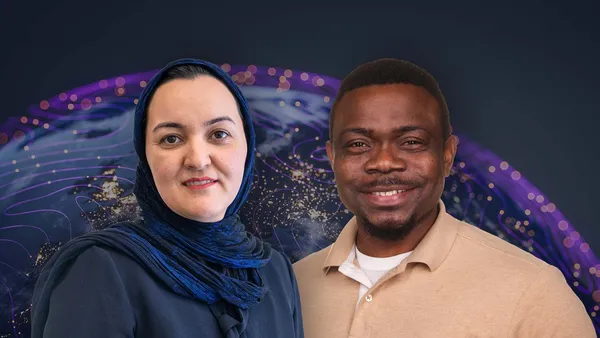
Maura Grossman, a lawyer and research professor at the University of Waterloo and York University’s Osgoode Hall Law School, and Ebrahim Bagheri, a professor at the University of Toronto, co-direct the network. They are working with Canadian scholars to build a framework for assessing synthetic material.
The problem also includes the “liar’s dividend”, in which genuine evidence is dismissed as fake. CIFAR points to early uses of this defence in U.S. courtrooms, including a prosecution linked to the Jan. 6 Capitol riot and a case involving a fatal car crash in which lawyers for Elon Musk questioned the authenticity of a 2016 video.
Commercial detectors may fail on real court files
According to Bagheri, existing AI detectors cannot simply be moved from research settings into courtrooms. A tool advertised as 60 per cent accurate could reach 90 per cent accuracy on one type of evidence but only 10 per cent on another. For the less accurate category, he says, a judge may be better off relying on chance.
The consequences of an incorrect assessment can affect a person’s freedom, safety or access to their children. Synthetic audio and text messages are especially difficult because language and voice models are cheap, fast and widely shared. In one workshop, 40 domain experts performed worse than chance when trying to distinguish authentic legal documents from AI-generated text.
Grossman says that without standardized forensic rules, judges are “flying by the seat of their pants.” Bagheri also describes interviews in which judges initially said they had never encountered synthetic evidence, before recognizing that they may have seen it without identifying it.
A system designed to support human judgment
The network is not building an automated system that issues true-or-false rulings. Its computational team is developing a purpose-built AI verification tool intended to reveal digital fingerprints, including flaws in cloned voices, statistical patterns in generated text and visual details that conflict with real-world physics.
The proposed systems could help legal professionals examine files systematically. Examples include identifying unusual spacing, checking legal citations against court records and flagging contradictions, such as a photograph geotagged in Ohio when an affidavit says it was taken in Toronto.
Interviews have focused on Canadian and American courts, but the initiative has also attracted interest from Norwegian legal scholars and police forces in the United Kingdom. The network’s goal, according to CIFAR, is to give judges, lawyers and self-represented litigants practical tools and questions for evaluating digital evidence, while keeping decisions with human legal professionals.
CIFAR: Law and order: the future of evidence