Honeywell Aerospace Flies Autonomous Aircraft Six Weeks After Starting Hivemind
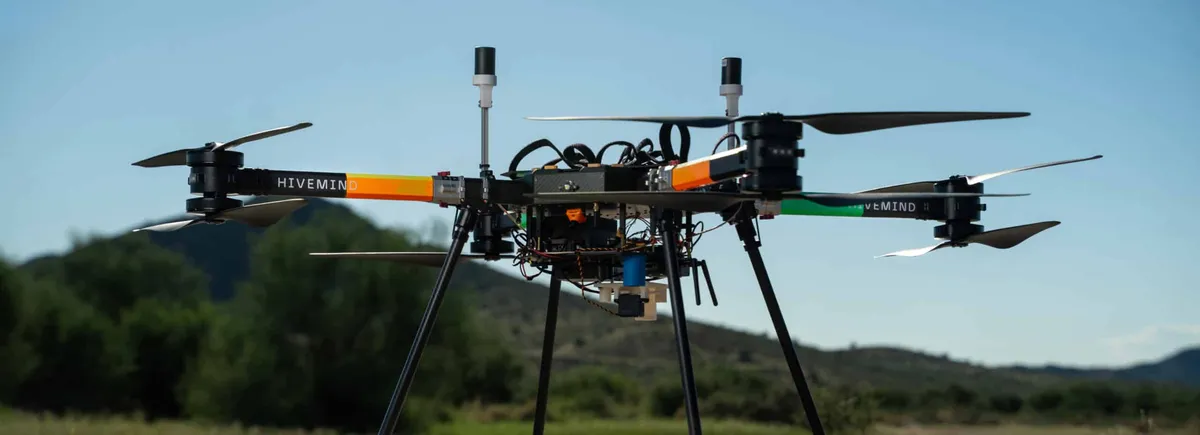
Honeywell Aerospace and Shield AI say Honeywell's autonomy team flew its first autonomous aircraft six weeks after starting training on Hivemind Enterprise, then completed a coordinated two-aircraft ISR mission near Phoenix. According to the companies, the platform cut an estimated 54-week autonomy-development effort to six weeks.
- Honeywell Aerospace flew its first autonomous aircraft, a BFD-SE8 multirotor, six weeks after starting Hivemind Enterprise training.
- The companies say an estimated 54-week autonomy-development effort was cut to six weeks.
- On October 8, two Hivemind-equipped aircraft completed a coordinated ISR mission near Phoenix, sharing target data and dividing tasks autonomously.
- Honeywell used its own AI target detection and tracking model on the platform.
- Next steps include linking Hivemind to Honeywell avionics, navigation and sensing, and applying it to larger uncrewed aircraft and commercial aviation.
From training to first autonomous flight
Honeywell Aerospace (Nasdaq: HONA) and Shield AI announced on October 13, 2026 that they had completed two autonomous flight demonstrations. Honeywell's autonomy team began training on Hivemind Enterprise in late April. Hivemind Enterprise is Shield AI's integrated platform for developing, deploying and operating autonomous systems.
In mid-June, six weeks after training began, the team flew a BFD-SE8 multirotor aircraft owned by Honeywell Aerospace autonomously for the first time. The aircraft used an autonomy stack built on Hivemind Enterprise.
The first official demonstration took place on July 8 in Plymouth, Minnesota. The aircraft took off on its own, followed a planned route, rerouted around a no-fly zone and returned to base.
Two aircraft share targets and split tasks
The second demonstration began right after the July flight. Over three months, Honeywell Aerospace trained and deployed its own target detection and tracking model, built the mission in simulation, and tested it in Minnesota and Arizona.
On October 8, two aircraft running Hivemind and equipped with Honeywell Aerospace's o480 inertial navigation system flew a coordinated ISR mission near Phoenix. A scout aircraft used onboard cameras and Honeywell's AI model to detect, identify and track a target. Hivemind passed the target location to a second aircraft, which navigated autonomously to the target, delivered a payload and returned to base with the scout.
The aircraft shared target information and divided mission tasks autonomously. The companies describe this as multi-aircraft teaming built by Honeywell engineers on Hivemind Enterprise.
What Hivemind Enterprise provides
According to Shield AI, Hivemind Enterprise combines the development environment and onboard autonomy software needed to build, test, deploy and operate autonomous systems. It offers core capabilities such as route planning, mission management and communication between aircraft. That lets companies concentrate on integrating their own AI models, sensors and mission capabilities and moving them from simulation to flight.
Tom Schaefer, vice president of Hivemind Enterprise at Shield AI, said Honeywell engineers flew their first autonomous aircraft within weeks, "work their engineering leads estimated would normally take a year." He added that the platform "handled the autonomy basics, so the team could spend its time on its own detection and tracking model."
Todd Giles, SVP Engineering and Chief Technology Officer at Honeywell Aerospace, said the milestone shows how the company "can rapidly translate advanced autonomy into real-world capability."
Next steps for the partnership
The flight tests build on the companies' July 2026 memorandum of understanding, under which Honeywell Aerospace is developing an autonomy software stack on Hivemind Enterprise.
Next, the companies will define how Hivemind connects with Honeywell Aerospace's integrated avionics, navigation and sensing capabilities. They also plan to apply the work to larger uncrewed aircraft and to commercial aviation.
Shield AI says Hivemind has piloted more than 40 platforms, including F-16s, jet-powered uncrewed aircraft, helicopters, uncrewed surface vessels, ground vehicles and a satellite in low Earth orbit. The timing figures come from the companies themselves and reflect an estimate by Honeywell's engineering leads, not an independent measurement.