Liquid AI adds vision to d1, its probability-based decision model
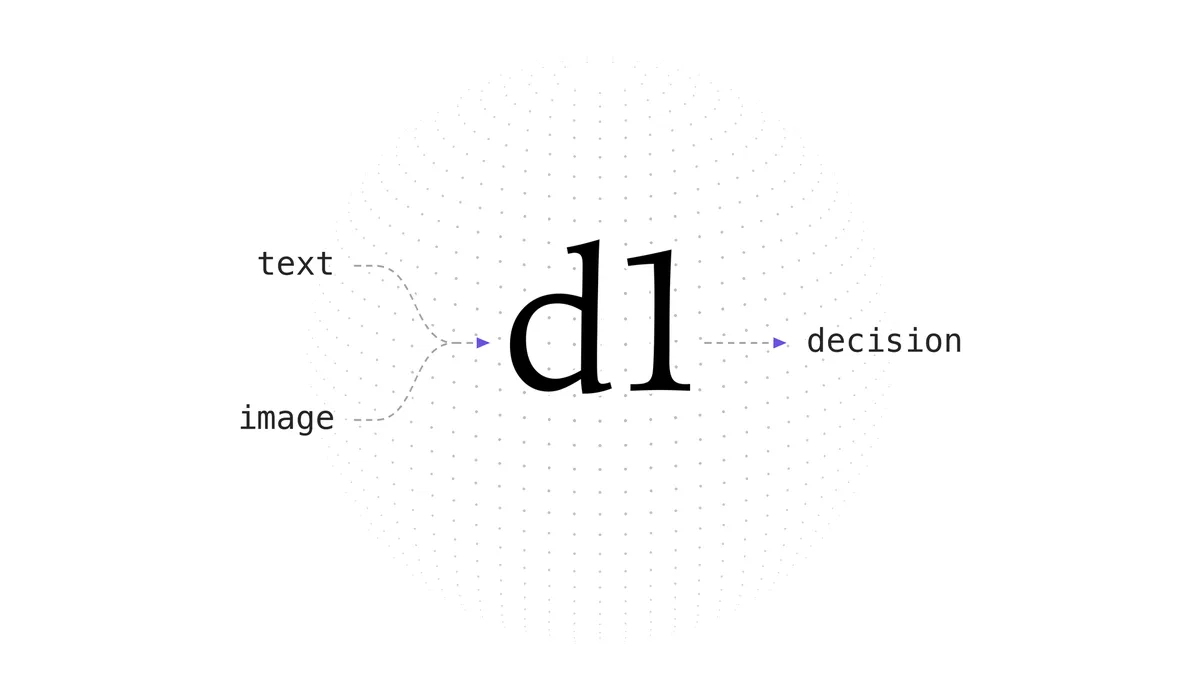
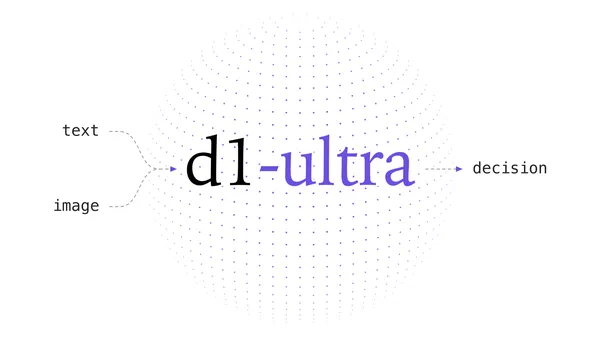
Liquid AI has released d1, a decision model that now accepts both text and images and returns a probability for each possible answer instead of generating text. According to the company, d1 matches or beats GPT-6.1 Sol on four of six real applications while costing 19x to 200x less than both GPT-6.1 Sol and Claude Opus 5.5.
- Liquid AI's d1 decision model now accepts text and images and returns a probability per answer without generating tokens.
- According to Liquid AI, d1 matches or beats GPT-6.1 Sol on four of six applications and costs 19x to 200x less than GPT-6.1 Sol and Claude Opus 5.5.
- Text decisions take 200 to 300 ms, and d1 is billed at $0.04 per million input tokens with no output tokens.
- d1 sorts good and defective parts with 85-97% accuracy on the VisA dataset without task-specific training.
- d1 is on the Liquid AI API now, on Vercel and OpenRouter with text only, and open weights for upcoming models are planned.
How a decision model differs from a chatbot
Liquid AI describes d1 as its first decision model. It takes unstructured data, such as text, images or both, along with one or more questions. It reads everything in a single forward pass and returns probabilities, without generating any tokens. A text decision takes 200 to 300 ms, which the company says is fast enough for real-time applications.
d1 answers three kinds of questions:
- Yes/no: answered with a probability between 0 and 1.
- Choice: pick one label among many, with a probability per label.
- Score: a position on a scale, weighted by the probability of each level.
A single request can ask several questions about the same state, which saves input tokens. Liquid AI says decision models can replace expensive calls to language models when the answer is a structured decision.
Benchmark claims against GPT-6.1 Sol and Claude Opus 5.5
Liquid AI tested d1 against GPT-6.1 Sol and Claude Opus 5.5 on six real applications, ranging from filtering support tickets to inspecting circuit boards. According to the company, d1 matches or beats GPT-6.1 Sol on four of them, costs 19x to 200x less than both models and answers significantly faster on every task.
The methodology note says each application was run once per model on October 5, 2026, using the d1 Playground's comparison script. The two chat models received each request as one chat message, answered in JSON and used their default reasoning setting. Costs use list prices without prompt-cache discounts, and d1's costs are based on $0.04 per million input tokens. Liquid AI also states that it wrote six of the 15 code questions and two of the four compaction sessions after d1's pipeline was set.
Visual inspection and text demos
For visual inspection, d1 reviews parts from four production lines: circuit boards, candles, cashews and chewing gum, drawn from the public VisA dataset. It sorts good and defective parts with 85-97% accuracy. Liquid AI stresses that the model was never trained for this task and understands it from a short description. In this test, every model sees a good part from the same line next to the part to inspect.
Five text applications use d1 for every decision:
- Smart Filter: d1 works as a function inside a SQL query and answers yes or no for each of 150 support tickets.
- Code Search: d1 browses the Hugging Face transformers repository, 6,511 files, one folder at a time, down to the function that answers a question.
- Smart Folders: d1 files each new document into a folder and then a subfolder, and files search questions the same way, so keyword search only looks in one subfolder.
- Web Agent: d1 operates a flight-search website from a one-sentence goal, choosing the next action at each step.
- Context Compaction: d1 reads each tool output in a coding agent's session and keeps, trims or drops it. According to Liquid AI, it removes 52% of the tokens and keeps every output the task needs.
Liquid AI says it adapted four of these applications from open-source projects. All demos run live in the d1 Playground.
Games show what vision adds
d1 also plays eight classic games live and picks every move. Liquid AI points to two benefits of vision. In Tetris, which can be described fully in text, adding the screen raises d1's score from 70 to 81 cleared lines. In Wordle, d1 reads the board directly from a screenshot, so developers do not need to write a text version of the game. It still solved 12 of 12 games in 3.8 guesses on average.
On a purely visual task, Quick, Draw!, d1 guesses what a doodle shows among 62 words. It recognizes 5.2 of 6 drawings, while random guessing gets 0.6.
Availability, pricing and what comes next
d1 is available on the Liquid AI API under the model name d1. Users create an API key at console.liquid.ai and can send images as base64 data URLs in an images field of the request. The model is billed on input tokens only, with no output tokens. Images count as input tokens at the same rate as text: 1.5 tokens per 32×32-pixel patch, so a 1024×1024 image costs 1,536 tokens. Each question is billed as its own prompt, including its text and all images.
d1 is also available through Vercel and OpenRouter, with text only for now. Vision is coming to both soon. Liquid AI says it is continuing its work on decision models across a range of sizes, with new features, higher decision quality and lower latency. The company also plans to release open weights for upcoming models on Hugging Face soon.
For developers, the pitch is a cheaper, faster option for tasks where a language model's free-form output is not needed, such as routing, filtering and quality checks. The cost and quality figures come from Liquid AI's own tests, run once per model, so independent results may differ.