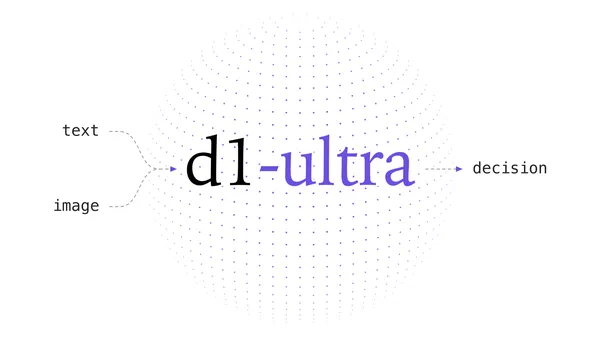
Liquid AI lists open d1 multimodal decision models for edge use
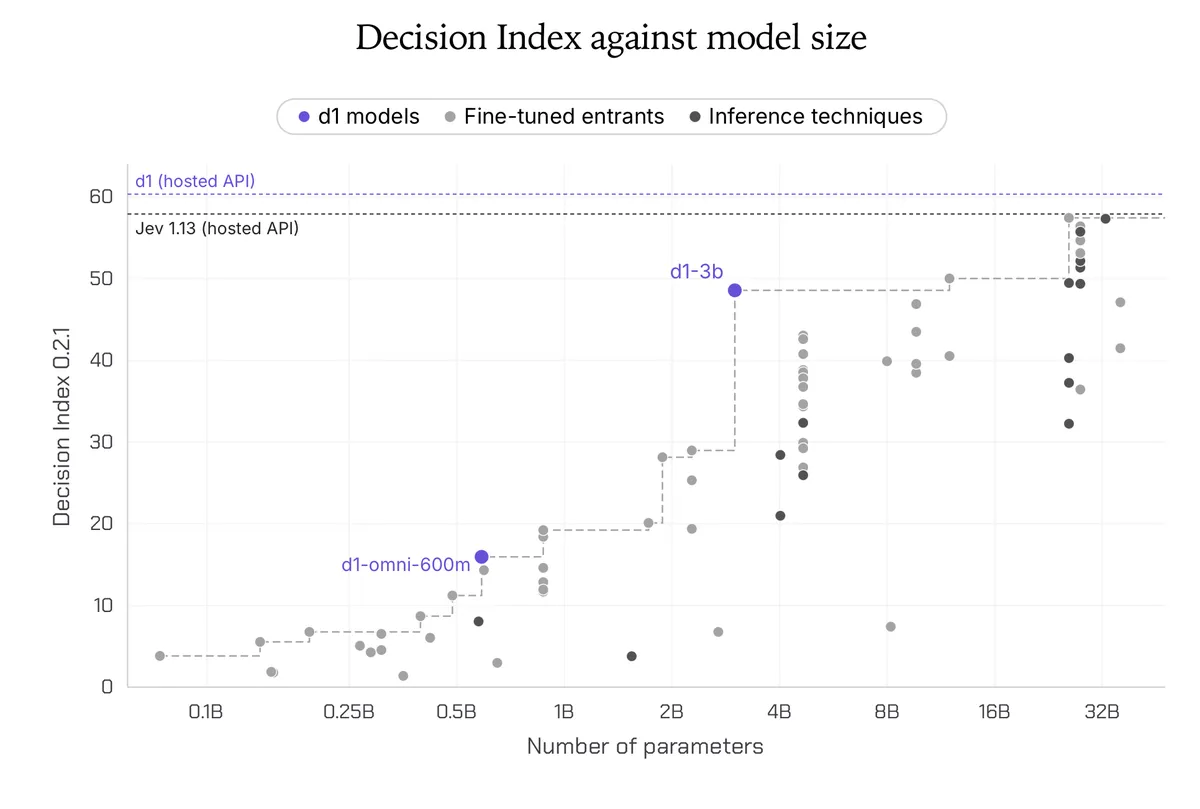
Liquid AI has published a Hugging Face blog post titled "Multimodal open d1 decision models for the edge", which links three models of 0.4B, 0.6B and 3B parameters. The text available for this report contains little beyond the title and the model listings, so most technical details remain unconfirmed.
- Liquid AI published a Hugging Face post titled "Multimodal open d1 decision models for the edge".
- Three models are linked: a 0.4B Fill-Mask model and two Image-Text-to-Text models of 3B and 0.6B parameters.
- The same author's earlier posts cover LFM2.5-VL-DSpark and LFM2.5-DSpark, the latter titled "Up to 3.2x Faster Inference".
- The available text gives no benchmarks, licensing or deployment details.
What the post lists
The post appears on the Hugging Face blog under the LiquidAI organization and is titled "Multimodal open d1 decision models for the edge". The title points to open models meant for edge deployment that handle more than one type of input.
Three models are mentioned in the article. One is tagged Fill-Mask and has 0.4B parameters, with the page showing it as updated on Jul 28. A second is tagged Image-Text-to-Text and has 3B parameters, shown as updated 13 days ago. The third is also tagged Image-Text-to-Text, has 0.6B parameters and was shown as updated 4 minutes ago at the time the page was captured.
Related Liquid AI work
The page also points to two earlier posts from the same author. One is "Accelerating vision-language models with LFM2.5-VL-DSpark", dated September 24, 2026. The other is "Up to 3.2x Faster Inference with LFM2.5-DSpark", dated August 20, 2026. The "3.2x" figure is part of that post's title, and the available text gives no further detail on how it was measured.
Together, the titles suggest that Liquid AI has been publishing material on faster vision-language models and efficient inference in recent months.
What is not yet known
The available text does not name the models, describe their architecture or training, or explain what "d1" and "decision models" mean in practice. It also gives no benchmark results, licensing terms, hardware requirements or details of the intended edge use cases. The page counters next to each model are not labeled in the excerpt, so they are not interpreted here.
For developers interested in running multimodal models on local or embedded hardware, the full post and the linked model pages on Hugging Face are the place to check for specifics. Until those details are confirmed, the news is limited to the fact that Liquid AI has released a set of small image-text and fill-mask models under the open d1 label.
Hugging Face: Multimodal open d1 decision models for the edge