Microsoft Research unveils Quine, an AI system built for biology's complexity
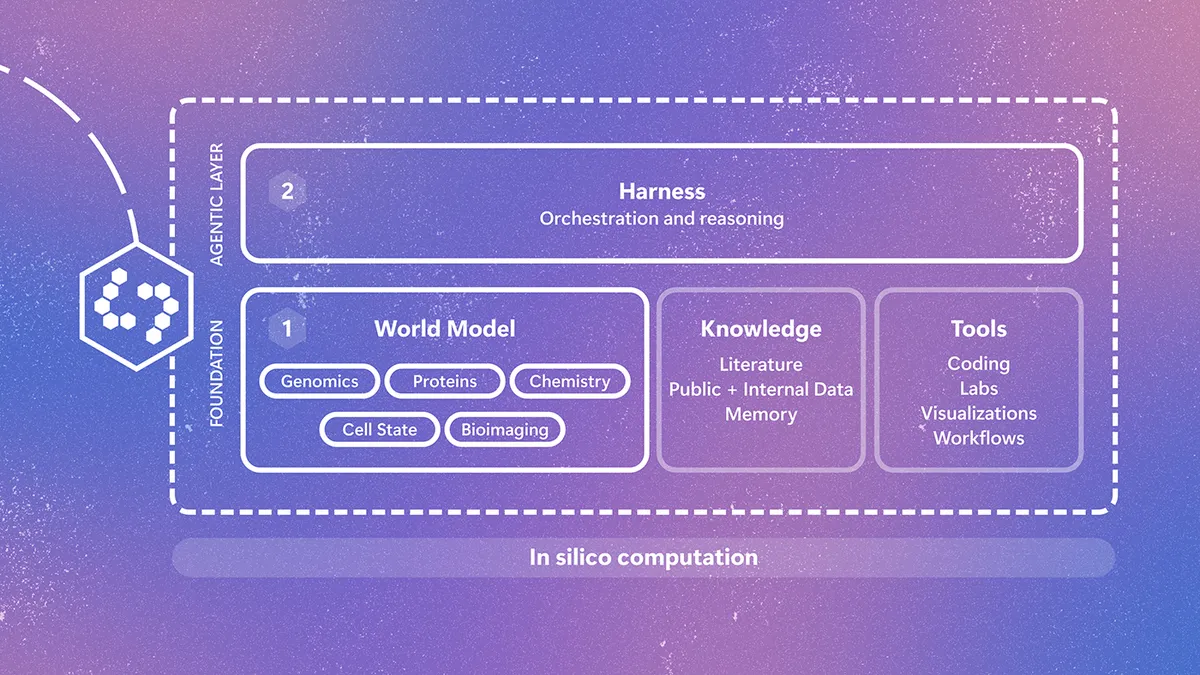
Microsoft Research has introduced Quine, a research effort that pairs a multimodal world model of biology with an interactive harness linking models, scientific tools, literature and researchers. In work with the Broad Institute of Harvard and MIT, the team says it used the system to prioritize compounds predicted to shift pancreatic cancer cells between therapeutically relevant states, and validated several top-ranked candidates in wet-lab assays.
- Microsoft Research introduced Quine, combining a multimodal world model of biology with an interactive harness for tools, literature and researchers.
- With the Broad Institute, Quine prioritized thousands of compounds for shifting pancreatic cancer cell states, and top-ranked candidates were validated in several wet-lab assays.
- According to Microsoft, narrowing the candidates took one weekend, and the lab also confirmed a predicted third phenotype.
- A Quine Fellows program will give a cohort of scientists access; the system is for research only, not clinical use.
- Microsoft expects to widen access through products such as Microsoft Discovery as the technology matures.
A world model for biology
According to Microsoft Research, Quine has two core parts: a world model of biology and a harness. The harness connects the model to orchestration and reasoning models, scientific tools, the literature and the teams of scientists who use them.
Microsoft defines a world model as a system that can represent the state of a biological system, predict how that state will change in response to interventions, and reason about the consequences of those interventions multiple steps ahead. The company says such a system would not replace experimentation. Instead, it would let researchers use computation to explore, propose, rank and prioritize options before committing scarce laboratory resources.
The model learns shared representations across sequence, structure, function, cellular state and imaging data. Because it is trained on these modalities jointly, Quine can use evidence from one to inform predictions in another. Microsoft contrasts this with orchestrating separate single-domain specialist models, which it says can leave relationships siloed or lost. The company reports that learning across connected representations strengthens performance rather than diluting it, helping the model generalize and handle a broader range of biological reasoning tasks.
Microsoft also states plainly that the model does not need to be perfect. In its words, it will never perfectly model biology and "simply needs to usefully inform experimental design."
Test case: pancreatic cancer cell states
The example Microsoft highlights is pancreatic ductal adenocarcinoma (PDAC), the most common form of pancreatic cancer and one of the most challenging to treat. Together with Broad Institute researchers, the team has spent years developing patient-derived ex vivo models to study a hypothesis: that tumor behavior and drug response depend not only on genetics but also on transcriptional cell state.
Using Quine, the researchers predicted and prioritized thousands of compounds based on their potential to move tumor cells between therapeutically relevant states. In wet-lab studies of the transition from classical to basal cell states, Microsoft says the highest-ranked compounds produced the largest intended shifts across experimental assays.
The company says the process, from narrowing the compound search space to picking a handful of candidates for lab validation, took one weekend, potentially saving months of experimental work and significant research costs. It also reports that some of the strongest effects came from compounds with unexpected mechanisms of action, which it describes as early evidence that AI can find new opportunities for drug repurposing and discovery.
- The reverse shift, from basal to classical states, proved harder, and Quine had predicted that available compounds would have a weaker effect.
- Quine also predicted that several compounds would consistently push cells toward a distinct third phenotype, and the lab experiments bore this out.
Microsoft says this suggests the PDAC cell-state landscape is richer than a simple classical-basal axis, and that the experiments both tested the model's hypotheses and generated new ones.
Access, limits and what comes next
Microsoft is launching a Quine Fellows program that will give a cohort of scientists access to the system, in return for their scientific feedback and the chance to speed up their own research.
The company stresses that Quine is experimental research technology intended only for research, not for clinical or medical use. Its outputs may be incomplete or inaccurate and need review by qualified researchers, along with appropriate scientific and experimental validation.
As the technology matures, Microsoft says it expects to broaden access through products such as Microsoft Discovery. The stated long-term goal is a future in which scientists, models and experiments work in a continuously accelerating loop, with the scientist at the start and end of each cycle: a question becomes proposals, proposals become designs worth testing, and the resulting measurements sharpen both the next question and the model.
For now, the PDAC results are Microsoft's own account of its work with the Broad Institute, and the system's reach beyond that case will depend on how the Fellows cohort uses it.
Microsoft Research: Introducing Quine: An AI research system designed for the complexity of biology