NAVER D2SF backs TraceWeave and its post-Transformer on-device AI
NAVER D2SF has invested in TraceWeave, a Seoul-based startup that built Phase-TITAN, a post-Transformer architecture meant to run AI agents on memory-constrained devices. The seed round, led by Mirae Asset Capital, raised approximately KRW 3 billion.
- NAVER D2SF invested in TraceWeave, which raised about KRW 3 billion in a seed round led by Mirae Asset Capital.
- Pre-money valuation is approximately KRW 30 billion.
- Phase-TITAN is a post-Transformer architecture that keeps memory usage constant as context grows.
- TraceWeave claims its 1B model holds 0.04 GB at a 1M-token context, versus tens of gigabytes or more for a comparable Transformer's KV-Cache.
- The company completed a paid mobility pilot and is exploring robots, drones, smart glasses and wearables.
A different architecture for devices with little memory
TraceWeave, led by co-founder and CEO Jaeyoung Park, develops Phase-TITAN, which the company describes as a post-Transformer architecture. According to the announcement, it understands long contexts and carries out multi-step tasks while keeping memory usage constant.
The problem it targets is well defined. In Transformer-based models, the key-value cache (KV-Cache) grows with context length and therefore requires more memory. On devices, limits on memory, battery life and heat make it hard to build AI agents that handle long contexts and complex tasks. TraceWeave says Phase-TITAN is designed to resolve this bottleneck by replacing the conventional Transformer architecture altogether. The company also says it develops its own AI models rather than relying on existing open-source ones.
Claimed results and pilots
According to TraceWeave, at a 1M-token context without quantization, a comparable Transformer's KV-Cache holds tens of gigabytes or more, while its 1B Phase-TITAN model holds 0.04 GB. The company says this lets agents call tools, interpret results and decide on next actions entirely on the device, without cloud calls.
TraceWeave's internal benchmarks on RULER and BFCL indicate that Phase-TITAN keeps performance on par with Transformer models of the same size and larger. These are the company's own figures. It has also demonstrated a multi-step agent running on a smartphone using only its CPU.
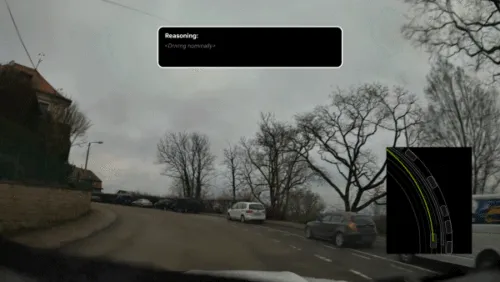
- In mobility, TraceWeave completed a paid pilot with the autonomous driving affiliate of a global automotive group. The system identified driving-data frames that improve the partner's autonomous driving model without human annotation.
- It is validating in-vehicle agent performance with a global automotive electronics software company.
- It is exploring opportunities in robots, drones, smart glasses and wearables.
The startup was a Top 20 finalist in NVIDIA's 2026 Inception Grand Challenge.
Funding, team and plans
TraceWeave was co-founded in October 2025 by researchers with backgrounds at ETH Zurich, Google and KAIST. The team combines expertise in computational neuroscience and physics with business development skills. In the seed round it raised approximately KRW 3 billion at a pre-money valuation of approximately KRW 30 billion.
The company is based at NAVER D2SF @Gangnam and plans to use the money to expand its research and engineering team for next-generation architecture development and to grow its business.
Park said: "Taking the KV cache out was never the hard part. Staying capable without it was." He added that Phase-TITAN "already delivers Transformer-class capability without the Transformer's memory tax, and the next one goes well beyond its class, with the memory still fixed."
What it means for on-device AI
Sanghwan Yang, Head of NAVER D2SF, said on-device AI is a core technology for running complex, advanced AI across device environments beyond PCs, and that it offers advantages in reducing cloud call costs and protecting privacy. He called TraceWeave a team "innovating AI architecture to overcome the limitations of existing AI models and bring AI to on-device environments."
The investment shows NAVER D2SF continuing to back on-device AI and next-generation device technologies. For device makers in vehicles, robots, drones and wearables, the pitch is agents that work locally without cloud calls. The performance and memory figures come from TraceWeave's own testing, and the source gives no independent verification or commercial availability details.
PR Newswire: NAVER D2SF Invests in On-Device AI Startup TraceWeave