Neo4j Publishes Agent Integrations for AWS, Google, Vercel and Salesforce
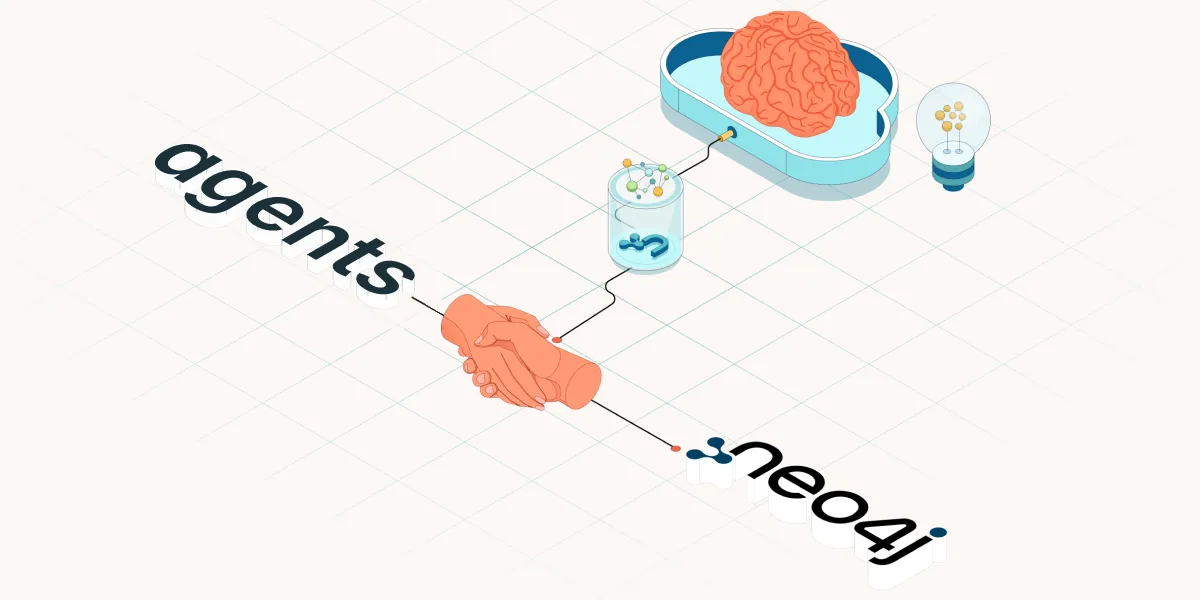
Neo4j has published a library of documented, working integrations that connect its graph database and memory tools to agent frameworks and platforms including AWS, Google, Microsoft, Vercel and Salesforce. According to the company, the aim is to spare developers the wiring work so agents can draw on the same knowledge layer.
- Neo4j has published documented Labs integrations for agent platforms including AWS, Google, Microsoft, Vercel and Salesforce.
- Code for all integrations is in the neo4j-agent-integrations repository on GitHub.
- Neo4j Agent Memory adds short-term, long-term and reasoning memory stored as a connected graph.
- Connection routes include the Neo4j MCP server, drivers, Aura Agents MCP and NAMS.
- CrewAI and Haystack 3.0 are next on the integration roadmap.
One graph behind many agent stacks
In a blog post dated October 6, 2026, Neo4j says every team building an agent ends up solving the same problems: how to get a knowledge graph talking to tools such as LangGraph, AWS Strands or Salesforce Agentforce, and how to make an agent's memory last beyond a single session and be shared across a larger system of agents.
Neo4j says it worked out how the platforms, frameworks and APIs fit together and released the results as Neo4j Labs integrations. Each one comes with documented patterns, working code and architecture guidance. The company says they cover everything from native model access and MCP servers to GenAI frameworks.
The code for all of the integrations sits in one place, the neo4j-agent-integrations repository on GitHub. Neo4j also says each integration is ready for production, with platform security, deployment steps and pre-launch tests.
Retrieval, action and memory
Neo4j argues that every agent needs two things from a graph: a way to retrieve and act on graph data, and a way to remember and learn. Retrieval and action belong to the action phase of the agent loop, where an agent queries and updates the graph and calls the APIs and databases it needs. Memory feeds planning and reasoning before action and is updated in the observation phase.
The company says teams tend to underestimate memory, calling it an architectural must for workflows with several agents that must work in sync. Neo4j Agent Memory adds short-term, long-term and reasoning memory. According to Neo4j, it stores memory as a connected graph of typed, resolved entities, so three references to the same customer collapse into one node with facts attached. Reasoning memory stores the agent's decisions alongside the evidence behind them.
Developers can connect through several routes:
- The official Neo4j MCP server, running locally or hosted
- Neo4j drivers, for custom connections in custom tools
- Aura Agents MCP
- Neo4j Agent Memory and the Neo4j Agent Memory Service (NAMS), for the memory layer specifically
Platform examples
AWS. Neo4j describes using AWS Strands and AgentCore with a Neo4j MCP server. Agents can use AgentCore Memory, or Neo4j Agent Memory for direct graph visualization, to capture context and retain past outcomes. A setup guide walks through connecting the AWS AgentCore Gateway to external Neo4j MCP servers hosted on AWS Fargate.
Google. The ADK and Gemini Enterprise integrations let an agent reason over a graph before it acts, and Genkit offers a direct path from Google's developer tooling into Neo4j. Neo4j gives the example of a supply chain agent that traces a part shortage through supplier relationships and dependent orders. The post includes an ADK sample that combines an MCP toolset for querying the graph with a memory tool for recalling past sessions.
Vercel. The AI SDK integration turns Neo4j Agent Memory into a memory provider for an existing app, with NAMS Chat as a working example. Neo4j suggests a customer-facing assistant that remembers preferences and past requests across visits. Its sample shows an MCP client passing tools to a single generateText call.
Salesforce Agentforce. Neo4j lists three integrations that ground Agentforce agents in knowledge graphs: a native MCP client for grounding and multi-agent setups, plus External Service Actions and Apex Actions for a fully declarative path or full custom control. A direct route to durable memory runs through Neo4j Agent Memory.
Roadmap and what it means for developers
CrewAI and Haystack 3.0 are next on the roadmap. Neo4j says Neo4j Agent Memory already gives CrewAI crews shared, persistent memory. Haystack support exists through the neo4j-haystack document store, but Haystack 3.0 shipped breaking changes, including a leaner core, a merged pipeline class and a new agent hooks system.
The post also starts a series that will take one framework or platform at a time through a full implementation, covering choices such as MCP versus drivers and self-hosted memory versus NAMS.
For developers already working on one of these stacks, the offer is a starting point of runnable code and architecture guidance rather than custom integration work. Neo4j also says Neo4j Agent Memory runs through nearly all the integrations, so agents on different platforms can pull from and contribute to the same memory.