NUS Team Wins Google.org Grant to Study Genetics and RNA Splicing With AI
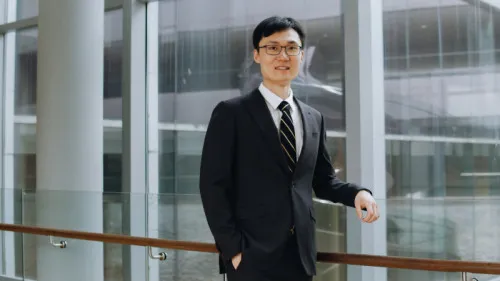
A research team led by Assistant Professor Liu Boxiang at the National University of Singapore (NUS) has received a grant under the Google.org Impact Challenge: AI for Science. The team will use AI to study how genetic variations influence RNA splicing and disease.
- Asst Prof Liu Boxiang's NUS team received a grant under the Google.org Impact Challenge: AI for Science.
- NUS is one of 17 organisations selected globally, and the only one in Asia, to share US$36 million.
- The team will use AI to map how genetic variations influence RNA splicing across populations and predict effects on disease.
- Recipients can join a six-month Google.org Accelerator offering engineering support, mentorship and Google infrastructure.
One of 17 organisations selected worldwide
Asst Prof Liu and his team work in the Department of Pharmacy and Pharmaceutical Sciences at the NUS Faculty of Science. According to NUS, the university is among 17 organisations selected globally, and the only one in Asia, to share US$36 million in funding for AI-powered scientific research.
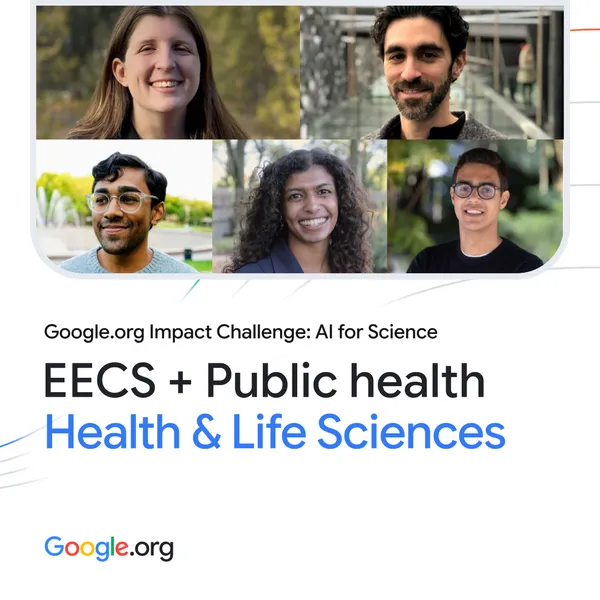
The initiative supports research that addresses challenges in climate, health and foundational science. The NUS project falls within the health area, with a focus on genomics.
Mapping genetic effects on RNA splicing
The team plans to use AI to map how genetic variations influence RNA splicing across populations. The aim is to predict the effects of those variations on disease.
NUS describes RNA splicing as a process in which sections of an RNA molecule are removed, while the remaining sections are joined together. Understanding how genetic differences affect this process could help clarify their role in disease, according to the university.
The work looks at differences across populations, rather than a single group, which is central to how the team frames the project.
Accelerator option and what comes next
Recipients of the grant also have the option to take part in a six-month Google.org Accelerator. The programme provides engineering support, technical mentorship and access to Google infrastructure, with the goal of helping turn ideas into scaled solutions.
The source does not say whether the NUS team will join the accelerator, nor does it give the size of the individual grant or a project timeline.
In a statement, Asst Prof Liu said: "We are at an inflection point where AI is changing the way science is done. We are incredibly excited to partner with Google to accelerate our AI-enabled genomics research."
What it means
The award gives a Singapore genomics lab access to philanthropic funding and, if it opts in, to technical support and computing infrastructure from Google. For the wider field, the selection of 17 organisations across climate, health and foundational science shows the range of areas where AI is being applied to research. Whether the NUS approach can reliably predict disease effects of genetic variations remains to be shown by the project itself.