Orbis International pledges US$32 million to improve eye health for 18 million people
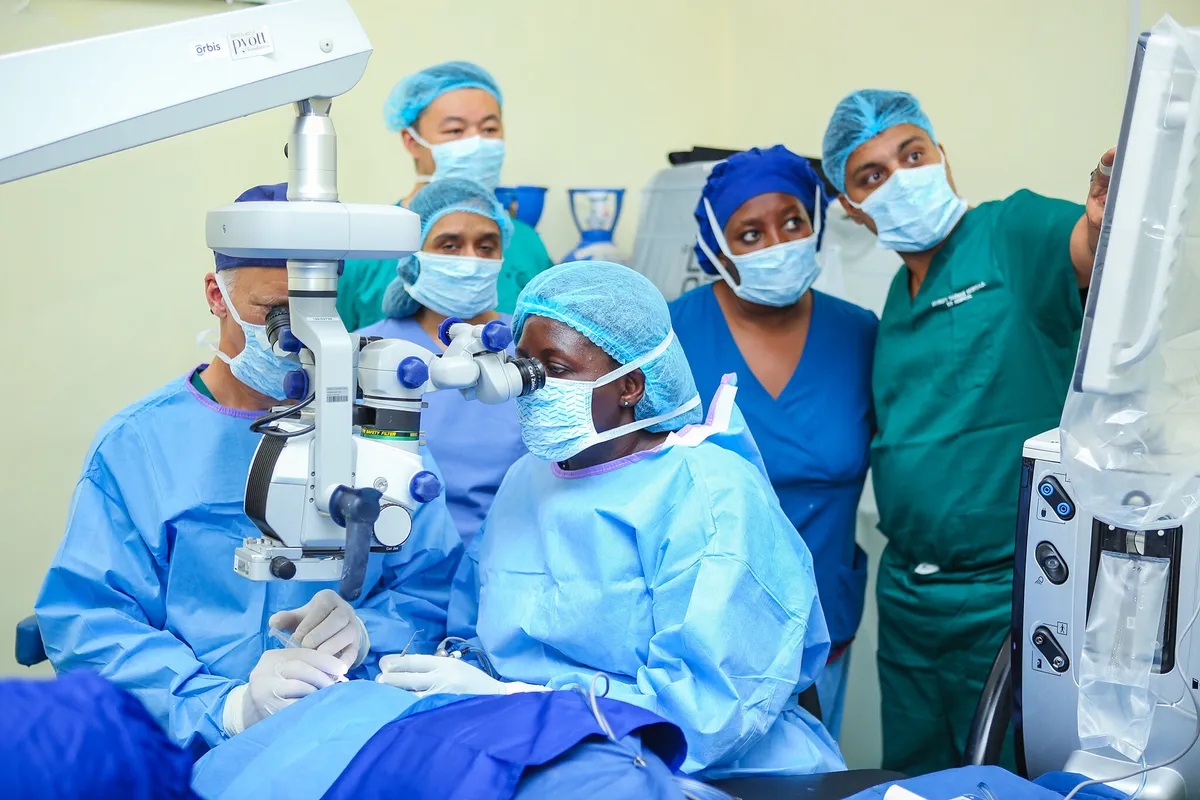
Global eye care nonprofit Orbis International has committed an estimated US$32 million in financial and technical contributions from 2027 through 2030 to strengthen eye health systems. According to the organization, the pledge aims to contribute to better eye health outcomes for more than 18 million people and support the professional development of more than 250,000 eye health professionals.
- Orbis International commits an estimated US$32 million in contributions from 2027 through 2030.
- The aim is better eye health for more than 18 million people and support for more than 250,000 eye health professionals.
- About US$17 million is earmarked for cataract care, and free Cybersight access through 2030 is valued at an estimated US$15 million.
- From 2027, Orbis and Antigua and Barbuda will introduce AI-assisted diabetic retinopathy screening, targeting at least 80% coverage among people receiving diabetes care by 2030.
- Direct system support will reach 16 countries, with Cybersight available in more than 200 countries and territories.
A commitment tied to the first Global Summit for Eye Health
Orbis announced the commitment in connection with the first Global Summit for Eye Health, hosted by the Government of Antigua and Barbuda in technical collaboration with the World Health Organization (WHO). The Summit brings together leaders from government, the public and private sectors, NGOs and funding institutions. Their goal is to share ambitious commitments to reach the 1 billion people living with avoidable vision loss.
Orbis has endorsed the St. John's Global Compact for Eye Health and its shared agenda for action, investment and accountability. The nonprofit says its Summit commitments put that support into practice through workforce development, quality cataract care, and responsible use of digital technology and artificial intelligence.
Orbis plans to work with ministries of health, WHO, the International Agency for the Prevention of Blindness (IAPB), civil society, professional associations and private-sector partners. It says it will support country-led priorities and locally-led approaches. The commitments run from January 2027 through December 2030 and cover cataract, diabetic retinopathy, childhood eye health and refractive error.
Training the workforce and expanding cataract care
Orbis describes access to a skilled workforce as one of the biggest barriers to quality eye care. By 2030, it plans to support the ongoing professional development of more than 250,000 eye health professionals, including through Cybersight, which it calls the world's leading digital platform for eye health. The platform connects learning, mentorship, AI and clinical support. Orbis will keep providing free access to Cybersight through 2030, which it values at an estimated US$15 million over four years. Its capabilities will also be made available to support IAPB learning, training and development initiatives.
Hunter Cherwek, Chief Medical Officer at Orbis International, said: "There is a global crisis in eye health: the lack of a trained workforce to treat and prevent conditions that cause blindness."
On cataract, which the release calls the leading cause of blindness globally, Orbis will invest the equivalent of US$17 million in financial and technical contributions between 2027 and 2030. The money is meant to strengthen the workforce, improve surgical quality, build institutional capacity and expand access to high-quality cataract services. The work will contribute toward WHO's 2030 cataract targets and the SEE 2045 global initiative. Working with governments and partners, including Alcon, Orbis will support cataract training through hands-on clinical experience, digital learning, mentorship and simulation.
AI screening for diabetic retinopathy in Antigua and Barbuda
Beginning in 2027, Orbis will partner with the Government of Antigua and Barbuda to integrate AI-assisted diabetic retinopathy screening into routine diabetes care. The effort supports the Prime Minister's Vision Initiative. The partners will work toward screening coverage of at least 80% among people receiving diabetes care by 2030, with referral, diagnosis, treatment and follow-up pathways for patients who need further care.
Walton Webson, Permanent Representative of Antigua and Barbuda to the United Nations, said the collaboration will help build "a comprehensive eye care model that can be adapted across the Caribbean and other Small Island Developing States." Orbis also says it will generate evidence and share lessons from the program to inform the responsible adoption and possible scale-up of similar approaches in other countries.
Reach and what it means
Orbis says it will provide direct support to strengthen government-led systems and institutions in 16 countries. Through Cybersight, it will offer global access to learning, mentorship and clinical support across more than 200 countries and territories. It says it will pay particular attention to women, girls and underserved communities.
Kathleen Sherwin, President and CEO of Orbis International, said the organization is committing its expertise and resources to help countries build the workforce and systems needed to deliver lasting improvements in eye health. According to Orbis, its approach of investing in professionals and institutions is meant to ensure improvements continue after an individual program ends. The figures are the organization's own estimates and targets, and results will depend on delivery with government and private partners over the four-year period.