Picsart Commerce turns existing product photos into new images and videos

Picsart has introduced Picsart Commerce, a family of integrations that helps ecommerce merchants turn the product photos they already have into new images and short product videos. According to Picsart, merchants set the creative direction, see the cost before anything runs, and decide what goes in front of customers.
- Picsart Commerce is a family of integrations that turns existing product photos into new images and short product videos.
- A credit quote is shown before generation, and nothing runs until the merchant approves it.
- Picsart advises checking labels, colors, shapes and materials against the original photo before publishing.
- Capabilities and release timing differ by integration, and the source names no specific platforms or prices.
What Picsart Commerce does
Picsart describes Commerce as a way to bring AI for ecommerce into the way merchants already work, closer to where they manage their store. The tool starts from an existing product photo and generates new scenes or short clips around it.
The company frames the problem as a visual one. A single studio shot can only stretch so far across a seasonal collection, a launch announcement and a week of social posts. According to Picsart, most conversations about AI in ecommerce focus on chatbots and product recommendations, while the more pressing question for merchants is often how to keep product content fresh without booking a new shoot every time the season changes.
Picsart gives an example of a small home goods shop with a best-selling mug. The same photo could appear on a sunny breakfast table for a spring email, in a candlelit setting for the holidays, and in a short video for a social post, without a new photoshoot.
From prompt to image and video
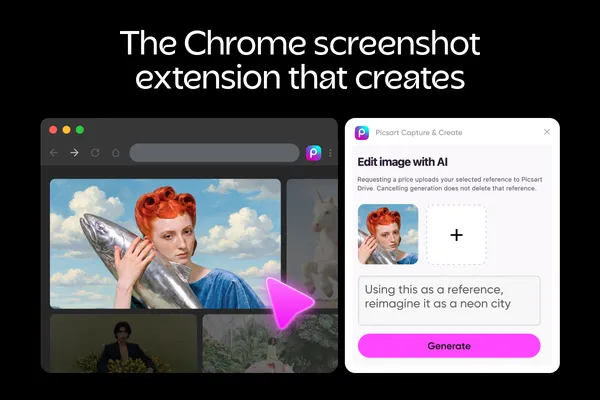
Picsart says the process begins with a clear source image that shows the details a merchant wants to keep: shape, color, texture and label. The sharper and more accurate the source, the more the result has to build on. Merchants then decide what to change, such as the setting, the mood or the movement.
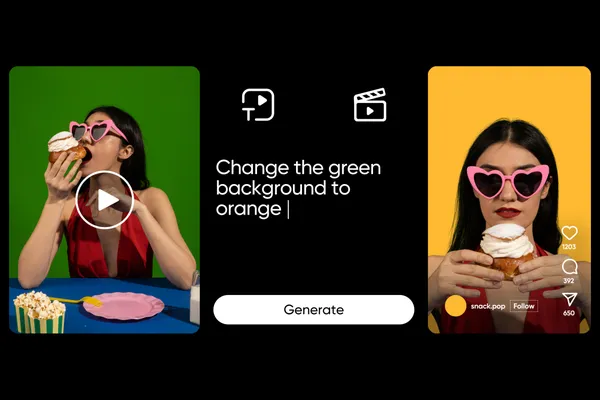
The prompt does the steering. Picsart advises describing the scene, the light and the mood, and reading the prompt back before generating. It says a specific prompt such as a calm morning scene with soft window light and a simple linen background gives the model far more to work with than a vague request. Results are meant to be treated as drafts, and merchants can generate another version to compare options side by side.
For video, Commerce lets merchants explore short clips that start from a still photo. The motion is described in the prompt, for example a slow turn, a gentle zoom or a reveal from behind a fabric drape. Picsart says such clips suit social posts and product announcements, and can be used to test a motion idea before deciding whether it deserves a bigger production.
Picsart notes that source options, capabilities and video options depend on the integration being used.
Cost quotes and accuracy checks
Commerce is designed to show a credit quote before anything is generated. The model and output settings determine the cost, so a merchant can weigh a quick image test against a longer video. According to Picsart, nothing runs until the merchant approves, and changing a setting or trying another version produces a new quote.
The company also warns that AI can change product details. It advises merchants to compare the label, shape, color, proportions and materials of each result against the original photo, because a beautiful image that misrepresents the product creates problems that polish cannot fix. Preparing an asset and publishing it are separate steps, so nothing reaches customers until the merchant puts it there.
What it means for merchants
For merchants, the pitch is to reuse existing product photography for seasonal campaigns, launches and social content while keeping control over spending and publishing. Picsart says Commerce is a family of integrations, and each one has its own capabilities and release timing. The source does not name specific platforms or give pricing, and it points readers to the Commerce page for the latest on supported platforms.