Polish TOPR speeds up mountain rescues with automated drones
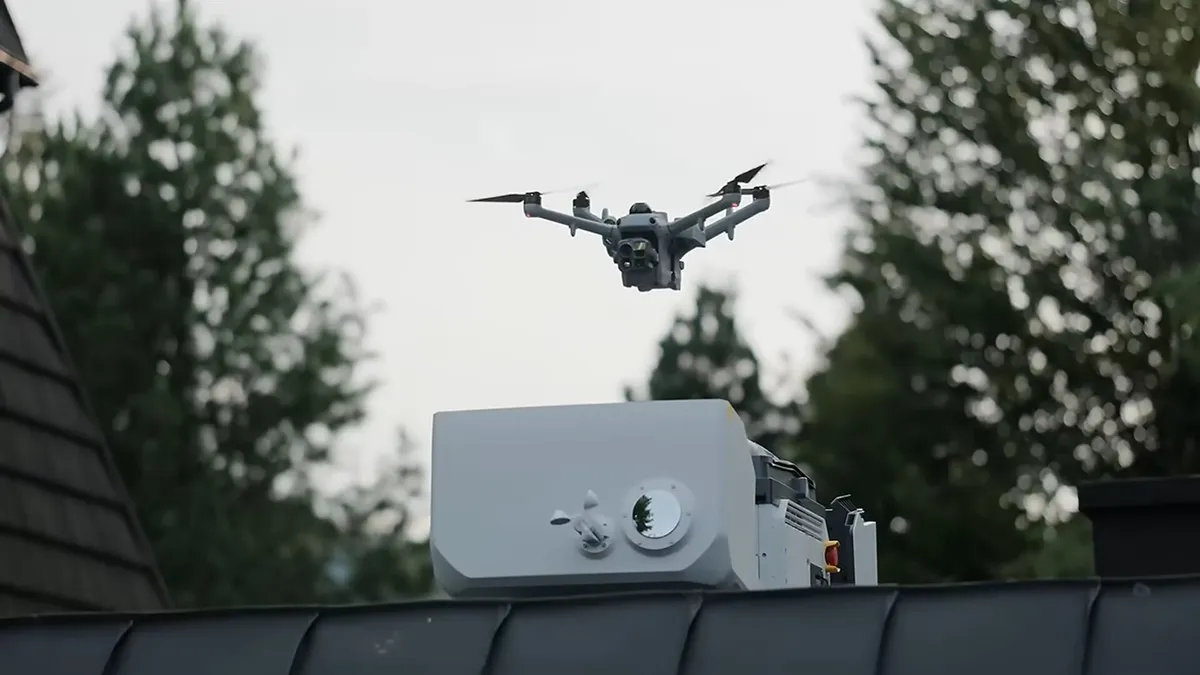
Poland's Tatra Volunteer Search and Rescue Service, TOPR, is speeding up rescue operations with automated drones. With the DJI Dock 4, a drone can head to a reported location before the ground rescue team has even left its base.
- TOPR has launched a pilot program using the DJI Dock 4.
- The drone can survey the scene before the ground rescue team sets out.
- The DJI Matrice 5TD supports rescuers with a loudspeaker and thermal imaging.
- DJI O4 ground relay stations can extend the flight range toward neighboring valleys.
- The system is also being tested for daily hazard reconnaissance and route monitoring.
The drone can reach the scene within minutes
With its steep peaks, deep valleys and harsh winter weather, the Tatra Mountains pose a serious challenge to search and rescue teams. TOPR, which operates in Poland, has launched a pilot program based on its previous use of DJI Enterprise equipment and the new DJI Dock 4 automated drone station.
The concept allows the drone to launch from an automated rooftop docking station while the ground rescue team is still at base. According to Marcin Józefowicz, a TOPR rescuer and head of Cybertech, some locations are inaccessible in winter by car, bicycle or even snowmobile.
Józefowicz said that in the past, assembling a team and reaching the starting point on foot could take up to two hours during a full mountain deployment. By contrast, a drone launched in advance can reach the reported accident scene within minutes.
Aerial footage can guide rescue decisions
Rapid reconnaissance allows dispatchers to assess the situation before a physical intervention begins. They can determine whether a rescue is actually needed, how many volunteers should be sent to the scene and what equipment will be required.
The DJI Matrice 5TD also supports communication through its loudspeaker. Rescuers can issue instructions to people on the ground and ask whether they need help. Hikers can respond with gestures, so if they indicate that no rescue is necessary, the team can continue searching elsewhere.
In the dark, imaging that combines thermal and conventional views helps operators. According to the source, it can provide an overview similar to near-daylight conditions, while allowing operators to identify hikers' headlamps and terrain details.
Relay stations extend the operating range
Mountain terrain often obstructs conventional communications signals. TOPR is therefore testing a network of DJI O4 video-transmission ground stations. The relay stations are installed on observation towers and remote mountain peaks, allowing the drone to switch between them during flight.
According to Józefowicz, this infrastructure could extend the flight range into neighboring valleys. In addition to automated flight launches, the dock can also replace the battery, reportedly in just 25 seconds, supporting tests of continuous operations.
The system is also being tested for daily monitoring
TOPR is testing the technology not only in active rescue operations. The automated fleet is also being used to explore daily reconnaissance of hazardous locations and monitoring of routes.
According to a DJI statement, the initiative aims to help rescuers in the Tatras reach people in distress more quickly, safely and efficiently. The manufacturer measured the figures cited in the statement in a controlled environment using a mass-produced model, and noted that some features are available only with specific DJI drones and in certain regions.
PR Newswire: Automated Drone Technology Further Transforms Polish Mountain Rescue Operations
PR Newswire: La technologie des drones automatisés transforme encore plus les opérations de secours en montagne en Pologne
PR Newswire: La tecnología de drones automatizados transforma aún más las operaciones de rescate en montaña en Polonia