Shield and NIPPI to build local V-BAT support capability in Japan
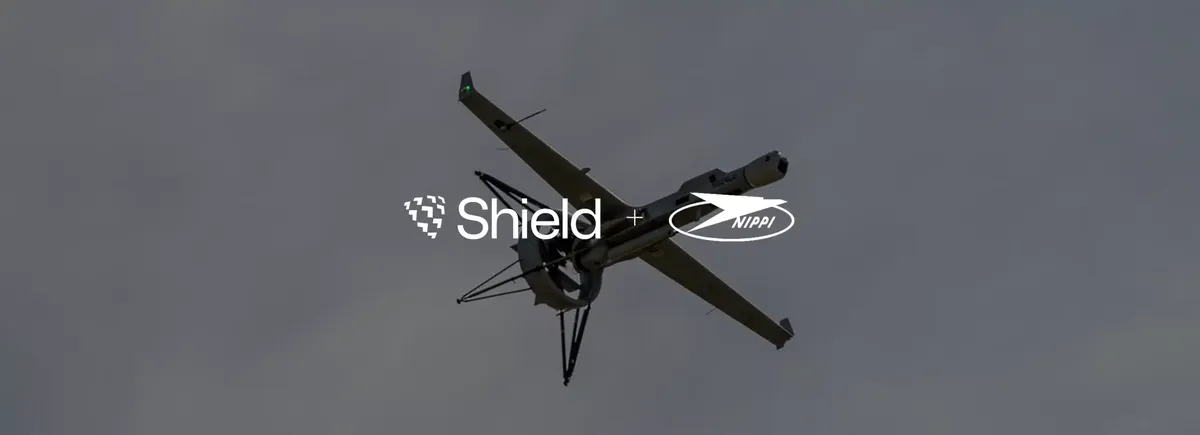
Shield and NIPPI Corporation have signed a contract to establish local Maintenance, Repair and Overhaul operations and training support for V-BAT in Japan. The agreement is intended to give Japan a domestic capability for maintaining and operating the Group 3 uncrewed aircraft system.
- Shield and NIPPI signed a contract for V-BAT MRO operations in Japan.
- NIPPI will provide local technical, maintenance and training support to the JMSDF.
- The agreement is Shield’s first domestic V-BAT MRO arrangement of its kind.
- Shield says local support will shorten repairs and reduce logistics to the United States.
- Shield is also expanding its Japanese presence with a dedicated Tokyo office.
NIPPI becomes Shield’s primary Japanese support provider
Under the contract, NIPPI will establish in-country technical capability for Group 3 unmanned aircraft systems and serve as Shield’s primary maintenance, repair, overhaul and training provider in Japan. The company will provide technical and maintenance support for V-BAT directly to the Japan Maritime Self-Defense Force.
Shield described the agreement as the first domestic MRO agreement of its kind for V-BAT. NIPPI will be the company’s main partner for V-BAT with the JMSDF, with the potential to extend the capabilities to future V-BAT programs across other Japanese forces.
NIPPI is one of Japan’s leading aerospace maintenance and manufacturing companies. Founded in 1934, it has expertise in aircraft component manufacturing, composite technology, and aircraft maintenance, repair and modification. The company has supported Japan’s Self-Defense Forces and United States Navy aircraft for decades from its facilities in Yokohama and Atsugi.
Local maintenance is designed to reduce support delays
Shield said that localizing MRO and training is a key step in moving V-BAT from an imported system to a domestically supported capability. According to the company, the arrangement will shorten repair timelines and reduce the logistical burden of returning components to the United States.
The agreement will also help build a trained Japanese workforce able to support V-BAT operations over the long term. Kunihiro Asaji, Project Manager at NIPPI, said, “For the Japan Self-Defense Forces, establishing a sustainable domestic maintenance and support capability is essential to ensuring equipment readiness.” He added that the collaboration would build NIPPI employees’ skills in unmanned aircraft maintenance as the program develops.
V-BAT is a Group 3 uncrewed aircraft system with a ducted-fan design and a heavy-fuel engine. Shield says it is designed for contested electronic warfare environments and provides intelligence, surveillance and reconnaissance, along with targeting capability. Its single-engine, enclosed-rotor design supports launch and recovery from ship decks, urban rooftops and austere environments without assistance.
Shield expands its presence in Japan
The agreement forms part of Shield’s wider investment in its Japanese operations. The company has a dedicated office in Tokyo led by Eugene “Sunshine” Choi, its International Business Development Managing Director for Japan. The office supports Shield’s Japanese customers and partners on the ground.
“This agreement reflects our commitment to be a long-term partner here, not just a supplier,” Choi said. He added that placing maintenance, repair and training capability in Japanese hands would create skilled jobs in Japan and build long-term capacity.
Shield also works with Sumisho Aero-Systems, which has facilitated V-BAT procurement for the JMSDF since the program’s inception. Sumisho supports program coordination, business development and supply chain activities for aerospace and defense products in Japan, and serves as an interface between Shield and Japanese stakeholders.
For Japanese users, the announced arrangement means V-BAT support is planned to rely increasingly on local technical expertise rather than overseas logistics alone. For Shield, it creates a domestic maintenance and training structure that the company says can support current JMSDF activity and potentially future programs with other forces.