Shield AI says Hivemind coordinated multiple Air Force CCAs
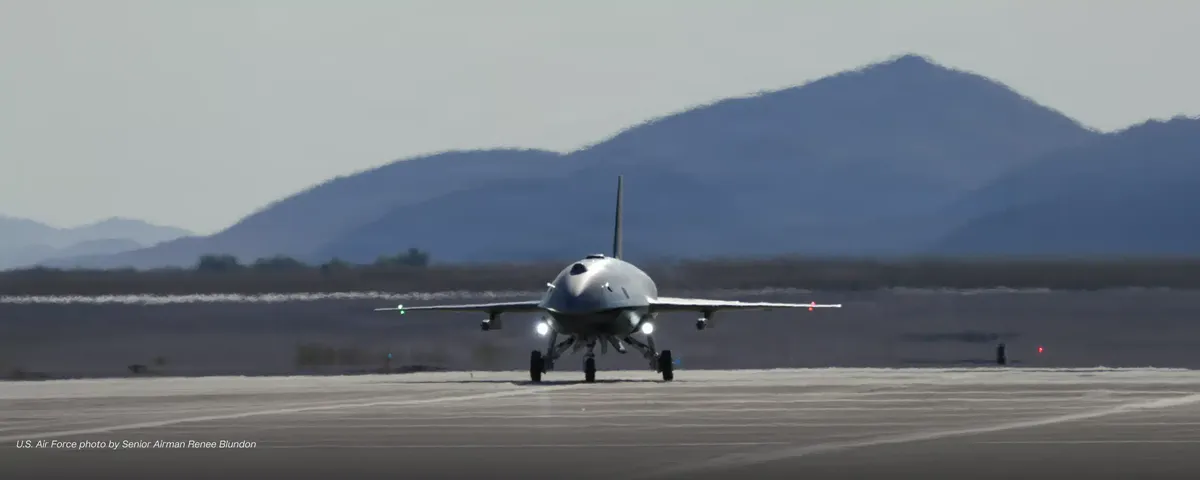
Shield AI says its Hivemind mission autonomy software has enabled multiple U.S. Air Force Collaborative Combat Aircraft to fly in formation and perform coordinated beyond-visual-range counter-air tactics. The demonstration came three weeks after an airborne F-22 pilot directed a FQ-44A Fury in flight.
- Hivemind coordinated multiple Air Force CCAs in formation.
- The aircraft performed collaborative beyond-visual-range counter-air tactics.
- An F-22 pilot previously directed a FQ-44A Fury in flight.
- Hivemind has been integrated on more than 40 uncrewed systems.
- Shield linked the work to the Air Force’s A-GRA architecture.
Two demonstrations in three weeks
Shield said the flights mark two firsts for the Air Force’s Collaborative Combat Aircraft program. On October 8, an F-22 pilot acted as an airborne “quarterback,” issuing high-level directives to a FQ-44A.
Hivemind interpreted and executed those directives in real time, allowing the aircraft to perform dynamic maneuvers and simulated combat tasks under the pilot’s direction. The demonstration showed how a human pilot could direct an autonomous teammate during flight.
On October 26, Hivemind enabled multiple CCAs to execute a multi-ship formation and tactical beyond-visual-range air combat maneuvers. Shield described this as collaborative mission execution, rather than independent aircraft operating in the same airspace.
Human direction, coordinated autonomy
Shield said the demonstrations support a model in which human pilots set the direction while mission autonomy translates that direction into coordinated action. The company said this approach could expand what a human-led combat team can accomplish.
“Our mission autonomy, running on each aircraft, seamlessly translates human intent into collaborative actions that deliver the desired mission effect,” Todd Wesley, vice president of Hivemind engineering at Shield, said in the company’s announcement. He added that the flights advance the integration of sensors, data links and interfaces needed for the mission autonomy.
Wesley said each flight produces data for the next software release. He also said the combined Hivemind and aircraft software release process is nearing the point where the Air Force can fly a sortie, update the software overnight and fly again the next day.
A software architecture designed to scale
Shield linked the milestones to the Air Force’s Autonomy Government Reference Architecture, or A-GRA. The architecture separates mission autonomy from aircraft-specific functions through standardized interfaces. According to Shield, that creates a path to improve mission software independently of the airframe, preserve competition and reduce the integration burden involved in delivering new capabilities.
Shield follows a repeatable cycle of develop, verify, fly, learn and update across its aircraft deployments. The company said improvements and new behaviors on any aircraft can mature Hivemind across its other aircraft, subject to data handling restrictions.
Hivemind has been integrated on more than 40 uncrewed systems across air, land, sea and space, according to Shield. The CCA flights use the same common software foundation, allowing lessons from each test to be delivered as software updates. Shield said it will continue testing, assessment and refinement with the Air Force, with data from the flights informing that work.