Synopsys virtualizes Infineon’s AURIX RC1 for automotive software development
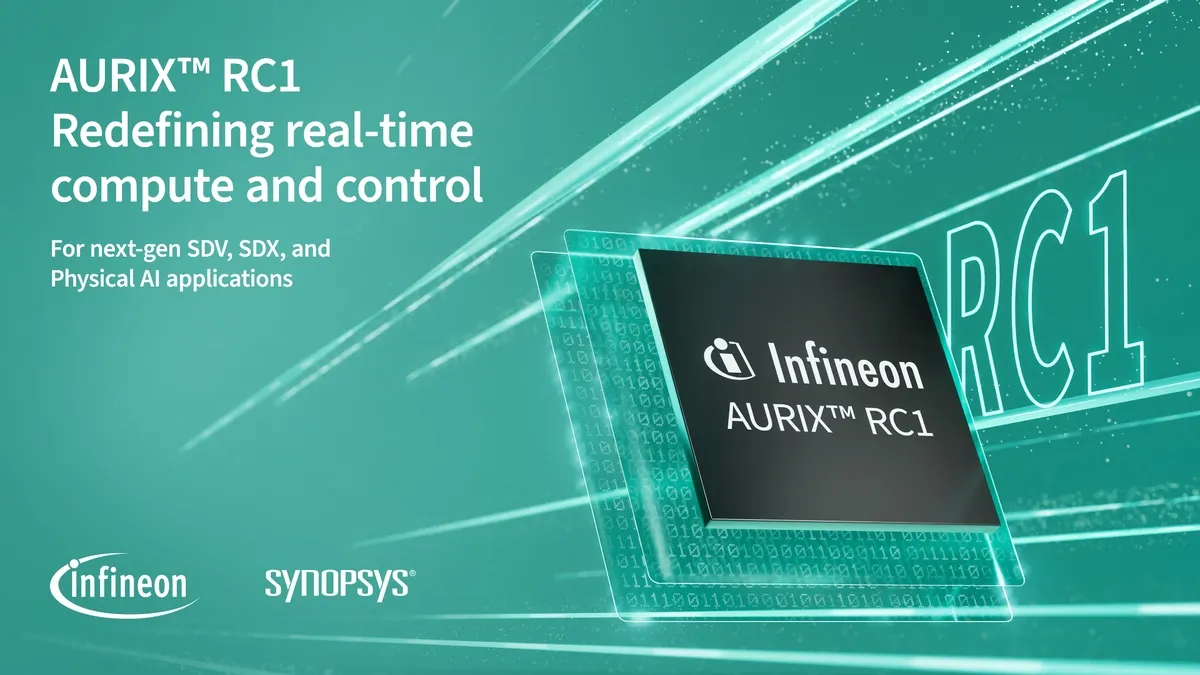
Synopsys has extended its collaboration with Infineon with a Virtualizer Development Kit for the AURIX RC1 microcontroller family. The virtual prototype is designed to let automotive engineering teams develop, verify and validate software before the physical silicon is available.
- Synopsys launched a VDK for Infineon’s AURIX RC1 MCU family.
- The kit supports software development before physical silicon is available.
- Synopsys says up to 90% of software can be validated ahead of physical system availability.
- The VDK supports virtual ECUs and complete electronics digital twins.
- Synopsys says electronics virtualization can reduce costs by 20, 60%.
A virtual prototype for AURIX RC1
The Synopsys Virtualizer Development Kit, or VDK, supports Infineon’s AURIX RC1 microcontroller family, which Infineon describes as a scalable computing platform for software-defined vehicle and Physical AI applications.
The kit provides a virtual prototype of the MCU that can be used as part of an electronics digital twin. According to Synopsys, teams can use it to develop and validate software across multiple domains, helping reduce integration risk and accelerate time to market.
The companies have worked together on virtual prototyping for more than a decade and have supported multiple generations of AURIX MCUs. Their collaboration has also included Synopsys solutions for developing Infineon’s multicore real-time cluster architecture.
Software development before silicon
The RC1 VDK gives customers and partners virtual access to the new MCU for earlier evaluation and platform-selection decisions ahead of silicon availability. It also allows engineering teams to integrate the architecture into next-generation electronic control units and validate up to 90% of software before physical system availability, according to Synopsys.
The VDK is available within Infineon’s DRIVECORE software portfolio. This supports compiler, debugger, AUTOSAR, open-source and other partners in validating software compatibility with the upcoming MCU family ahead of silicon availability.
Synopsys says the kit can support the development of virtual ECUs, networks of virtual ECUs and complete electronics digital twins. These models are intended to enable validation from the earliest development stages through the product lifecycle.
Why earlier validation matters
Synopsys says automotive engineering teams are handling more than 600 million lines of code, hundreds of suppliers, shorter development cycles and increasing cost pressures. As software and AI take a larger role in vehicle functionality, the company says teams cannot wait for physical hardware to begin validating complex software stacks.
According to Synopsys, large original equipment manufacturers often spend hundreds of millions of dollars each year on physical test vehicles, with more than half going to software and electronics. The company’s analysis says virtualizing vehicle electronics for design, integration and testing can reduce these costs by 20, 60%.
“With a Synopsys Virtualizer Development Kit for the new AURIX™ RC1 family, automotive OEMs and Tier 1 suppliers can start software development before silicon is available,” said Marc Serughetti, vice president of Product Management at Synopsys. He said the digital twins can help teams identify issues earlier, reduce costs, accelerate time to market and improve software quality.