Toyota and Waymo to test autonomous bZ4X fleet in Japan from 2027
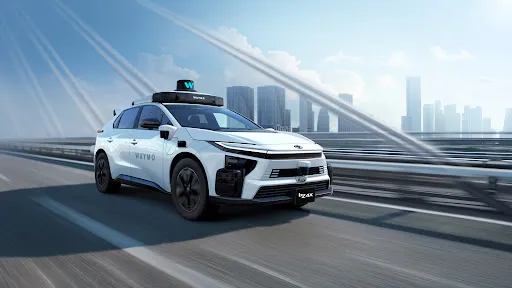
Toyota and Waymo will start initial operations to test and validate an autonomous Toyota bZ4X fleet in Japan in 2027, with deployment to the United Kingdom and other Waymo-serviced markets planned for the following years. The step builds on the preliminary agreement the two companies announced in April 2025.
- Toyota and Waymo will begin testing and validating an autonomous Toyota bZ4X fleet in Japan in 2027.
- Deployment to the United Kingdom and other Waymo-serviced markets is planned for the following years.
- Toyota will build the vehicles at its Takaoka plant in Toyota City, Aichi Prefecture, including integration of Waymo's AV hardware.
- The companies will also explore autonomous technology for personally owned Toyota vehicles, together with Woven by Toyota.
- Waymo claims it is up to 20x safer than human drivers regarding serious crash injuries in areas where it operates.
Japan first, then the UK and other markets
Toyota Motor Corporation and Waymo said they are moving into the next phase of their autonomous driving collaboration. According to the companies, the partnership marks a major milestone in the expansion of Japan's first fully autonomous ride-hailing service using high-volume, domestically manufactured vehicles.
Testing and validation of the autonomous bZ4X fleet will begin in Japan in 2027. The source gives no more specific dates for the later rollout, saying only that deployment to the United Kingdom and other Waymo-serviced markets is planned for the following years.
Built under one roof in Aichi Prefecture
Toyota will build the vehicles at its Takaoka plant in Toyota City, Aichi Prefecture, Japan. The companies say the entire process will take place under one roof, from assembling the base vehicle to integrating Waymo's AV hardware.
By pairing Toyota's global manufacturing and vehicle development expertise with Waymo's fully autonomous technology, the companies say they will accelerate the scaling of safety-validated Level 4 autonomous vehicles globally.
The custom-outfitted bZ4X is also designed for comfort and greater accessibility. Generous rear legroom and features such as automatic doors, a power liftgate and ambient lighting are meant to provide seamless entry and exit for riders.
Safety claims and further cooperation
Dmitri Dolgov, co-CEO of Waymo, said that in areas where Waymo operates, "we've demonstrated that we are up to 20x safer than human drivers when it comes to serious crash injuries." This is Waymo's own claim. He added that the partnership with Toyota will help bring autonomous driving to more people around the world, including key international markets like Japan.
Hiroki Nakajima, member of the board of directors and executive vice president of Toyota, said safety technology "makes the biggest difference when it reaches as many people as possible." He said Toyota will continue to explore how integrating vehicles with traffic infrastructure can make roads safer, and that "No single company can achieve the goal of zero traffic accidents alone."
The cooperation is not limited to ride-hailing fleets. Toyota and Waymo will continue to explore autonomous driving technology for personally owned Toyota vehicles. Together with Woven by Toyota, they will also look at further initiatives for fewer road safety incidents, including how insights from Waymo's real-world operations, data-driven intelligence and technology could improve safety for other road users.
What it means
For Japan, the plan points to a locally built fleet serving a fully autonomous ride-hailing service, with testing set to begin in 2027. For riders, the companies stress accessibility, including for people who cannot easily get around. The longer-term direction, according to the companies, is to extend the same vehicle to the UK and other Waymo markets and to examine autonomy in privately owned Toyota cars. No pricing, fleet size or launch dates for public service were given.