Ultralytics YOLO26n Gets 40% Speed Boost on Arm Devices via New AI Portal
Ultralytics says its YOLO26n model achieved more than a 40% performance improvement with single-thread execution on two Arm-based setups, a result it shared around Arm Create 2026 in Shenzhen. The company's YOLO models are also among the pre-optimized options available at launch on the new Arm AI Portal.
- Ultralytics presented YOLO edge deployment at Arm Create in Shenzhen on September 11, 2026.
- Ultralytics YOLO is among the pre-optimized models at launch on the Arm AI Portal, alongside Alibaba Qwen and Google Gemma.
- According to Ultralytics, YOLO26n gained more than 40% with single-thread execution on a vivo X300 (SME2) and a Raspberry Pi 5 (NEON).
- The session stressed exporting, quantization, pipeline optimization and validating on the real target hardware.
A session on taking vision models to the edge
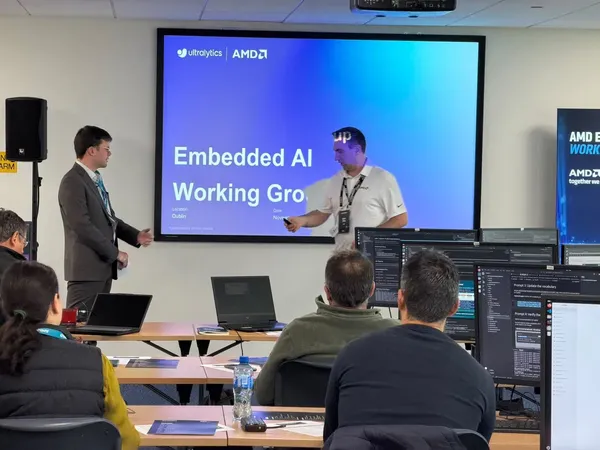
On September 11, 2026, Ultralytics Marketing Associate Ziyue Wang and Senior Machine Learning Engineer Rick Hou took part in Arm Create, Arm's developer event on building, optimizing and deploying AI across cloud, edge, mobile and physical AI. According to Ultralytics, the Shenzhen event followed an earlier stop in Shanghai.
Hou presented a session titled "Deploying Ultralytics YOLO: Real-Time Vision AI at the Edge". It covered how to optimize and deploy YOLO models on edge devices and drew on lessons from production applications.
- Export: the right export format depends on the device, the inference engine and the performance goals of the application.
- Quantization: lowering numerical precision, for example from FP32 to FP16 or INT8, shrinks model size and speeds up inference with minimal accuracy loss, according to the session.
- Pipeline: preprocessing, runtime choice and hardware acceleration all affect latency and throughput, so developers need to find bottlenecks across the whole inference pipeline.
- Validation: benchmarks are a starting point, but models should be tested on the actual target hardware under real operating conditions.
Model panel focused on fit, not rankings
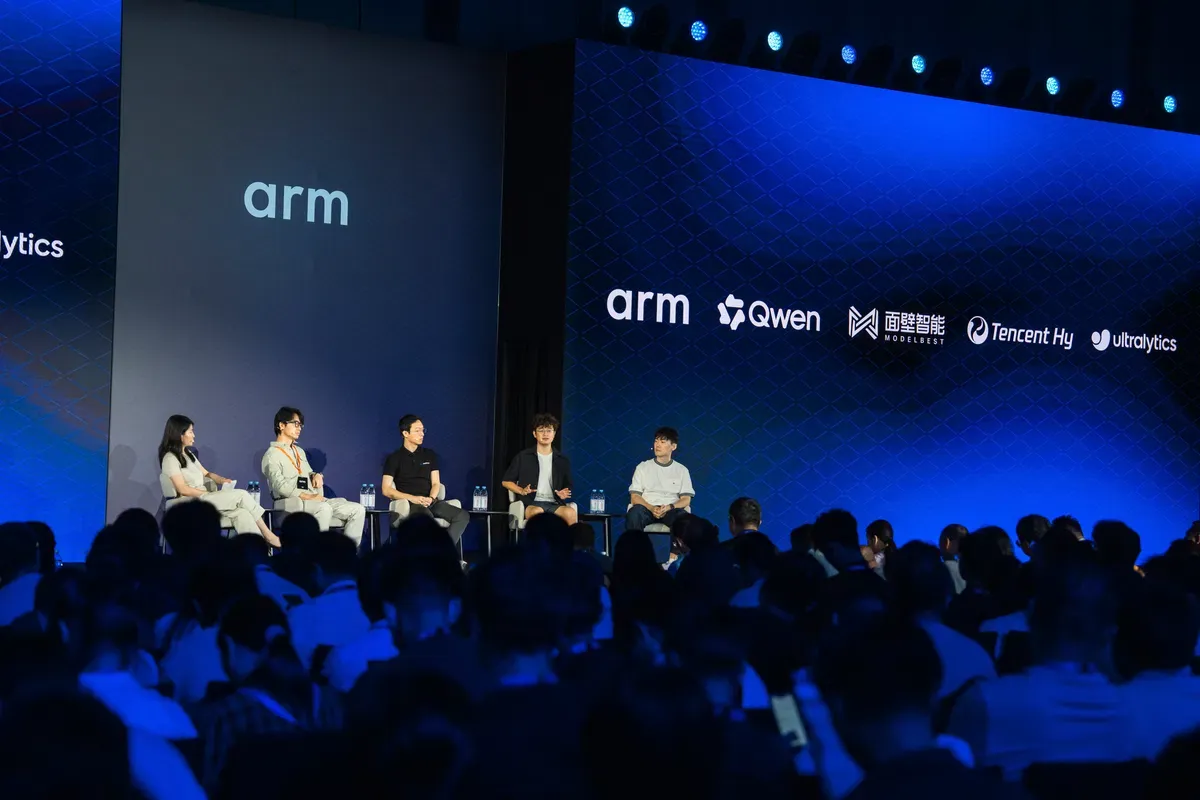
Hou also joined a panel with Arm, Alibaba Qwen, Tencent and ModelBest. Ultralytics says the discussion did not compare models head to head. It centered on application fit: what a workload needs, where it should run and how it behaves once deployed.
The company gave examples of how different the requirements can be. A quick-reply feature in a mobile app, a cloud agent reasoning over large document sets and an edge vision pipeline each call for a different model. Hou represented vision AI and brought the edge perspective, where latency, efficiency and on-device reliability often matter more than model size, according to Ultralytics.
Arm AI Portal and the YOLO26n results
Arm Create Shenzhen came just days after Arm launched the Arm AI Portal. Ultralytics describes it as a hub that helps developers and AI agents discover, optimize and deploy AI software across the Arm compute platform. Developers can find task-specific, pre-optimized models with performance and accuracy data, compare latency, memory and model size, and access code examples and deployment workflows.
Ultralytics YOLO is among the pre-optimized models available at launch, alongside Alibaba Qwen and Google Gemma. Ultralytics supports the portal as an ecosystem partner.
The company called early results promising. YOLO26n achieved more than a 40% performance improvement with single-thread execution in two setups:
- FP16 versus FP32 on a vivo X300 smartphone with SME2
- FP16 and INT8 mixed quantization versus FP32 on a Raspberry Pi 5 with NEON
These figures are reported by Ultralytics and the source does not give further detail on the test conditions.
What it means for edge developers
Ultralytics argues that the Arm AI Portal cuts down the time developers spend searching, benchmarking and hand-tuning models, creating a faster path from model selection to deployment on Arm-based hardware. The company says this supports its mission to make state-of-the-art vision AI simple and accessible.
The next Arm Create heads to the US, according to Ultralytics. Developers who want to try YOLO on their own edge devices can start with the Ultralytics docs or find the models on the Arm AI Portal.
Ultralytics: Ultralytics at Arm Create 2026: Real-time Vision AI at the edge