UNESCO tests its Six Pillars Framework against AI at Digital Learning Week

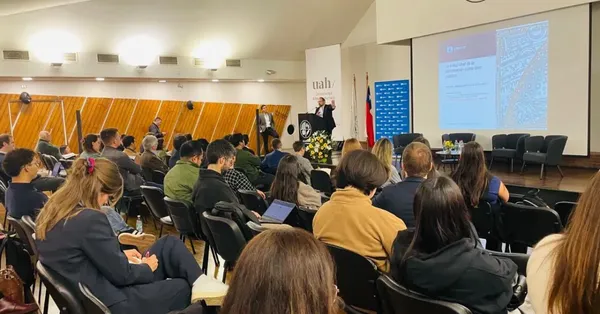
UNESCO's Digital Transformation Collaborative tested its Six Pillars Framework against the rapid rise of AI in education during a Strategy Lab at Digital Learning Week 2026. The session, held in Paris on 11 September 2026, brought together more than 200 participants to ask whether the framework can still respond to fast-moving change.
- UNESCO's Digital Transformation Collaborative tested its Six Pillars Framework against AI at a Strategy Lab in Paris on 11 September 2026.
- More than 200 participants took part, with six groups each examining one pillar.
- The most consistent concern was whether teachers have the skills and training to use AI ethically and responsibly.
- Outputs will inform the framework and the maturity assessment questionnaire.
- Talks continue at the Global Education Coalition annual meeting in March 2027.
A framework put to the test
The Digital Transformation Collaborative (DTC) is a technological subgroup of UNESCO's Global Education Coalition. At UNESCO Headquarters in Paris, it convened policymakers, education partners and practitioners for a Strategy Lab. The central question, according to UNESCO, was what AI is changing and whether the DTC's Six Pillars Framework is still equipped to respond.
The session looked at how education systems can respond to AI's expanding opportunities and widening gaps. It also stressed ethical governance and safety, and the support teachers need to engage critically with the technology as their role evolves.
UNESCO describes the conversation as one that treated AI as a moving target. Access alone is no longer enough, it said. The more pressing questions concern quality, capacity and resilience, as well as who owns, uses and benefits from AI systems.
Opportunity, risk and the role of teachers
Participants pointed to AI's potential beyond the classroom. Accessible and inclusive tools could expand opportunities for learners with disabilities, they said, while giving young people more autonomy to address challenges in their own communities. Examples named include climate action, Indigenous language preservation and protecting natural resources in the Amazon.
AI is also pushing education systems to rethink standard approaches. According to UNESCO, the concern raised most consistently was whether teachers have the skills and training to use AI ethically and responsibly, bring that knowledge into classroom practice and pass it on to students.
Six pillars, six groups
Six parallel groups each took one pillar and asked how AI is reshaping it.
- Content and solutions: the quality and openness of AI-powered platforms, curricular alignment, assessment and certification, and the role of parents and caregivers.
- Capacity and culture: future-ready skills, shifting competencies and mindsets, critical thinking, and community involvement in shaping AI in education.
- Connectivity and infrastructure: moving beyond access, with calls for AI to become a system-wide capability built collaboratively on open data and models, with economies of scale across schools.
- Cost and sustainability: the durability of devices, the risk of AI deepening existing inequities, and the need to teach students about sustainability itself.
- Data and evidence: whether data is good, mapped, traceable and transparent, whether AI improves learning outcomes and supports creativity, and who is accountable when it does not.
- Coordination and leadership: stronger government ownership in how AI tools are researched and designed, and more coherence across a sector working with multiple, competing technology providers.
What happens next
The outputs of the Strategy Lab feed directly into the DTC's AI workstream. They will inform the evolution of the Six Pillars Framework and the maturity assessment questionnaire, according to UNESCO.
The discussions will continue at the Global Education Coalition annual meeting in March 2027, in a dedicated session. For education ministries and practitioners, the exercise signals that the framework is being revised with AI in mind, with attention on teacher training, accountability for outcomes, government involvement in tool design and the coordination of competing providers.
UNESCO (AI): UNESCO's Digital Transformation Collaborative: Charting how AI is