Wiley says grounding AI in peer-reviewed sources is key to trust
Publisher Wiley used the AI for Good Global Summit in Geneva to argue that responsible AI begins with the knowledge a model is built on, not with filters applied to its output. According to Wiley, 64% of researchers in its global study cited potential inaccuracies and hallucinations as concerns that keep them from using AI as much as they would like.
- Wiley says 64% of researchers cited inaccuracies and hallucinations as a barrier to using AI more.
- Its ExplanAItions study found researcher AI adoption rose from 57% to 84% in one year.
- Wiley advocates RAG tied to peer-reviewed content to improve transparency, reduce bias and cut re-prompting.
- Partnerships include OpenEvidence, the European Space Agency and an AI Gateway linking Claude, AWS Marketplace and Perplexity.
- Wiley introduced Applied Research Intelligence (ARI) with exportable audit trails for corporate R&D teams.
Grounding as the answer to hallucinations
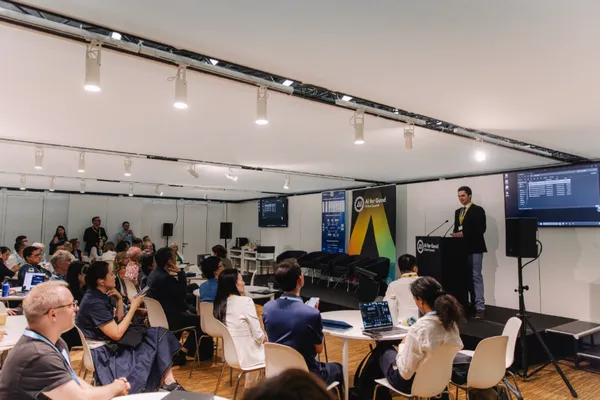
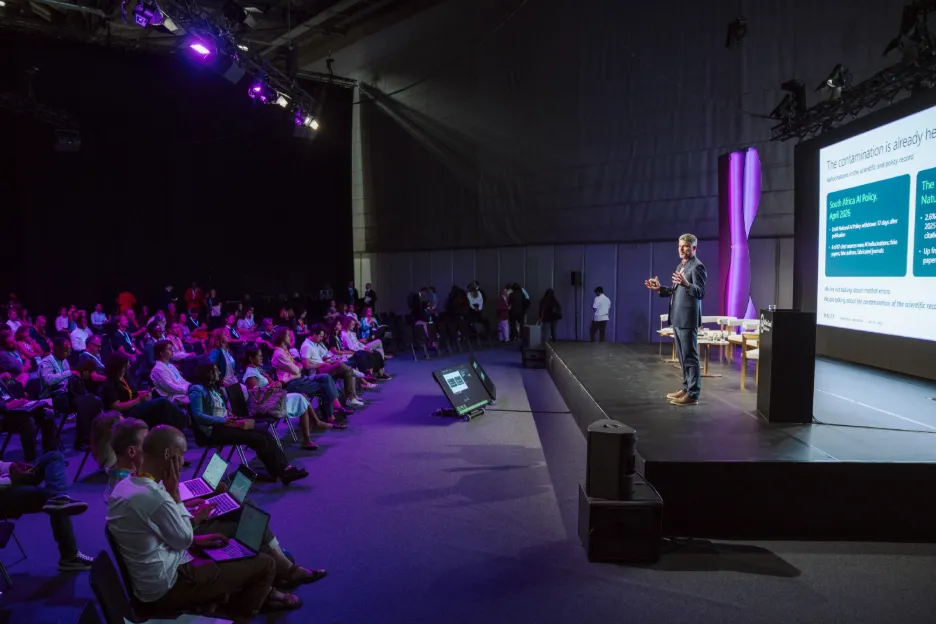
Armughan Rafat, Wiley's SVP and Chief AI & Data Analytics Officer, set out the company's position in a post about its sponsorship of the summit. Wiley presented a session on the Solutions stage titled "From hallucination to verification: why trusted, responsible AI needs grounded knowledge."
The core argument is that trust starts before the model runs. Wiley showed how retrieval-augmented generation (RAG), connected to peer-reviewed content, reduces bias by drawing on more diverse and authoritative sources, restores transparency through citation, and cuts the wasted computation of re-prompting a model to fix an ungrounded answer.
"Responsible AI requires responsible inputs" is the idea the company says it wanted to leave with the audience. Most governance debates, it argues, focus on what comes out of a model, while the more useful question for builders is what the model is standing on.
Real-world failures cited
Wiley pointed to two recent cases it says share the same root cause. In April 2026, South Africa withdrew its draft national AI policy after discovering that several of its citations were fabricated, including invented papers and journals. Around the same time, the patient-safety organization ECRI named the misuse of general-purpose AI chatbots the top health technology hazard for 2026, warning that these tools are not validated for clinical use even as patients increasingly turn to them.
The urgency is rising, Wiley says. Its ExplanAItions study found that AI adoption among researchers jumped from 57% to 84% in a single year, meaning more people are exposed to the same failure every day.
Wiley's own products and partnerships
Wiley described how this thinking shapes its AI strategy:
- OpenEvidence: Wiley is licensing the Cochrane Database of Systematic Reviews and more than 400 of its journals and books into a clinical AI platform used by over 60% of US physicians, so answers can be traced to peer-reviewed evidence.
- European Space Agency: curated Earth-science research feeds the agency's Earth Virtual Expert (EVE) assistant, with attribution kept intact for policy teams and researchers.
- AI Gateway: connects peer-reviewed content to Claude, AWS Marketplace and Perplexity.
- Knowledge feeds: structured, AI-ready data products for teams building models in fields such as life sciences, healthcare, engineering and finance.
The company also introduced Wiley Applied Research Intelligence (ARI), a research intelligence layer built on peer-reviewed content and securely enriched with a team's own data, plus sources such as grants, patents and clinical trial registries. According to Wiley, it helps corporate R&D and AI teams surface connections that a keyword search would miss, and offers faster time to insight, a higher probability of success in experiments and trials, and results teams can defend. Each answer comes with an exportable audit trail.
What it means
The post is a company viewpoint, but it reflects a broader concern among AI users: tools are spreading faster than confidence in their accuracy. Wiley says it left Geneva with new conversations underway with governments, research institutions and corporate partners about building trustworthy AI at scale. Its answer is that the knowledge layer beneath the model, and increasingly an intelligence layer built on top of it, matters most. A recording of the session is available through the AI for Good site.
ITU AI for Good: Why we were at AI for Good: grounding artificial intelligence in knowledge you can trust