New AI computing capacity is doubling every 9 months, Epoch AI finds
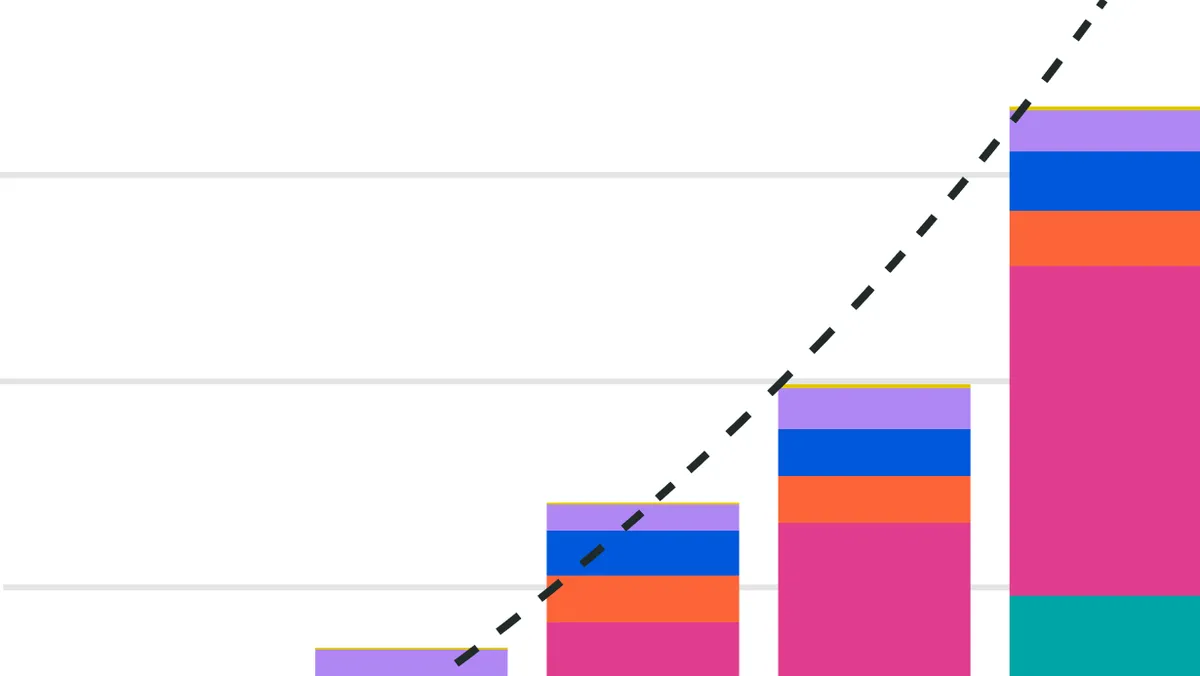
The computing capacity of AI chips sold worldwide each quarter has grown about 2.5× per year since 2024, according to research group Epoch AI. That equals a doubling time of 9.1 months, slower than the surge seen in 2023.
- Epoch AI estimates quarterly AI chip capacity additions have grown about 2.5× per year since 2024, a doubling time of 9.1 months.
- Additions rose from 0.8 million H100e in Q1 2024 to 6.3 million in Q2 2026.
- Growth was roughly 6× in 2023, so the pace has fallen, though a further slowdown is not statistically significant (p = 0.26).
- The data covers six designers and tracks chip sales, not chips operating in data centers.
From 0.8 million to 6.3 million H100e per quarter
Epoch AI measures capacity in H100-equivalents (H100e), a unit based on Nvidia's H100 GPU. According to the group, quarterly additions rose from 0.8 million H100e in Q1 2024 to 6.3 million in Q2 2026. The fitted trend is 2.5× per year (90% CI: 2.3× to 2.7×), which corresponds to a doubling time of 9.1 months (90% CI: 8.4 to 10.0 months).
The estimate covers six chip designers: Nvidia, Google, AMD, Amazon, Huawei and Cambricon. Nvidia leads by a wide margin, at 3,953,823 H100e in Q2 2026 out of a total of 6,327,416. Google follows with 1,607,427 H100e in the same quarter, up from 923,374 in Q1 2026.
Epoch says the growth rate was roughly 6× in 2023, when global AI training and inference capacity surged after the release of the initial ChatGPT and GPT-4, led by Nvidia's new H100 GPU.
Why Epoch looks at quarterly additions
The group chose to analyze quarterly additions instead of cumulative capacity, the running sum of those additions. When additions grow steadily, the two growth rates converge. They can diverge if sales surge and then slow, as happened in 2023.
In 2024 and 2025, cumulative capacity was small relative to recent quarterly sales, so each quarter brought a relatively large increase in the cumulative stock. By 2026 the rates had converged: cumulative capacity grew 2.6× between Q2 2025 and Q2 2026, close to the 2.5× trend and down from 3.5× the year before. Epoch says a fit to cumulative capacity over 2024 to 2026 would overstate the current pace.
Is growth slowing?
The picture is unclear. Year-over-year growth in quarterly additions fell from 2.8× in Q2 2025 to 2.2× in Q2 2026. Regressing quarterly growth rates on time shows a decline from about 32% to 19% per quarter, but this is not statistically significant (p = 0.26).
Epoch notes that quarter-to-quarter growth is noisy, partly because of generation transitions such as Nvidia's rollout of Blackwell chips in late 2024 and early 2025. It also says a slowdown may reflect a lull between generations. Nvidia has recently started shipping its next-generation Rubin chips, but had not yet recognized any Rubin sales as of its latest fiscal quarter ending in July.
Limits of the data and what it means
The figures come from Epoch's AI chip sales hub, which estimates units sold per chip model based on company financial disclosures, analyst estimates and media reports. The analysis uses the hub's median estimates as of October 19, 2026.
- The data tracks chips when they are sold, not when they come online, and chips can take several more months to become operational in a data center.
- Smaller designers such as Intel, Meta, Microsoft, Cerebras and Groq are omitted, as are non-data-center GPUs. Epoch believes these volumes are minor.
- The confidence intervals reflect only how well the trend fits the median estimate, not uncertainty in the underlying sales estimates.
- The main estimate rests on only ten quarters of data. Pre-2024 estimates exist only for Nvidia GPUs and Google TPUs, so no earlier trend can be fitted for all six designers.
For readers tracking AI infrastructure, the finding suggests that new capacity is still compounding quickly, though more slowly than in the 2023 surge. Whether growth keeps its current pace may become clearer as Rubin sales begin to show up in the data.
Epoch AI: New global AI computing capacity is doubling every 9 months